
South Korea to offer monthly allowance of $490 to reclusive youths; read to know why
South Korea is all set to offer reclusive youths in the country a monthly allowance of $490 in an effort to encourage them to get out of their homes.
- World News
- 3 min read

;'%3e%3cpath%20d='m8,15.99c4.41,0,7.99-3.58,7.99-7.99S12.41,0,8,0,0,3.59,0,8s3.58,7.99,7.99,7.99Z'%20style='stroke:%23fff;%20stroke-miterlimit:10;%20stroke-width:.02px;'/%3e%3cpath%20d='m3.08,3.37l3.82,5.11-3.84,4.15h.87l3.37-3.64,2.72,3.64h2.94l-4.04-5.39,3.58-3.87h-.86l-3.1,3.35-2.5-3.35h-2.94Zm1.27.64h1.35l5.97,7.99h-1.35l-5.97-7.99Z'%20style='fill:%23fff;'/%3e%3c/g%3e%3c/svg%3e)


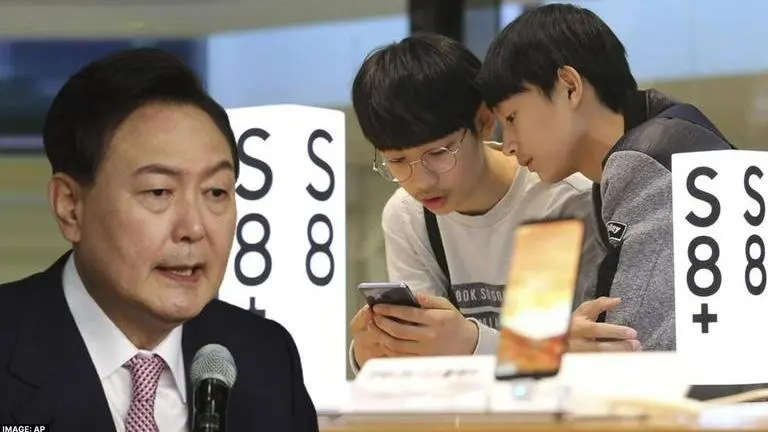
South Korea is all set to offer reclusive youths in the country a monthly allowance of $490 in an effort to encourage them to get out of their homes. The enticing measure was passed by the South Korean Ministry of Gender Equality and Family. Through these measures, the government is planning to offer education, jobs, and health support along with other exciting incentives to South Korean youths. According to The Guardian, the South Korean administration is taking these measures to address the issue of South Korean youth suffering from a condition called “Hikikomori”.
Hikikomori is a Japanese term which roughly means to “pull back”. Through these measures, the South Korean Ministry is trying to make it easier for the youth to leave the house and go to school, university or work. The programme which was announced this week expands on the measures that were announced in November last year. The monthly allowance will be given to South Koreans who are suffering from extreme social withdrawals and are aged between 9 and 24. According to the Korean Institute of Health and Social Affairs, about 3,50,000 South Koreans between the age of 19 and 39 in South Korea are considered as lonely or isolated, and most of them belong to the disadvantaged section of society.
What is Hikikomori Syndrome?
Hikikomori refers to a social phenomenon where individuals withdraw from society and remain isolated for an extended period of time. According to the National Library of Medicine, the term was coined somewhere in the 1990s in Japan to describe the phenomena of social withdrawal. While it is not a clinical diagnosis but a social issue, it generally affects people who are suffering from clinical depression, anxiety and other mental health issues. Academic and career pressure in a highly economically competitive country like South Korea can be considered a major catalyst for the phenomenon.
Since the term originated in Japan, the country has witnessed a major rise in people who are suffering from the phenomenon. Due to the intensive work culture, an estimated 1.5 million working-age population is living in isolation. The Japanese government has also recognised the severity of the situation and introduced several initiatives. The government has not only provided financial assistance to the Japanese youth, but they are also providing counselling services and support groups for individuals who are affected by the phenomenon.
Advertisement
Step taken to address rising unemployment rates among South Korean youth
The measures become important since South Korea has a relatively high rate of youth unemployment. According to The Guardian, while the unemployment rate in the country stands at 7.2%, the country is also trying to tackle a rapidly declining birth rate that further threatens productivity. This year, South Korea became the only county in the world with a fertility rate below one, with South Korean women having an average of 0.78 children. Meanwhile, South Korean President Yoon Suk Yeol expressed his concerns over the shrinking population. Last month, the South Korean President declared the birth rate a “crucial national agenda”.