
Sperm Donor With Rare Cancer-Causing Gene Fathers Almost 200 Children In Europe
Investigations have also revealed that the gene mutation, that leads to Li-Fraumeni syndrome, resulted in some of those children developing cancer. Some have even died at a very early age, it said. Since the mutation was of a rare and unknown variant, it was not detected in the screening phase
- World News
- 4 min read

;'%3e%3cpath%20d='m8,15.99c4.41,0,7.99-3.58,7.99-7.99S12.41,0,8,0,0,3.59,0,8s3.58,7.99,7.99,7.99Z'%20style='stroke:%23fff;%20stroke-miterlimit:10;%20stroke-width:.02px;'/%3e%3cpath%20d='m3.08,3.37l3.82,5.11-3.84,4.15h.87l3.37-3.64,2.72,3.64h2.94l-4.04-5.39,3.58-3.87h-.86l-3.1,3.35-2.5-3.35h-2.94Zm1.27.64h1.35l5.97,7.99h-1.35l-5.97-7.99Z'%20style='fill:%23fff;'/%3e%3c/g%3e%3c/svg%3e)


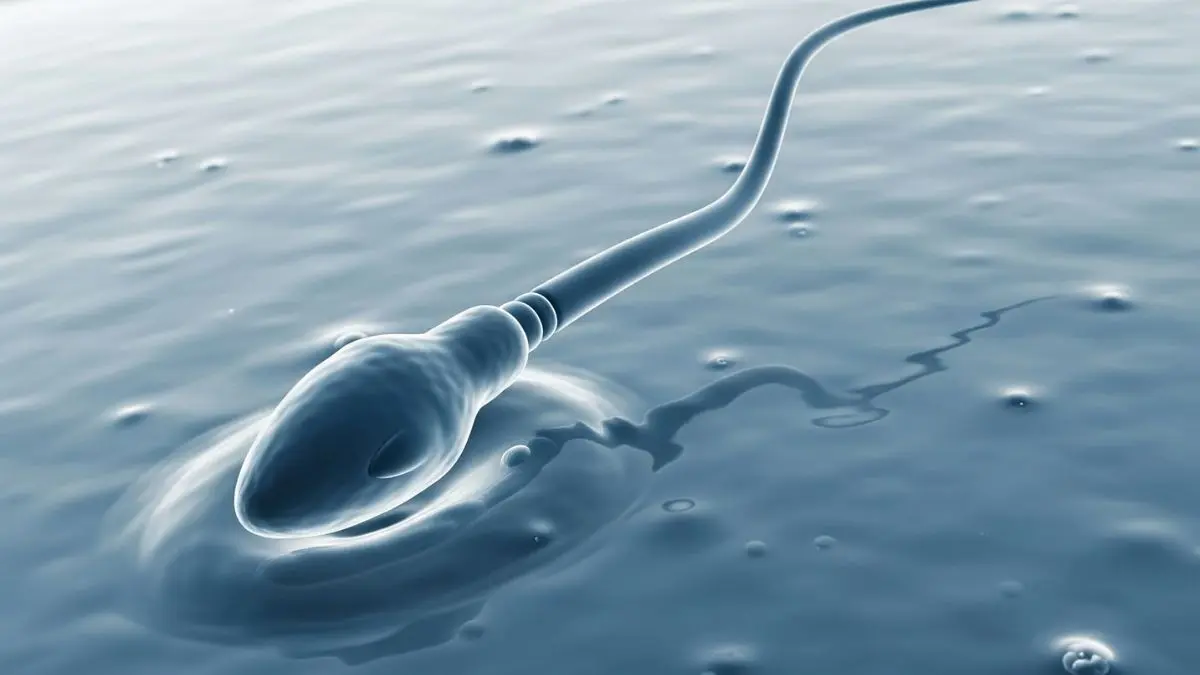
New Delhi: In today's fast-paced world, sperm donations have emerged as a progressive way of helping couples have children. The method has not only become a viable alternative to several couples who struggle with conception, but has also come out as matter of choice for many single parents. However, a major investigation in Europe, into one case, has pointed out the perils of letting an unknown donor father one's children.
The probe conducted by 14 public service broadcasters, has recently revealed that one sperm donor bearing a rare, aggressive cancer-causing gene mutation had helped father at least 197 children in Europe. Reports indicate that the sperm was distributed by Copenhagen's European Sperm Bank (ESB), to 67 clinics in around 14 countries.
Investigations have also revealed that the gene mutation, that leads to Li-Fraumeni syndrome, resulted in some of those children developing cancer. Some have even died at a very early age, it said. Since the mutation was of a rare and unknown variant, it was not detected in the initial screening phase during the time of donation.
Who Was This The Sperm Donor?
The man with this rare gene mutation was an anonymous donor. He started donating as early as 2005 since he was a student and continued for several years. His sperm was used by multiple women to conceive over a 17-year period. According to the reports, the mutation had occurred in some of his cells before his birth and affected the TP53 gene, which is known to protect the body from developing cancer. Almost 20% of his sperm is known to carry this
Advertisement
While most of his body doesn't carry the mutated TP53 gene, up to 20% of his sperm do. If a child is conceived from one of these affected sperm, the mutation would be present in every cell of that child's body, increasing their risk for certain cancers. The man was identified in November 2023 by the European Sperm Bank, based in Denmark.
What Was He Suffering From?
This donor was suffering from a rare disease called the Li-Fraumeni syndrome, a genetic disorder which is known to significantly increase the risk of developing cancer. According to medical experts, individuals having this syndrome are usually advised to undergo annual full-body and brain MRI scans, as well as ultrasounds, to detect tumors early.
Advertisement
Speaking to a global media broadcaster, Professor Clare Turnbull, a cancer geneticist at the Institute of Cancer Research in London said, “It is a dreadful diagnosis. It's a very challenging diagnosis to land on a family, there is a lifelong burden of living with that risk, it's clearly devastating.”
What The Sperm Bank Said
According to the European Sperm Bank (ESB), the donor and his family are healthy, and the mutation is usually not detected by standard genetic screening. He was immediately withdrawn from the sperm donation program as soon as the investigation findings came out, the Bank said.
Reports indicate that the ESB was first alerted in 2020 after a child who was conceived with the donor's sperm was diagnosed with this rare gene mutation. The bank initially concluded that the test was negative. After a second case in 2023, the donor was blocked.
Initially, 23 out of 67 children were found to have the gene variant. 10 among them were already diagnosed with cancer. After some further investigation, it was found that the donor had fathered at least 197 children. However, the exact number could not be ascertained owing to lack of data from some countries. It is not known how many children inherited the variant.
According to the investigation, despite the ESB's self-imposed limit of restricting the sperm donor to 75 families, the donor's sperm was used to produce far more children than the prescribed norm. It also exceeded national limits in some countries like Belgium and Spain.