
'This Is Punishment': US Says Latest Iran Offensive Is 4-5 Times Bigger Than Last, Signals More Attacks Ahead
The U.S. has significantly intensified its military actions against Iran, conducting strikes that are "four to five times bigger" than prior operations, citing Tehran's ceasefire violations and assaults on commercial shipping in the Strait of Hormuz. A senior U.S. official stated the objective is to impose heavy costs on Iran, targeting various military assets.
- World News
- 4 min read

;'%3e%3cpath%20d='m8,15.99c4.41,0,7.99-3.58,7.99-7.99S12.41,0,8,0,0,3.59,0,8s3.58,7.99,7.99,7.99Z'%20style='stroke:%23fff;%20stroke-miterlimit:10;%20stroke-width:.02px;'/%3e%3cpath%20d='m3.08,3.37l3.82,5.11-3.84,4.15h.87l3.37-3.64,2.72,3.64h2.94l-4.04-5.39,3.58-3.87h-.86l-3.1,3.35-2.5-3.35h-2.94Zm1.27.64h1.35l5.97,7.99h-1.35l-5.97-7.99Z'%20style='fill:%23fff;'/%3e%3c/g%3e%3c/svg%3e)


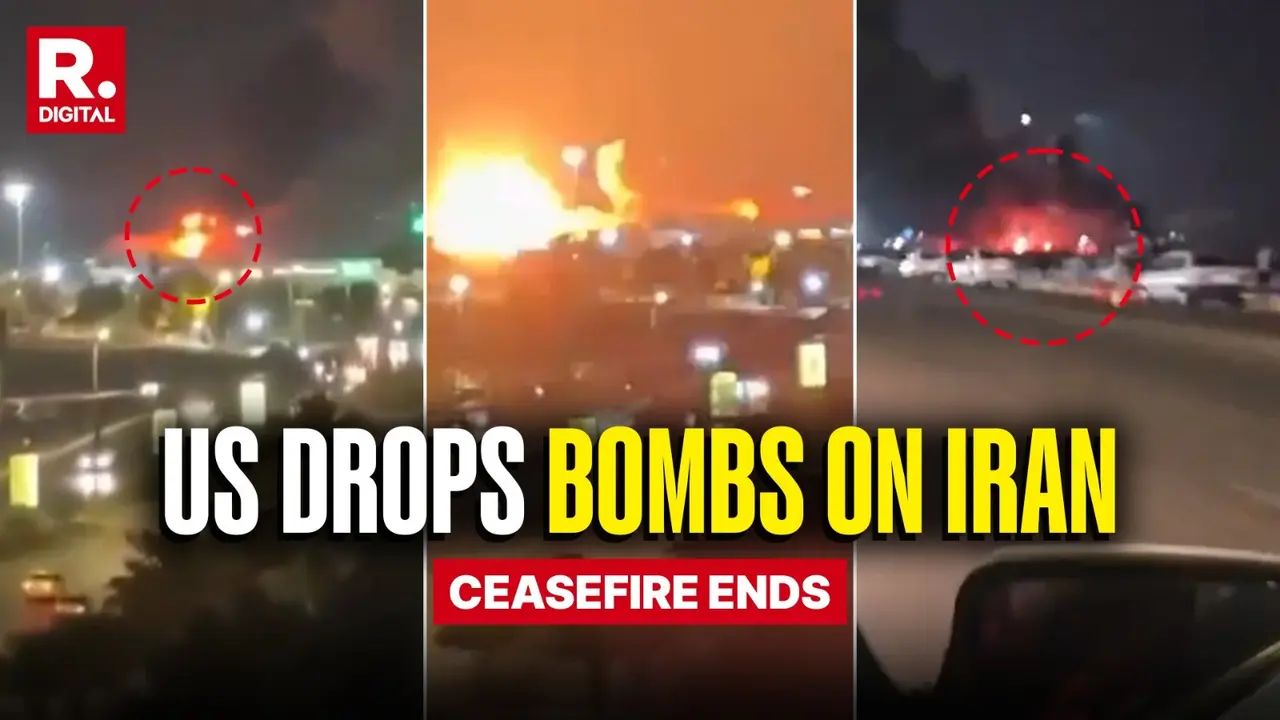
New Delhi: The United States has dramatically escalated its military campaign against Iran, launching what officials described as an offensive "four to five times bigger" than the previous wave of strikes, in what Washington says is a punitive response to Tehran's alleged ceasefire violations and attacks on commercial shipping in the Strait of Hormuz.
A senior US official said the latest operation was intended to impose "heavy costs" on Iran and send an unmistakable message that further aggression would invite an even stronger military response. Calling the strikes "punishment," the official stressed that the campaign was significantly larger than earlier US operations and warned that "more is coming" if Iran continues its hostile actions.
According to US officials, the strikes targeted a wide range of Iranian military assets, including air defence systems, drone launch sites, coastal surveillance infrastructure, anti-ship missile batteries and other strategic facilities linked to Iran's military operations.
The operation was carried out by US Central Command (CENTCOM) following attacks on multiple commercial vessels transiting the Strait of Hormuz, which Washington blamed on Tehran.
Advertisement
The latest assault marks the most significant US military action against Iran since the ceasefire reached earlier this year. American officials accused Iran of violating the agreement by targeting commercial shipping, calling the attacks "unwarranted, dangerous and a clear violation" of the truce.
Officials indicated that the operation was carefully calibrated to degrade Iran's military capabilities while signalling that the US remains prepared to escalate further if necessary. They maintained that the objective is deterrence rather than a broader war but made it clear that Washington is ready to respond with overwhelming force if Tehran persists.
Advertisement
The military action comes amid heightened tensions in the Gulf after attacks on three commercial vessels, including a Qatari LNG tanker and a Saudi-linked oil tanker, triggered international concern over maritime security in one of the world's busiest energy corridors.
The US has also reinstated sanctions affecting Iranian oil exports, arguing that Tehran failed to honour commitments made under the ceasefire framework.
Hours after the three tankers were struck by projectiles, the United States revoked a license that authorized the sale of Iranian oil as part of the interim deal to end the fighting between the U.S. and Iran.
The new assaults in the fuel-shipping waterway were the most in a single day since late April, according to the U.N. International Maritime Organization. The attacks threatened to choke off the flow of traffic in the strait just as countries hoped to restore normal shipping practices and ease the global economic strain of the war.
A U.S. official said the license was revoked because Iran’s actions in the strait were unacceptable and needed to be met with consequences. The official spoke on the condition of anonymity to share insight into the reasoning behind the move.
Iran has condemned the strikes as a violation of the peace agreement and warned that it reserves the right to respond.
Tehran has also accused Washington of undermining ongoing diplomatic efforts, even as the US insists the military action was a direct response to Iranian aggression and aimed at protecting freedom of navigation in the Strait of Hormuz.
The renewed exchange has raised fears that the fragile ceasefire between the two countries could collapse completely, with officials on both sides hardening their positions as military and diplomatic tensions continue to intensify.