
‘Toll Booth’ On The Strait Of Hormuz: How Iran Gets To Pick Whom To Let Through The World's Most Critical Energy Chokepoint
Even when the legislation is not in place, the Islamic Revolutionary Guard Corps (IRGC) has a “toll booth” system already in place to control traffic through the strait.
- World News
- 3 min read

;'%3e%3cpath%20d='m8,15.99c4.41,0,7.99-3.58,7.99-7.99S12.41,0,8,0,0,3.59,0,8s3.58,7.99,7.99,7.99Z'%20style='stroke:%23fff;%20stroke-miterlimit:10;%20stroke-width:.02px;'/%3e%3cpath%20d='m3.08,3.37l3.82,5.11-3.84,4.15h.87l3.37-3.64,2.72,3.64h2.94l-4.04-5.39,3.58-3.87h-.86l-3.1,3.35-2.5-3.35h-2.94Zm1.27.64h1.35l5.97,7.99h-1.35l-5.97-7.99Z'%20style='fill:%23fff;'/%3e%3c/g%3e%3c/svg%3e)


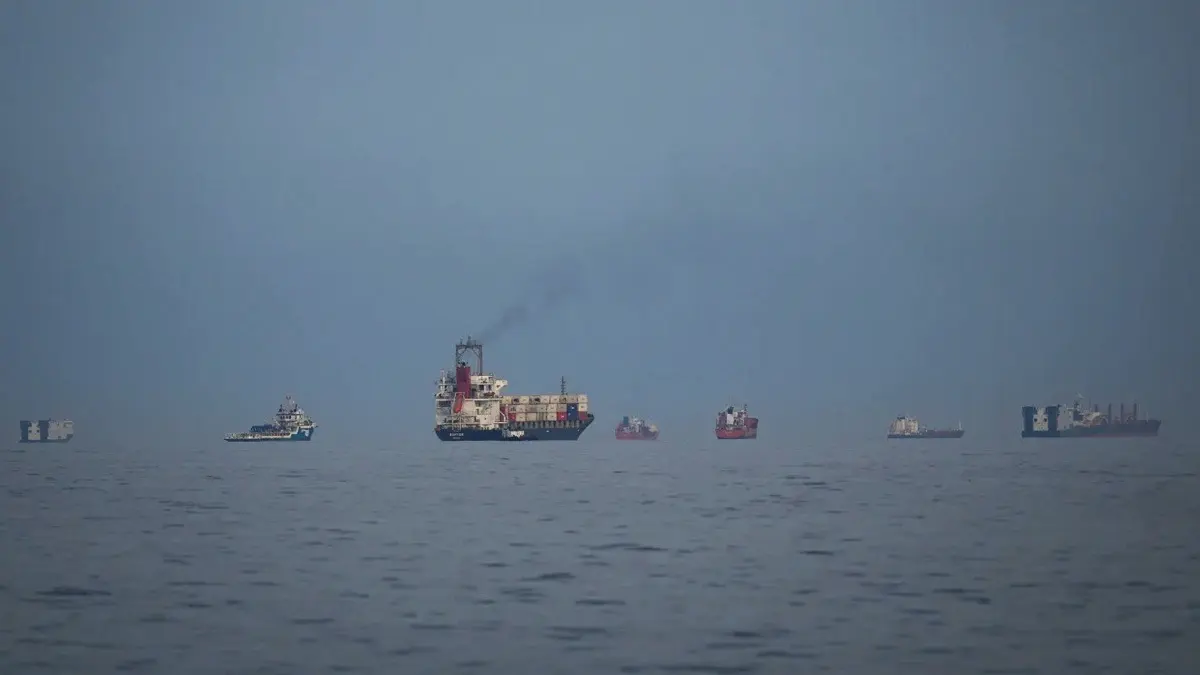
Tehran: As Iran continues to maintain a de-facto blockade of the Strait of Hormuz amid the war in the Middle East which has now dragged on for a month, Iranian media has recently reported that the country’s parliament is planning to pass a legislation through which it can collect tolls from ships passing through the world’s single most important oil passageway.
Reports suggest that the chairman of the parliament’s Civil Affairs Committee, said that a draft law has been prepared which will soon be finalised.
An official reasoned that the process is completely natural and just like duties are paid when goods pass through a country, the Strait of Hormuz is also a corridor. "We ensure its security, and it is natural for ships and tankers to pay us duties,” he was quoted as saying.
However, even when the legislation is not in place, the Islamic Revolutionary Guard Corps (IRGC) has a “toll booth” system already in place to control traffic through the strait.
Advertisement
Iran has demanded international recognition of its right to exercise authority over the Strait of Hormuz as one of its five conditions for ending the war.
How Are Tolls Collected Now?
Sources indicate that vessels transiting the Strait of Hormuz must first go through a screening process linked to Iran’s Islamic Revolutionary Guard Corps (IRGC). Before entry, ships are required to share detailed information with intermediaries associated with the IRGC. This includes the vessel’s International Maritime Organization (IMO) number, cargo details, full crew list, and intended destination. The intermediaries forward this data to the IRGC’s naval command for verification.
Advertisement
If the vessel is cleared, the IRGC provides a specific authorization code along with designated routing instructions for navigating the strait. Upon entering the waterway, IRGC personnel reportedly establish radio contact over VHF, requesting the clearance code. Once verified, Iranian patrol boats may escort the vessel through territorial waters near Larak Island.
Ships that fail to meet the screening criteria are denied passage through the corridor, underscoring the tightly controlled nature of transit in one of the world’s most critical maritime chokepoints.
Who Pays The Tolls?
Iran has maintained that the Strait of Hormuz remains open to all vessels except those linked to the United States and its allies, saying that access through the strait is conditional and not fully restricted.
In a communication sent to the 176 member states of the International Maritime Organization, Tehran stated that “non-hostile” ships can continue to pass through the strait. However, this is subject to key conditions: vessels must not be involved in or support any hostile actions against Iran and must comply with security protocols laid down by Iranian authorities. Only then, it said, would they be granted safe passage in coordination with officials.
Ships from ‘friendly’ nations such as Malaysia, China, Egypt, South Korea, and India have reportedly been permitted to transit the waterway.
Is Charging Tolls Legal?
Under international maritime law, the legality of imposing tolls in such a chokepoint is highly contentious.
According to Article 38 of the United Nations Convention on the Law of the Sea (UNCLOS), all ships and aircraft enjoy the right of “transit passage” through international straits. Crucially, this right cannot be suspended by any coastal state.
Additionally, Article 17 of UNCLOS guarantees all foreign vessels the right of “innocent passage” through a country’s territorial waters. Article 19 further clarifies that passage is considered “innocent” so long as it does not threaten the peace, security, or good order of the coastal state.
While coastal states like Iran can regulate navigation for safety and security, imposing blanket restrictions or charging tolls on transit passage through an international strait would likely conflict with established international law.