
England: Remains of five 2,00,000-year-old ice age mammoths & Neanderthal tools discovered
In an astonishing discovery, the remains of five ice age mammoth species were unearthed from Swindon, a town in southwest England.
- World News
- 2 min read

;'%3e%3cpath%20d='m8,15.99c4.41,0,7.99-3.58,7.99-7.99S12.41,0,8,0,0,3.59,0,8s3.58,7.99,7.99,7.99Z'%20style='stroke:%23fff;%20stroke-miterlimit:10;%20stroke-width:.02px;'/%3e%3cpath%20d='m3.08,3.37l3.82,5.11-3.84,4.15h.87l3.37-3.64,2.72,3.64h2.94l-4.04-5.39,3.58-3.87h-.86l-3.1,3.35-2.5-3.35h-2.94Zm1.27.64h1.35l5.97,7.99h-1.35l-5.97-7.99Z'%20style='fill:%23fff;'/%3e%3c/g%3e%3c/svg%3e)


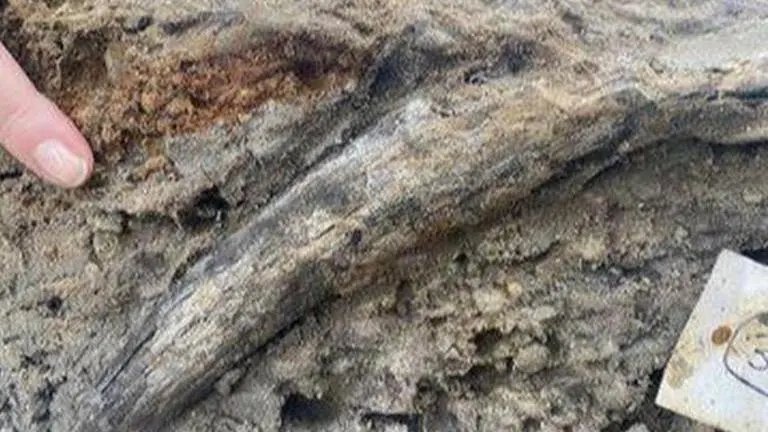
In an astonishing discovery, the remains of five ice age mammoth species were unearthed from a 'mammoth graveyard' in Swindon, a town in southwest England. These remains belonged to two adults, two juveniles and one infant Steppe mammoths and have been dated back to 220,000 and 210,000 years ago. Steppe mammoths are the species that descended from the woolly mammoths. According to archaeologists, the remains of this species are extremely well-preserved and might lead to new revelations about the Neanderthal lifestyle in the ice age.
Five mammoths, Neanderthal stone tools, and everyone’s favourite national treasure!!!
— Prof Ben Garrod (@Ben_garrod) December 19, 2021
Watch Attenborough and the #MammothGraveyard on @BBCOne at 8pm Dec30, as I join the amazing @TheDigVenturers to unravel the ace discovery made by @BSally1 and hubby.https://t.co/aMbfAscltJ pic.twitter.com/yTtM8xzn9X
What else did the archaeologists find?
Interestingly, the remains of the five mammoths- tusks, leg bones, ribs and vertebrae, were accompanied by the tools of Neanderthals, which they might have used to hunt the creatures. DigVentures, the UK-based archaeological outfit that led the excavation informed that these tools include hand axes and sharp stones that were brought into use for clearing animal skin, Live Science reported. In addition to this, the treasure trove recovered from the site also included beetle wings and freshwater snail shells that were found preserved at the site next to the mammoths. The Steppe mammoths have been known to grow up to 13.1 feet, however, the recovered fossils were comparatively small, pointing towards a shrink in their size.
Lisa Westcott Wilkins, the co-founder of DigVentures, said in a statement as per Live Science, that ''finding mammoth bones is always extraordinary, but finding ones that are so old and well preserved, and in such close proximity to Neanderthal stone tools is exceptional."
Evolutionary biologist Ben Garrod has called the findings "one of the most important discoveries in British palaeontology", as finding a complete skeleton is an extremely rare event. “Where these mammoths lie in the ground is exactly where they died a quarter of a million years ago – next to incredible things like stone tools and the snails they trampled underfoot," The Guardian quoted him saying. Garrod added that other fossils found other than the mammoth provide a clue about the landscape that the creatures and the Neanderthals lived in along with the kind of plants that grew in that time. In an interview with Live Science, Duncan Wilson, the chief executive of Historic England said that with these findings, the archeologists will look to shed more life that was lived around Britain 2,00,000 years ago.