
UN urges to stop 'horrific sexual violence' in Tigray, highlights 'grave human suffering'
Amid humanitarian crisis in the Tigray region of Ethiopia, several UN officials called for a stop to indiscriminate and targeted attacks against civilians.
- World News
- 3 min read

;'%3e%3cpath%20d='m8,15.99c4.41,0,7.99-3.58,7.99-7.99S12.41,0,8,0,0,3.59,0,8s3.58,7.99,7.99,7.99Z'%20style='stroke:%23fff;%20stroke-miterlimit:10;%20stroke-width:.02px;'/%3e%3cpath%20d='m3.08,3.37l3.82,5.11-3.84,4.15h.87l3.37-3.64,2.72,3.64h2.94l-4.04-5.39,3.58-3.87h-.86l-3.1,3.35-2.5-3.35h-2.94Zm1.27.64h1.35l5.97,7.99h-1.35l-5.97-7.99Z'%20style='fill:%23fff;'/%3e%3c/g%3e%3c/svg%3e)


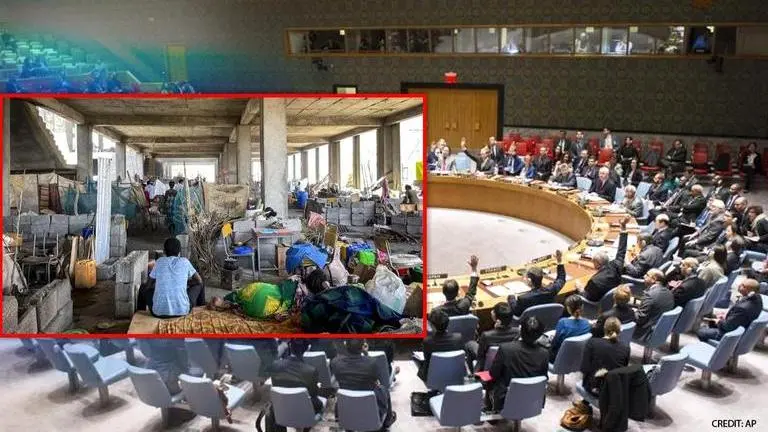
Amid the worsening humanitarian situation in the Tigray region of Ethiopia, several UN officials on March 22 asked to stop indiscriminate and targeted attacks against civilians. In a joint statement, officials including UN aid chief Mark Lowcock, rights chief Michelle Bachelet and refugee chief Filippo Grandi, noted the reports of rape and “other horrific forms of sexual violence”. They called on the warring parties to protect civilians from human rights abuse, condemn sexual violence and hold perpetrators accountable.
The UN officials said that women and children in affected areas are reporting “significant challenges” in accessing health, social welfare and justice services. They said that the initial assessments of 106 facilities in Tigray between December 2020 and March 2021 show that nearly 70 per cent of health facilities were looted, 30 per cent damaged and only 13 per cent in Tigray were functional. They also noted that most collective centres, where displaced civilians are sheltering, do not include separate spaces for women and men, girls and boys, thus increasing risks of gender-based violence and the spread of certain infectious diseases.
The statement read, “Preventing and responding to the grave human suffering resulting from this conflict will require a concerted effort at all levels. It is essential that an independent investigation into conflict-related sexual violence in Tigray be initiated, with the involvement of the UN Office of the High Commissioner for Human Rights”.
The Ethiopian conflict
It is worth noting that no one knows how many thousands of civilians or combatants have been killed since months of political tensions between PM Abiy Ahmed’s government and the Tigray leaders, who once dominated Ethiopia’s government, exploded in November into war. The civil war displaced tens of thousands of refugees, including residents of the Tigray region that garnered condemnation from across the globe. The United Nations and other humanitarian agencies had accused Ahmed's government of blocking assistance to the Tigray region since it managed to overpower the local Tigray People’s Liberation Front (TPLF) forces late last year.
The United Nations had described the situation in Tigray as "extremely grave", saying many people in the region have been forced to eat leaves to survive. The conflict in the region was sparked after the ruling TPLF party, a minority party at the centre but a strong and powerful group in the region, allegedly attacked a military base of the federal forces on November 4 following which Ahmed's government launched a military offensive. But relations between the two political groups had already started to sour way before the November attack, particularly after Ahmed announced reforms to end ethnic federalism in the country, from which TPLF was benefiting the most.