
UNESCO World Heritage Site Lord Howe Island in Australia closed due to fungus outbreak
The myrtle rust outbreak, a highly contagious plant fungus, has forced the closure of most of Lord Howe Island, a UNESCO World Heritage Site.
- World News
- 4 min read

;'%3e%3cpath%20d='m8,15.99c4.41,0,7.99-3.58,7.99-7.99S12.41,0,8,0,0,3.59,0,8s3.58,7.99,7.99,7.99Z'%20style='stroke:%23fff;%20stroke-miterlimit:10;%20stroke-width:.02px;'/%3e%3cpath%20d='m3.08,3.37l3.82,5.11-3.84,4.15h.87l3.37-3.64,2.72,3.64h2.94l-4.04-5.39,3.58-3.87h-.86l-3.1,3.35-2.5-3.35h-2.94Zm1.27.64h1.35l5.97,7.99h-1.35l-5.97-7.99Z'%20style='fill:%23fff;'/%3e%3c/g%3e%3c/svg%3e)


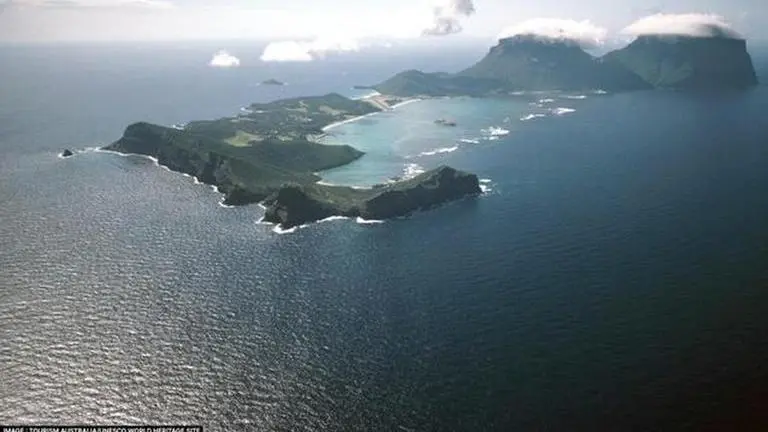
The myrtle rust outbreak, a highly contagious plant fungus, has forced the closure of most of Lord Howe Island, a UNESCO World Heritage Site, to unneeded tourists, according to The Guardian. The Lord Howe Island Board announced that all unnecessary visitors were "temporarily closed, effective immediately", to the permanent park preserve, which makes up roughly 70% of the world heritage-listed island.
On the island, myrtle rust was found on February 3. Weekly sweeps had discovered three new infected locations, two of which were roughly 230 meters from the boundary of the permanent park preserve, the board stated. This was despite continued treatment and prophylactic fungicide spraying.
The proximity of the fungus to the edge of the preserve led to the closure of the park
All four of the contaminated spots were found within the island's settlement zones, according to Atticus Fleming, head of the Lord Howe Island Board, as reported by The Guardian Australia. “It was the fact that they were close to the edge of the [preserve] that was the trigger for closing [it],” he said.
Plants in the Myrtaceae family, which also includes eucalypts, paperbarks, and tea trees, are afflicted by myrtle rust. The fungus damages flower buds and new growth, which interferes with photosynthesis in plants.
Advertisement
The mountain rose (Metrosideros nervulosa), the scalybark (Syzygium fullagarii), and the Gnarled Mossy cloud forest, a critically endangered woodland that tops Mount Gower, the island's highest mountain, is among the Myrtaceae species native to the island that may be impacted by myrtle rust.
The fungus generates thousands of spores that are easily distributed by wind, and rain, and on clothing, skin, hair, footwear, and equipment. These spores are alive for up to three months.
Advertisement
'The rust has the potential to change the way our mountains and forest look', says Board
“Due to the escalating risk, the closure of the permanent park preserve is being implemented to prevent the spread by human activity,” the board said. “The rust has the potential to change the way our mountains and forest look, it may alter food webs and ecology, and potentially affect world heritage values,” it added.
Around 50 locals attended an information session on Thursday night at the community hall on the island with specialists from the NSW Department of Planning and Environment and the Department of Primary Industries. Fleming stated that the board would examine the preserve's closure once a week, The Guardian reported.
“Our goal here is to eradicate the myrtle rust,” he said. “It will take us a few weeks before we know whether has been possible. We’re not going to take any risks given the importance of conservation values on the island, but also given the importance of those conservation values to the island’s economy,” he added.
Myrtle rust was discovered for the first time in Australia in 2010 on the NSW Central Coast, according to Prof. Robert Park, director of the Australian cereal rust management programme at the University of Sydney. “Rusts are among the most feared of all plant pathogens – they spread rapidly over thousands of kilometres on wind currents and can cause huge losses in plant production,” Park said, The Guardian reported.
“Myrtle rust rapidly invaded the entire east coast of Australia and has caused the near extinction of at least three rainforest species. It was detected at Lord Howe Island in 2016, and eradicated, but has now managed to spread there once again. This second incursion clearly illustrates how incredibly difficult rust diseases are to manage once they are introduced into a new region,” he stated.
The Ball's Pyramid and neighbouring islands of Lord Howe are also included in the permanent park preserve, which was created in 1982 to safeguard the local ecology. There are 241 native plant species there, more than 100 of which are island-specific.