
US and Iran To Establish Direct De-Escalation Channel Involving IRGC and CENTCOM in Doha: VP Vance
According to US Vice-President JD Vance, the arrangement will see representatives from Iran’s Islamic Revolutionary Guard Corps (IRGC) and the US Army’s Central Command (CENTCOM) stationed in Doha, Qatar, where they will work to resolve disputes on the ground.
- World News
- 3 min read

;'%3e%3cpath%20d='m8,15.99c4.41,0,7.99-3.58,7.99-7.99S12.41,0,8,0,0,3.59,0,8s3.58,7.99,7.99,7.99Z'%20style='stroke:%23fff;%20stroke-miterlimit:10;%20stroke-width:.02px;'/%3e%3cpath%20d='m3.08,3.37l3.82,5.11-3.84,4.15h.87l3.37-3.64,2.72,3.64h2.94l-4.04-5.39,3.58-3.87h-.86l-3.1,3.35-2.5-3.35h-2.94Zm1.27.64h1.35l5.97,7.99h-1.35l-5.97-7.99Z'%20style='fill:%23fff;'/%3e%3c/g%3e%3c/svg%3e)


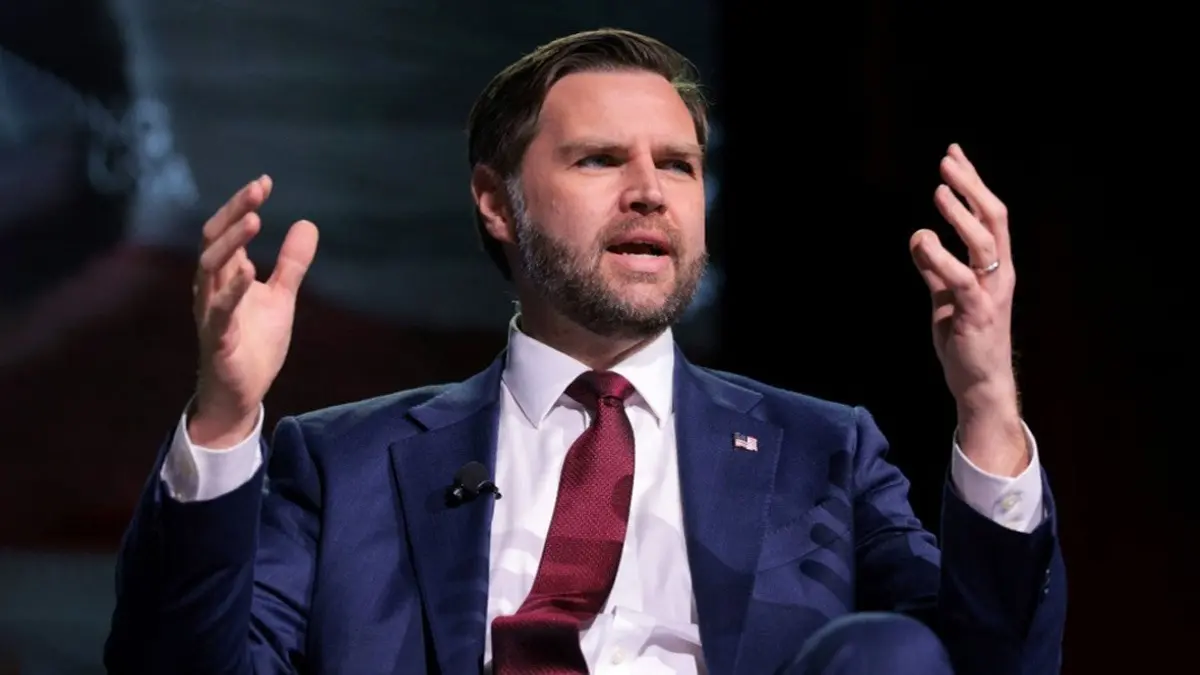
Washington DC: The United States and Iran have agreed to create a direct military communication channel to reduce the risk of conflict escalation, US Vice President JD Vance has confirmed.
According to Vance, the arrangement will see representatives from Iran’s Islamic Revolutionary Guard Corps (IRGC) and the US Army’s Central Command (CENTCOM) stationed in Doha, Qatar, where they will work to resolve disputes on the ground. In an interview with a British news outlet, Vance described the agreement, saying Iranian officials accepted the proposal for officials from both sides to “hang out in Doha” to manage tensions. The development was first reported by Al Jazeera on Thursday.
The move follows recent technical talks between the two sides in Lake Lucerne and marks a notable step in efforts to prevent unintended clashes amid ongoing regional frictions.
Vance also highlighted parallel diplomatic and economic efforts, noting that the United Arab Emirates has engaged in unprecedented discussions with Iranian officials, including the IRGC, regarding potential economic incentives.
Advertisement
US-GCC Reaffirm Strategic Partnership in Bahrain
The announcement comes as the United States and the Gulf Cooperation Council (GCC) wrapped up a ministerial meeting in Manama, Bahrain, on Thursday, where they reaffirmed their strong strategic partnership and coordinated approach toward Iran.
The meeting, co-chaired by US Secretary of State Marco Rubio and Bahraini Foreign Minister Abdullatif bin Rashid Al Zayani, was attended by foreign ministers from all GCC states.
Advertisement
In a joint statement, the participants welcomed the June 17 memorandum of understanding (MOU) between the US and Iran and praised mediation efforts by Pakistan and Qatar. They stressed the importance of sustaining momentum toward a more permanent resolution of hostilities while maintaining unity among partners.
In a joint statement, the participants welcomed the June 17 memorandum of understanding (MOU) between the US and Iran and praised mediation efforts by Pakistan and Qatar. They stressed the importance of sustaining momentum toward a more permanent resolution of hostilities while maintaining unity among partners.
The ministers reiterated their shared goal of preventing Iran from developing or acquiring nuclear weapons. They emphasized that lasting regional peace requires addressing the full range of Iranian threats, including its ballistic missile program, drone capabilities, and support for proxy groups across the region.
Focus on Maritime Security and Conditional Engagement
A key topic was freedom of navigation in the Strait of Hormuz. The statement strongly rejected any attempts to impose tolls, fees, or control over the critical waterway, underscoring that unrestricted transit passage remains essential for regional and global security. The ministers welcomed Oman and the International Maritime Organization’s plan to evacuate more than 11,000 stranded seafarers.
On economic matters, the US and GCC made clear that any future trade and investment with Iran will remain conditional and reversible. Progress will depend on Tehran’s full compliance with the MOU and any final agreement, an end to destabilizing activities, and the creation of conditions conducive to broader economic engagement.
The developments reflect a multi-track approach combining direct military deconfliction, diplomatic coordination with Gulf allies, and conditional incentives aimed at de-escalating tensions in the Gulf region.
(With inputs from ANI)