
US-Canada Trade Talks Collapse As Trump’s 50% Tariffs Take Effect, Carney Vows Dollar-for-Dollar Retaliation
Trade negotiations between the US and Canada have collapsed, with Prime Minister Mark Carney suspending talks and vowing to match new US tariffs “dollar for dollar.” The breakdown occurred after Canada rejected last-minute US proposals as “unfair.” Despite having made “important progress,” Carney stated the final US terms failed to meet Canada’s objectives, including tariff-free access for businesses.
- World News
- 4 min read

;'%3e%3cpath%20d='m8,15.99c4.41,0,7.99-3.58,7.99-7.99S12.41,0,8,0,0,3.59,0,8s3.58,7.99,7.99,7.99Z'%20style='stroke:%23fff;%20stroke-miterlimit:10;%20stroke-width:.02px;'/%3e%3cpath%20d='m3.08,3.37l3.82,5.11-3.84,4.15h.87l3.37-3.64,2.72,3.64h2.94l-4.04-5.39,3.58-3.87h-.86l-3.1,3.35-2.5-3.35h-2.94Zm1.27.64h1.35l5.97,7.99h-1.35l-5.97-7.99Z'%20style='fill:%23fff;'/%3e%3c/g%3e%3c/svg%3e)


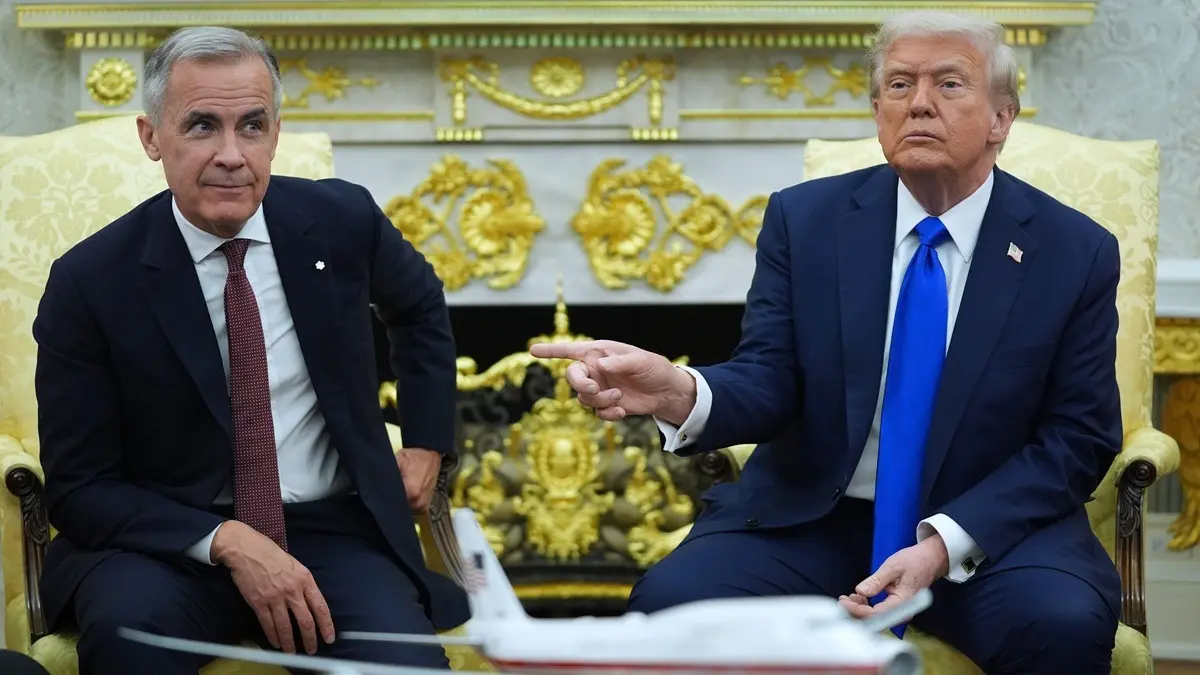
New Delhi: Trade negotiations between the United States and Canada have collapsed, with Canadian Prime Minister Mark Carney suspending talks with Washington and vowing to match new US tariffs “dollar for dollar”. The breakdown came after last-minute changes to Washington’s proposed terms were rejected by Ottawa as “unfair” and “uneconomic”.
The latest escalation comes as US President Donald Trump’s administration moves ahead with a 50% tariff on about C$28 billion worth of Canadian goods. The duties were set to take effect after the two countries failed to reach an agreement despite intensive negotiations and a three-day extension to the talks.
Carney said Canada had made “important progress” in negotiations in recent weeks but that the final US proposals failed to meet Ottawa’s objectives. He said Canada was seeking tariff-free access for most Canadian businesses, lower US tariffs on key industries and protections for small and medium-sized businesses.
“Last-minute changes in the US proposed terms were unfair, uneconomic, and called into question the reliability of any deal,” Carney said.
Advertisement
Canada Orders Negotiators Back To Ottawa
Following the failure to reach an agreement, Carney directed Canada’s trade negotiators to return to Ottawa, effectively suspending the negotiations.
The Canadian prime minister said his government would instead continue efforts to reduce the country’s dependence on the US by strengthening the domestic economy and expanding trade with other international markets. He said Canada’s existing free-trade agreements provide preferential access to around 1.5 billion consumers, with Ottawa aiming to double that market access by the end of the year.
Advertisement
Carney also said the government would introduce additional measures to support Canadian workers and businesses affected by the trade dispute, building on nearly C$25 billion in assistance provided over the previous 18 months.
Carney Vows Retaliation
Canada has said it will respond to the new US duties with matching tariffs on American goods.
Carney pledged that Ottawa would retaliate “dollar for dollar”, raising the prospect of a fresh escalation in the trade war between the two North American neighbours.
The new US tariffs cover roughly C$28 billion in Canadian goods, according to the Canadian government, while other reports put the affected US import value at around US$20 billion. The measures target a relatively limited share of Canada’s overall exports to the United States but carry wider political and economic significance given the countries’ deeply integrated supply chains.
Washington Blames Ottawa
Washington has rejected Canada’s account of the collapse.
US Trade Representative Jamieson Greer said Canada had declined to finalise a deal based on terms that Washington believed had already been agreed. He accused Ottawa of introducing new demands and backing away from previous commitments, arguing that this disrupted the balance reached during negotiations.
The breakdown came just a day after Trump had expressed optimism that the two sides could reach an agreement. Trump said negotiations were “moving along” and that he believed the US and Canada should be able to strike a deal.
The sudden reversal has therefore intensified uncertainty over the future of the bilateral trading relationship, with the latest tariff escalation threatening to further strain economic ties between two countries whose industries and supply chains are closely linked.
The collapse also raises fresh questions over the future of the broader North American trade framework and whether Washington and Ottawa can return to negotiations after the latest round of retaliatory measures.