
US Hits Iranian Bridges And Port Tower, Tehran Fires Missiles At Qatar And Kuwait As Battle For Strait Of Hormuz Escalates
The US and Iran escalated strikes, with Washington hitting Iranian bridges and a port tower while Tehran fired missiles at Qatar and Kuwait, as oil prices rose and shipping through the Strait of Hormuz fell to a 3-week low.
- World News
- 6 min read

;'%3e%3cpath%20d='m8,15.99c4.41,0,7.99-3.58,7.99-7.99S12.41,0,8,0,0,3.59,0,8s3.58,7.99,7.99,7.99Z'%20style='stroke:%23fff;%20stroke-miterlimit:10;%20stroke-width:.02px;'/%3e%3cpath%20d='m3.08,3.37l3.82,5.11-3.84,4.15h.87l3.37-3.64,2.72,3.64h2.94l-4.04-5.39,3.58-3.87h-.86l-3.1,3.35-2.5-3.35h-2.94Zm1.27.64h1.35l5.97,7.99h-1.35l-5.97-7.99Z'%20style='fill:%23fff;'/%3e%3c/g%3e%3c/svg%3e)


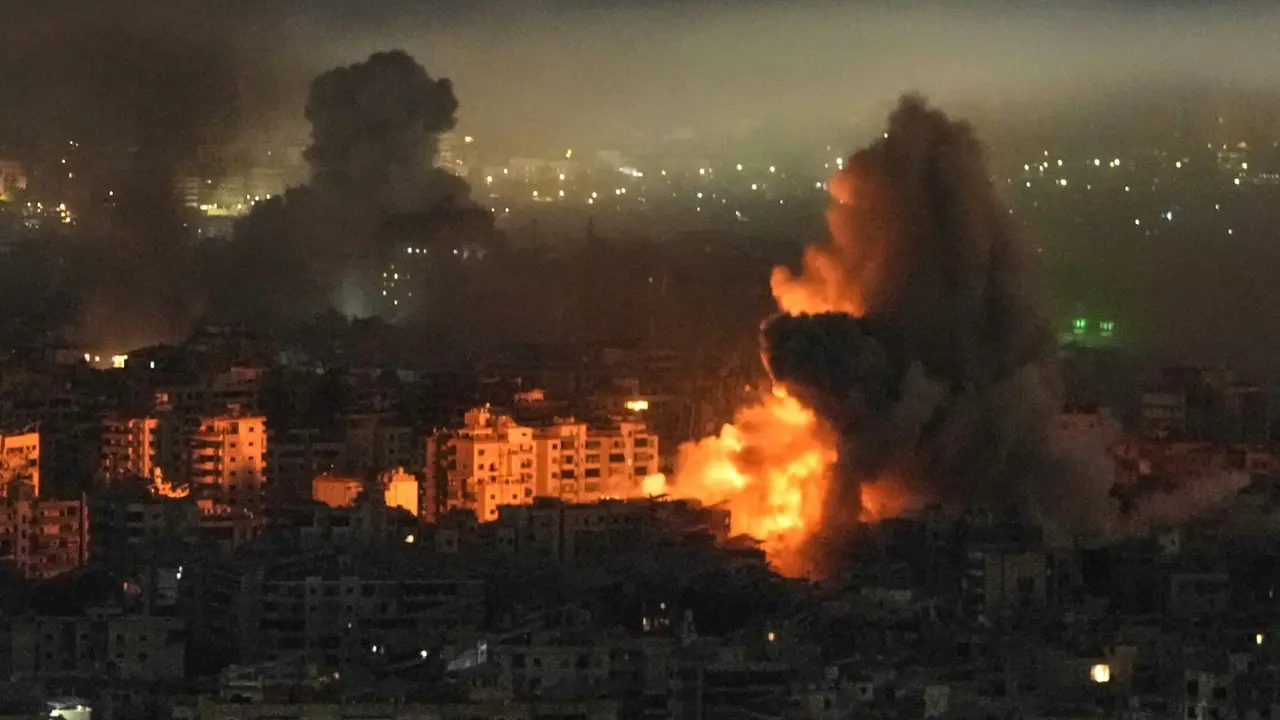
Tehran: The United States (US) and Iran intensified their confrontation across the Middle East on Friday, launching a new wave of attacks on infrastructure and military sites as both sides fought to gain control over the Strait of Hormuz. According to reports, the US Central Command (CENTCOM) broadened the air strikes by targeting bridges and energy facilities in southern Iran and destroying a surveillance tower at a strategic port, following through on President Donald Trump’s warning that Tehran’s grip on the vital waterway would face mounting pressure.
In response to the US strikes, Iran fired missiles at US-allied states in the Gulf, including Qatar and Kuwait, where a key water desalination plant was damaged. The exchange has pushed the conflict that began over four months ago into even more dangerous territory. Since the interim ceasefire now has collapsed and no clear path to de-escalation has emerged, the focus of the war has shifted squarely to the narrow strait through which about a 5th of the world’s traded oil and gas once passed in peacetime.
In a statement, the US CENTCOM stated late on Friday that it had carried out its 7th consecutive night of strikes to degrade Iran’s military capacity. According to Iranian state television, the latest raids hit bridges overnight in Iran’s southern Hormozgan province, including Bandar Khamir, a coastal city on the Strait of Hormuz, which was among the areas targeted.
The highway and railway bridge attacks appeared designed to cut off Bandar Abbas, Iran’s main port, from road and rail links running into the country’s central region and onward to Tehran. Not only this, the Iranian government, for the first time, also acknowledged strikes on power infrastructure. The Energy Ministry issued an appeal for residents in southern provinces “experiencing extreme heat” to reduce electricity use, though it did not detail which facilities had been hit.
Advertisement
The Iranian officials confirmed that at least 46 people have been killed and over 400 wounded in recent US strikes. Further, 8 of those deaths occurred in a single strike on a bridge on Friday. The US officials separately acknowledged that 13 additional American service members, including 10 Army soldiers and 3 Navy sailors, had been injured since Monday. At least 14 US service members have been killed and 427 have been wounded since the war began on February 28.
Tower At Iran's Chabahar Port Destroyed
The CENTCOM asserted that dozens of military and military-related sites were hit on Friday. The most visible strike collapsed a tower at Iran’s Chabahar port on the Gulf of Oman, a crucial trade outlet for landlocked Afghanistan that Tehran has operated with Indian support. The facility has been struck by US aircraft repeatedly in recent weeks, leading to the collapse of the tower.
Advertisement
IRNA, Iran’s state news agency, reported the tower oversaw commercial traffic into the port. The US military offered a different story, saying it was part of a maritime surveillance network run by Iran’s paramilitary Revolutionary Guard to “track and target” commercial vessels moving through the strait.
Iran Retaliates Against Gulf Allies And Mediators
Following the American strikes, Iran responded by launching missiles into several US-allied nations. Qatar was hit twice on Friday, with the government urging residents to take shelter as air defences engaged incoming projectiles. The explosions were heard overhead and Qatar’s Interior Ministry stated that falling debris wounded a child. Qatar, along with Pakistan, has been acting as a key mediator in efforts to end the war.
Kuwait and Bahrain were also targeted in the early hours, with Kuwaiti officials confirming that Iran struck a power and water desalination plant, causing extensive damage to the station. About 90% of the country’s drinking water comes from desalination. Kuwait has assured that the blaze had been put out by the firefighting teams and efforts were being made to restore operations.
Jordan’s military reported intercepting 3 missiles launched by Iran on Friday morning. In northern Iraq, explosions were heard in Irbil and Sulaymaniyah in the semi-autonomous Kurdish region as air defences engaged incoming fire. An official stated that the apparent target was the Iranian Kurdish dissident group Komala, with at least 9 people killed and others wounded. Tehran has not claimed the attack but has struck Komala positions in the past.
The British military also reported an attack on a tanker transiting the Strait of Hormuz close to Oman. The UK Maritime Trade Operations (MTO) centre said that the vessel suffered minor damage and no crew was injured. Tehran did not immediately acknowledge the incident, though it has openly targeted ships using the route in recent days.
Oil Prices Surge As Shipping Through Strait Collapses
The fighting has centred on control of the Strait of Hormuz, with Iran saying that the waterway must be under its sole authority and that ships should pay fees to Tehran, despite the long-standing status as an international passage. After the US and Israel launched the war on February 28, Tehran effectively closed the strait to commercial traffic, giving it leverage in any negotiations.
Meanwhile, the impact has been immediate on the stock markets, as the price of oil climbed above $86 a barrel on Friday, close to the highest level in a month. Crossings through the strait fell to a 3-week low of just 8 vessels on Thursday, according to MarineTraffic.com. Though more regional energy is now moving by pipeline, the volume is not enough to offset the drop in shipping.
The US has also reimposed a naval blockade on Iranian ports to halt crude exports and has returned to threats against Iranian power stations and bridges in an effort to force Tehran to ease its hold on the strait.
Trump Claims Progress As Political Pressure Mounts
In a televised address to the American public on Thursday evening, Trump insisted the campaign was succeeding, saying, “We are likewise winning big in Iran, and you will see the fruits of that labor very, very shortly.”
Before the hostilities began, Washington had been engaged in talks with Tehran over its nuclear programme. Trump now faced growing domestic pressure to bring the conflict to a close and avoid the kind of prolonged Middle East entanglement he campaigned against.
The Iranian officials stated that the US strikes have caused mounting civilian casualties, while Washington points to damage to Iran’s military and surveillance capabilities as evidence the pressure is working. As both sides were trading blows and no negotiations were underway, the risk of further escalation around the Strait of Hormuz remains high.