
US Intel Report Says Iran Now Has Powers To Shut Strait Of Hormuz At Will
US intelligence warns Iran now holds the power to shut the Strait of Hormuz, threatening global trade and energy security despite ongoing negotiations.
- World News
- 3 min read

;'%3e%3cpath%20d='m8,15.99c4.41,0,7.99-3.58,7.99-7.99S12.41,0,8,0,0,3.59,0,8s3.58,7.99,7.99,7.99Z'%20style='stroke:%23fff;%20stroke-miterlimit:10;%20stroke-width:.02px;'/%3e%3cpath%20d='m3.08,3.37l3.82,5.11-3.84,4.15h.87l3.37-3.64,2.72,3.64h2.94l-4.04-5.39,3.58-3.87h-.86l-3.1,3.35-2.5-3.35h-2.94Zm1.27.64h1.35l5.97,7.99h-1.35l-5.97-7.99Z'%20style='fill:%23fff;'/%3e%3c/g%3e%3c/svg%3e)


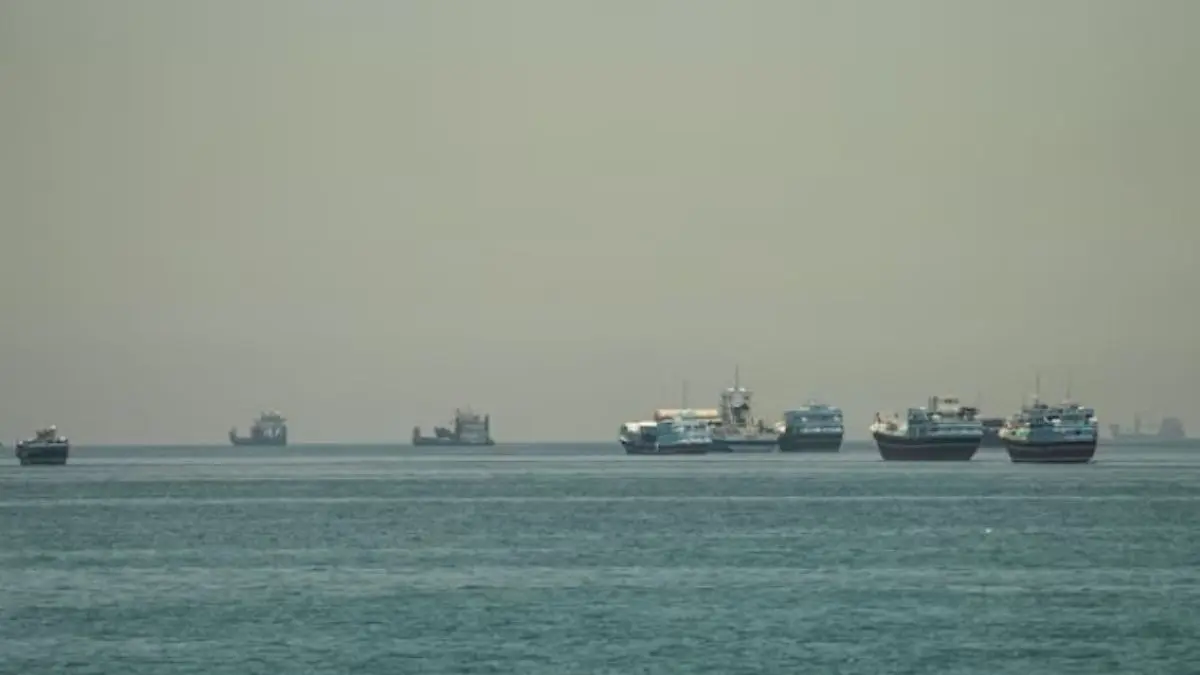
Washington DC [US]: US intelligence agencies' assessment revealed on Wednesday that Iran has acquired the ability after the war to shut the Strait of Hormuz at will, sources told CNN.
Iran's ability to hurt the economy using the critical waterway can crop up again regardless of the framework agreement to be signed on Friday, the assessment revealed.
Iran has now become the US' Achilles heel as it has learnt to leverage the strikes on Gulf countries' energy infrastructure, the sources familiar with the assessment told CNN. Iran had struck US bases in the neighbouring countries- the bases which were meant to be the safety guarantors by the US.
"We have now handed Iran de facto control over the strait - a weapon more powerful than any nuke," one of the sources familiar with the US intelligence assessments told CNN.
Advertisement
The US has had to negotiate with Iran intensively to fully re-open the strait, underscoring the Iranians' continued leverage.
US Vice President JD Vance, while speaking on the Iran deal to be signed on Friday in Switzerland, "It says, one, Iran can't have a nuclear weapon, two, the Straits of Hormuz are open, and number 3, there are all of these benefits contemplated that the Iranians can get if they behave... If they don't [behave], they don't get anything," without elaborating what the benefits are.
Advertisement
Uncertainty over the contents of the agreement and other risks are also likely to keep traffic through the Strait of Hormuz to a trickle for weeks or months, shipping industry officials and experts who track ship movements told CNN.
Meanwhile, US President Donald Trump on Tuesday vowed to publicly release the text of the agreement with Iran "in a couple of days" and even floated reciting the entire document in front of cameras. The US President indicated that he is waiting for a "formal setting" before revealing it publicly.
"I'd like to get a formal setting first before we do that, but I have no problem with that. It's a great document," he said during a meeting with the leader of the United Arab Emirates, President Mohamed bin Zayed Al Nahyan, on the sidelines of the G7 summit in France.
Detailing the core substance of the accord, the US President added, "Here's what it says: Iran will never have a nuclear weapon."
The President signed the agreement electronically on Sunday, but the full text hasn't been publicly disclosed. Neither members of Congress nor Trump's fellow world leaders have read it in full. But the US President downplayed any secrecy.