
COVID-19: US begins study to determine allergic reaction risk in Moderna, Pfizer vaccines
The US National Institue of Health said a clinical trial is underway to determine the risk of allergic reactions to COVID-19 vaccines made by Moderna and Pfizer
- World News
- 3 min read

;'%3e%3cpath%20d='m8,15.99c4.41,0,7.99-3.58,7.99-7.99S12.41,0,8,0,0,3.59,0,8s3.58,7.99,7.99,7.99Z'%20style='stroke:%23fff;%20stroke-miterlimit:10;%20stroke-width:.02px;'/%3e%3cpath%20d='m3.08,3.37l3.82,5.11-3.84,4.15h.87l3.37-3.64,2.72,3.64h2.94l-4.04-5.39,3.58-3.87h-.86l-3.1,3.35-2.5-3.35h-2.94Zm1.27.64h1.35l5.97,7.99h-1.35l-5.97-7.99Z'%20style='fill:%23fff;'/%3e%3c/g%3e%3c/svg%3e)


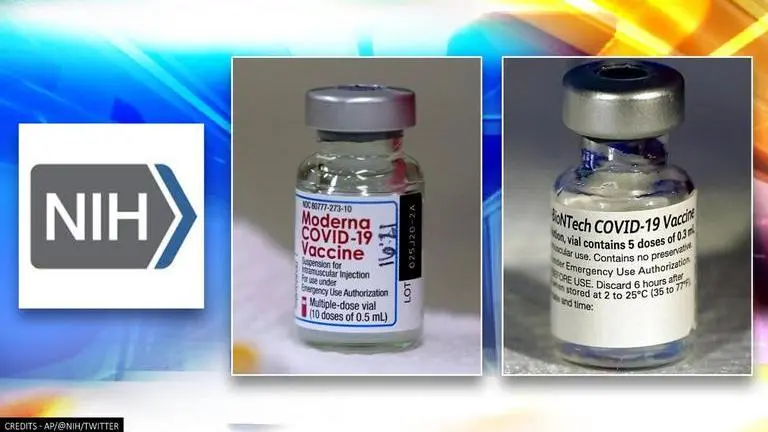
The US National Institue of Health on April 7 said a clinical trial is underway to determine the risk of allergic reactions to COVID-19 vaccines made by Moderna and Pfizer Inc. According to a press release, the study will enroll 3,400 adults between the ages of 18 to 69, with about 60 per cent of participants having a history of severe allergic reaction to food, insect stings or immunotherapy. The study will determine whether people who are highly allergic or have a mast cell disorder are at increased risk for an immediate, systemic allergic reaction to Moderna or Pfizer-BioNTech vaccines.
As per the press note, the NIH investigators will additionally also examine the biological mechanism behind the reactions and whether a genetic pattern or other factors can predict who is at most risk. Participants will be assigned at random to receive either the Pfizer or the Moderna vaccine. Initially, neither the participants nor the study team will know who is receiving a vaccine or placebo, or which vaccine is being administered. All participants ultimately will receive a full two-dose course of either the Pfizer-BioNTech vaccine or the Moderna vaccine.
News: NIH begins study of allergic reactions to Moderna, Pfizer-BioNTech COVID-19 vaccines https://t.co/9eXAqa8wUW
— NIH (@NIH) April 7, 2021
‘Benefits of vaccination far outweigh risks’
The participants will then be observed for at least 90 minutes after each injection in case any type of reaction occurs. Study staff will collect blood, urine and nasal swabs from participants before each injection, and blood and urine after each injection. If a significant number of systemic allergic reactions to either or both vaccines occur during the trial, investigators will analyze these biological samples to examine possible mechanisms for the reactions and whether certain genetic patterns are associated with higher risk.
Dr Anthony Fauci, director of the National Institute of Allergy and Infectious Diseases (NIAID), said, “The information gathered during this trial will help doctors advise people who are highly allergic or have a mast cell disorder about the risks and benefits of receiving these two vaccines. However, for most people, the benefits of COVID-19 vaccination far outweigh the risks”.
Meanwhile, it is worth noting that the study comes after several allergic reaction incidents, including serious episodes, known as anaphylaxis, have been reported in the US after vaccinations of Pfizer and Moderna shots. Back in January, the US CDC had also said that allergic reactions are occurring at a rate of 11.1 per cent per one million vaccinations. A recent report by CDC, on the other hand, said that the Pfizer and Moderna Covid-19 vaccines provide highly effective protection under real-world conditions.