
Iranian Navy attempts seizure of commercial tankers in Arabian Sea, US Navy responds
Since 2021, the Iranian Navy has engaged in multiple acts of harassment, attacks, and seizures against nearly 20 internationally flagged merchant vessels.
- World News
- 4 min read

;'%3e%3cpath%20d='m8,15.99c4.41,0,7.99-3.58,7.99-7.99S12.41,0,8,0,0,3.59,0,8s3.58,7.99,7.99,7.99Z'%20style='stroke:%23fff;%20stroke-miterlimit:10;%20stroke-width:.02px;'/%3e%3cpath%20d='m3.08,3.37l3.82,5.11-3.84,4.15h.87l3.37-3.64,2.72,3.64h2.94l-4.04-5.39,3.58-3.87h-.86l-3.1,3.35-2.5-3.35h-2.94Zm1.27.64h1.35l5.97,7.99h-1.35l-5.97-7.99Z'%20style='fill:%23fff;'/%3e%3c/g%3e%3c/svg%3e)


US forces recently prevented two attempted commercial tanker seizures by the Iranian Navy in the Arabian Sea. The incidents occurred on July 5 and involved Iranian vessels opening fire in one instance. The US Navy's prompt response and strategic deployment ensured the safety and security of the targeted tankers operating in international waters.
In the first incident, an Iranian naval vessel approached the Marshall Islands-flagged oil tanker TRF Moss in the Gulf of Oman. This incident unfolded in international waters, raising concerns about potential aggression. However, the situation de-escalated swiftly when the US Navy guided-missile destroyer USS McFaul (DDG 74) promptly arrived on the scene. The Iranian vessel, faced with the overwhelming presence of US forces, chose to depart the area, ensuring the safety of the commercial tanker and its crew.
Bahamian-flagged oil tanker makes distress call
Approximately three hours later, the US Navy received a distress call from the Bahamian-flagged oil tanker Richmond Voyager. The tanker, en route to the Arabian Sea and transiting international waters near the coast of Muscat, Oman, came under direct threat from another Iranian naval vessel. According to the US Navy, the Iranian vessel approached within one mile of the Richmond Voyager and demanded the tanker halt its journey.
On July 5, U.S. forces prevented two attempted commercial tanker seizures by the Iranian Navy after the Iranians had opened fire in one of the incidents near the coast of Oman. Both of these incidents occurred in international waters. Read more ⬇️ https://t.co/HJNTzKtsXv pic.twitter.com/rvzDcATCQq
— U.S. Naval Forces Central Command/U.S. 5th Fleet (@US5thFleet) July 5, 2023
In a remarkable display of coordination and responsiveness, the crew of USS McFaul steered the destroyer toward Richmond Voyager at maximum speed, effectively deterring further aggression. Prior to the arrival of the US Navy vessel, Iranian personnel opened fire, damaging the tanker's hull near crew living spaces. As per reports, there were no casualties or significant damage, and the Iranian naval vessel retreated once McFaul reached the scene.
Advertisement
Implications and Prior Actions undertaken by the US

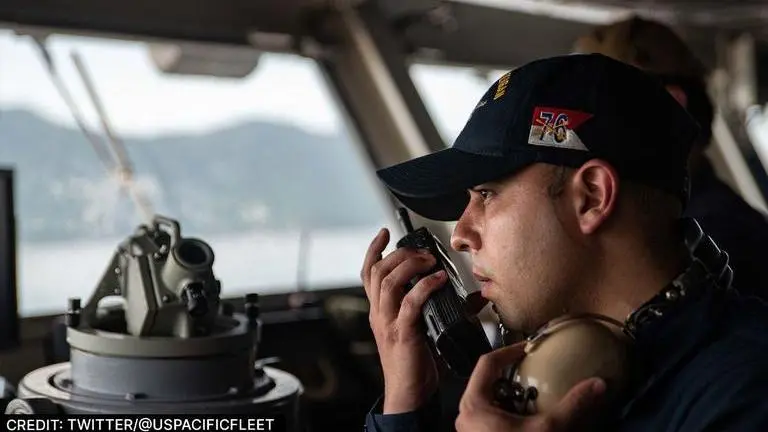
Image: Twitter/@USPacificFleet (The US Navy's active presence and increased rotation of ships and aircraft in the Strait of Hormuz were initiated in May)
The US Navy's active presence and increased rotation of ships and aircraft in the Strait of Hormuz, initiated in May, were implemented as a response to an escalation in Iranian merchant vessel seizures. These efforts align with broader multinational initiatives, such as the International Maritime Security Construct, aimed at deterring threats to commercial shipping and ensuring the safety of vital maritime routes. Vice Admiral Brad Cooper, commander of US Naval Forces Central Command,US 5th Fleet, and Combined Maritime Forces, lauded the exceptional response of the McFaul crew in preventing another potential seizure. The US remains committed to protecting navigational rights and preserving stability in these crucial waters.
Iran's pattern of aggression
Since 2021, Iran has engaged in multiple acts of harassment, attacks, and seizures against nearly 20 internationally flagged merchant vessels. Such repeated actions pose a significant threat not only to regional maritime security but also to the global economy. The international community must remain vigilant and united in countering Iran's aggressive behaviour, ensuring the uninterrupted flow of maritime trade and upholding the principles of navigational freedom.
Advertisement
The successful prevention of the Iranian Navy's attempted seizure of commercial tankers by US forces highlights the importance of a robust and proactive approach to maintaining maritime security. Through increased presence, coordination with partner nations, and rapid response capabilities, the US Navy continues to protect vital shipping lanes and safeguard the interests of global maritime trade. Efforts to deter and address Iranian aggression underscore the collective commitment to a stable and secure maritime environment.