
US advocates permanent ceasefire, peaceful negotiations between Afghanistan and Taliban
The US on August 8 condemned the Taliban’s violent offensive against Afghanistan cities and called on the insurgent group to agree to a permanent ceasefire.
- World News
- 3 min read


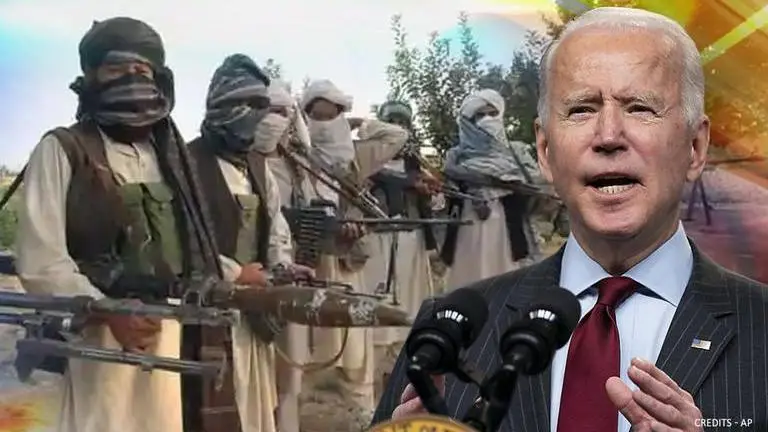
The US on August 8 condemned the Taliban’s violent offensive against Afghan cities and called on the insurgent group to agree to a permanent ceasefire. According to ANI, the US Embassy in Afghan condemned the violence and said that the “unlawful seizure” of Zaranj, the capital of Afghanistan’s Nimroz province, the attack on Sheberghan, capital of Jowzjan province, and continuing efforts to take over Lashkar Gah in Helmand and provincial capitals elsewhere. It added that the Taliban's actions to forcibly impose its rule are unacceptable and contradict its claim to support a negotiated settlement in the Doha peace process.
“They demonstrate a wanton disregard for the welfare and rights of civilians and will worsen this country’s humanitarian crisis”, the US Embassy added.
“We call for the Taliban to agree to a permanent and comprehensive ceasefire and to engage fully in peace negotiations to end the suffering of the Afghan people and pave the way for an inclusive political settlement that benefits all Afghans and ensures that Afghanistan does not again serve as a safe haven for terrorists,” it further said.
Further, the US Embassy has also asked US citizens to leave Afghan immediately using available commercial flight options. It said that given the security conditions and reduced staffing, the Embassy’s ability to assist US citizens in Afghanistan is extremely limited even within Kabul.
Taliban captures 3rd provincial capital
The statement comes as the Taliban captured the third provincial capital Kunduz in the last three days. The Taliban has intensified its campaign to defeat the US-backed government as foreign forces complete their withdrawal after 20 years of war. The insurgent group has taken dozens of districts and border crossings in recent months and put pressure on several provincial capitals, including Herat in the west and Kandahar in the south, as foreign troops withdraw.
The Taliban fighters have even assassinated the government's top media and information officer in the capital city of Kabul. They even launched an attack on Afghanistan's acting defence minister General Bismillah Khan Mohammadi, in which eight people were killed and 20 others suffered injuries. The defence minister however escaped unhurt in the attack claimed by the Taliban. Taliban’s offensives first began after US President Joe Biden announced a complete retraction of American and foreign troops from the war-torn land. The fundamentalist group, which ruled Afghanistan with an iron fist in the 1990s, soon started gaining ground, seizing major cities and key border points. The offensives triggered a retaliatory reaction from the Afghan military which, supported by the US, launched targeted strikes at the insurgent’s hideouts.