
US says 'not in position' to provide direct monetary aid to Afghanistan via Taliban regime
Officials from the US State Department, Treasury and the White House have been constantly monitoring about Afghanistan's finances since the Taliban overhaul.
- World News
- 3 min read

;'%3e%3cpath%20d='m8,15.99c4.41,0,7.99-3.58,7.99-7.99S12.41,0,8,0,0,3.59,0,8s3.58,7.99,7.99,7.99Z'%20style='stroke:%23fff;%20stroke-miterlimit:10;%20stroke-width:.02px;'/%3e%3cpath%20d='m3.08,3.37l3.82,5.11-3.84,4.15h.87l3.37-3.64,2.72,3.64h2.94l-4.04-5.39,3.58-3.87h-.86l-3.1,3.35-2.5-3.35h-2.94Zm1.27.64h1.35l5.97,7.99h-1.35l-5.97-7.99Z'%20style='fill:%23fff;'/%3e%3c/g%3e%3c/svg%3e)


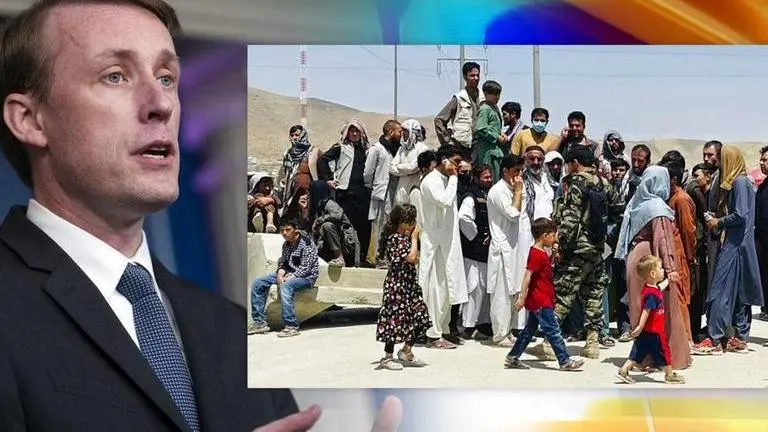
The United States is "not yet in a position" to allot monetary assistance directly through the current leadership in Afghanistan, asserted US National Security Advisor Jake Sullivan on Sunday. During an interview with CNN broadcaster, NSA Sullivan stated that the decision will remain unchanged until the US sees "a substantially improved approach to everything, from the inclusive government to other elements." Officials from the US State Department, Treasury and the White House have been constantly monitoring about Afghanistan's finances since the Taliban overhaul in August.
Speaking to CNN, Sullivan highlighted that until the said demands of government inclusivity and human rights are met in Afghanistan the US will continue to "focus on...providing funding...through international and non-government organisations." Emphasising that if Washington sees it as a significant need to release humanitarian aid and other disbursements for the war-torn nation, Sullivan stated that the best way to "actually help the people of Afghanistan without creating a circumstance in which some of those funds could be used for purposes that are problematic to the national security interests of the US."
It is to be noted that the international community, including global financial organisations like World Bank and International Monetary Fund (IMF), have refused to accept the Islamic Emirati after it was formed on 8 September. The global leaders have vehemently condemned the lack of reflection of the "Afghan society" in the outfit-led cabinet of Afghanistan. Additionally, much of the Afghan central funds worth USD10 billion in assets are parked overseas, which has now become a key for the US to assert pressure on the Taliban cabinet to respect women's rights and other rules of law.
Financial aid to Afghanistan frozen after Taliban takeover
The Taliban seized control of Afghanistan on 15 August. Since then the country has been grappling with humanitarian and economic crises. The international communities refused to recognise the Taliban-led government due to its widespread engagement in violation of human rights and inefficiency to form an inclusive government. Lack of recognition based on international standards has also led the World Bank and IMF to suspend aid and disbursement of contingent funds to the war-torn country. In August, the US also stopped $9.4 billion reserves to the country's central bank, as per the New York Post. Besides, the Financial Task Force warned its 39 member nations to block Talibani assets.
Advertisement
For #Afghanistan, the immediate focus should be on delivering humanitarian aid to the Afghan people currently facing severe economic hardship. The IMF stands ready to work with the international community in advocating for urgent actions to stall a looming humanitarian crisis. pic.twitter.com/C4CsbaOknu
— Gerry Rice (@IMFSpokesperson) September 16, 2021
Afghanistan could plummet into serious poverty by 2022 following the dearth of adequate funds and governance, stated the United Nations Development Programme (UNDP). Currently, the country is dwindling on the "brink of universal poverty," with food and fuel prices soaring across Afghanistan. Additionally, blocked bank accounts and the ability to make small withdrawals have pushed the country towards catastrophic deterioration fuelled by rising unemployment and inflation. Moreover, Afghanistan is also grappling with the COVID-19 pandemic after the driest drought this season now stepping into a harsh winter. As per International Monetary Fund (IMF) spokesperson Gerry Rice, as said in September, Afghanistan should focus on developing an immediate economic response program to counter the looming crisis and restore normalcy in the lives of the most vulnerable populations.