
US Senate Passes Russia Sanctions Bill, Could Trigger 100% Tariff on India
The Senate approved the Lindsey O Graham Sanctioning Russia and Iran Act of 2026 by an overwhelming 86-11 vote. Under the provisions, the US president would be granted discretionary authority to impose tariffs of up to 100% on imports from the world's top 5 buyers of Russian crude oil or natural gas
- World News
- 4 min read

;'%3e%3cpath%20d='m8,15.99c4.41,0,7.99-3.58,7.99-7.99S12.41,0,8,0,0,3.59,0,8s3.58,7.99,7.99,7.99Z'%20style='stroke:%23fff;%20stroke-miterlimit:10;%20stroke-width:.02px;'/%3e%3cpath%20d='m3.08,3.37l3.82,5.11-3.84,4.15h.87l3.37-3.64,2.72,3.64h2.94l-4.04-5.39,3.58-3.87h-.86l-3.1,3.35-2.5-3.35h-2.94Zm1.27.64h1.35l5.97,7.99h-1.35l-5.97-7.99Z'%20style='fill:%23fff;'/%3e%3c/g%3e%3c/svg%3e)


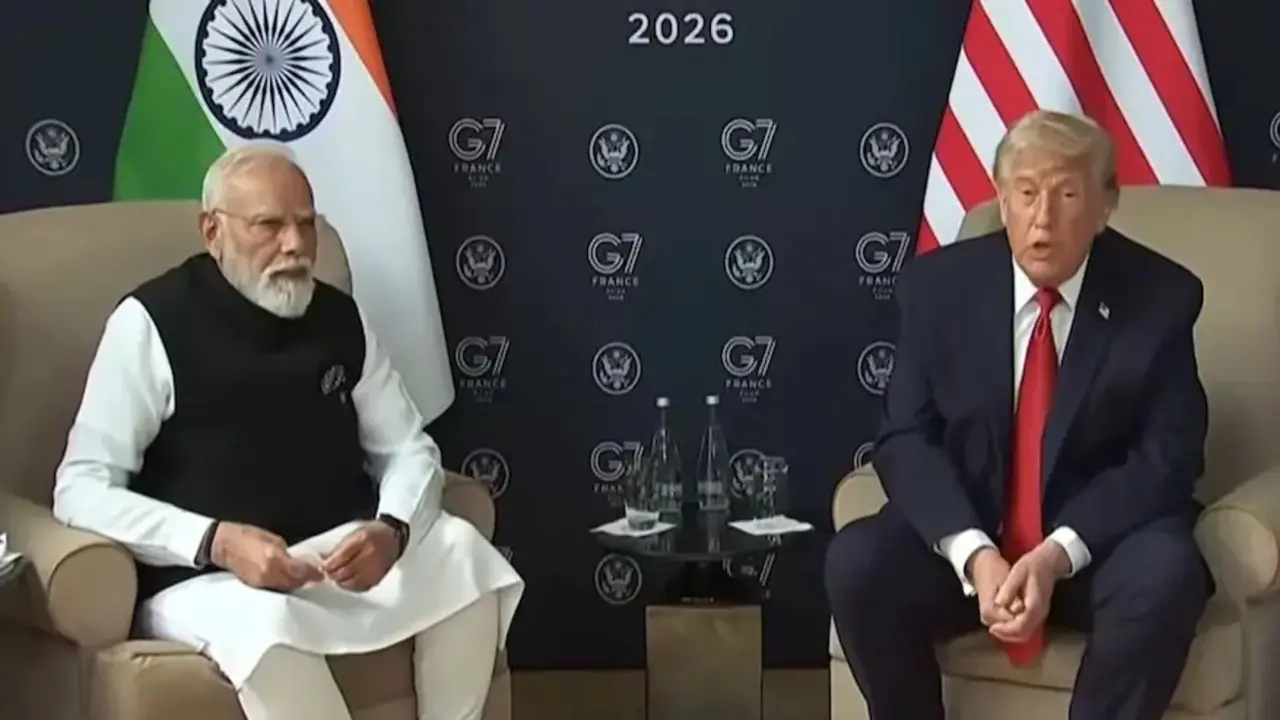
Washington, DC, US: The US Senate on Friday passed a bipartisan bill that could authorise President Donald Trump to levy tariffs of up to 100% on goods from countries, including India and China, that continue importing Russian oil and gas, maintaining that such trade helps sustain Moscow's economy and fund its military operations in Ukraine.
The Senate approved the Lindsey O Graham Sanctioning Russia and Iran Act of 2026 by an overwhelming 86-11 vote. Named after the late Republican Senator Lindsey Graham, one of its principal architects, the legislation aims to escalate economic pressure on Russia and Iran while targeting nations that maintain major energy trade ties with Moscow.
Under the provisions, the US president would be granted discretionary authority to impose tariffs of up to 100% on imports from the world's top five buyers of Russian crude oil or natural gas.
Beyond targeting foreign energy buyers, the legislation outlines fresh sanctions against Russian President Vladimir Putin, senior political and military officials, financial institutions, energy developments and connected entities linked to Russia's war effort.
Advertisement
It further extends US sanctions to older and reflagged oil tankers allegedly utilised by Russia to circumvent global restrictions and maintain energy export revenues. The broader objective is to restrict the financial flows supporting Russia's economy and military campaign.
The legislation empowers the US president to enforce tariffs of up to 100% on goods imported from the top five purchasers of Russian oil or natural gas. India remains one of the largest buyers of Russian crude globally, alongside China.
Advertisement
The measure seeks to present energy-importing nations with a choice between continuing to purchase discounted Russian energy or retaining access to the lucrative US market.
India expanded its procurement of discounted Russian crude following the outbreak of the Russia-Ukraine conflict in 2022 to secure national energy requirements during global market turmoil.
While Russia was historically not a traditional primary supplier for India, the availability of discounted crude allowed Indian refiners to optimise raw material costs and ensure uninterrupted domestic supplies, particularly amid transit disruptions in the Strait of Hormuz.
New Delhi has consistently maintained that its energy procurement strategy is guided strictly by national interest, energy security and the imperative to guarantee affordable and reliable energy for its citizens.
While Washington has previously raised concerns regarding global purchases of Russian oil, Indian refiners have maintained a pragmatic stance focused on domestic energy stability.
If broadly applied, a 100% tariff could raise import costs for US buyers across key trade sectors, including engineering goods, pharmaceuticals, chemicals, textiles and auto components.
Should US importers seek alternative suppliers in response to higher costs, Indian commercial exporters may explore market diversification or adjust operational strategies to maintain their global competitiveness.
Although the legislation secured strong Senate support, some lawmakers expressed reservations regarding the expansion of presidential tariff authority.
An amendment proposed by Republican Senator Rand Paul and Wyden seeking to remove the new tariff authority was defeated by the Senate. Senator Raphael Warnock, who had raised concerns regarding the tariff framework, confirmed receiving a written commitment from the Trump administration detailing operational safeguards.
The bill also incorporates strategic measures targeting Iran by extending the Iran Sanctions Act of 1996 through 2031 to sustain pressure on Tehran's energy sector.
The bipartisan package thus combines regulatory measures against two countries that Washington views as major geopolitical adversaries.
Under the draft terms, countries may qualify for an exemption if they account for less than 15% of Russia's total natural gas exports and are actively taking steps to reduce their reliance on Russian energy.
The bill also grants the US president full authority to waive sanctions or tariff restrictions if the administration determines such an action aligns with US national interest.
The proposed legislation now moves to the US House of Representatives for consideration when lawmakers return later this month.
House approval is required before the measure can be sent to Trump for signature, leaving significant legislative and diplomatic processes ahead before any potential tariff measures could take effect.