
US Supreme Court Revokes Tariffs: What Are Trump's Options Now
After the Supreme Court heard arguments in the case in November 2025, Trump had said that he would consider alternatives if the top court rules against him on tariffs. "We'll have to develop a 'game two' plan," he had then told reporters.
- World News
- 2 min read

;'%3e%3cpath%20d='m8,15.99c4.41,0,7.99-3.58,7.99-7.99S12.41,0,8,0,0,3.59,0,8s3.58,7.99,7.99,7.99Z'%20style='stroke:%23fff;%20stroke-miterlimit:10;%20stroke-width:.02px;'/%3e%3cpath%20d='m3.08,3.37l3.82,5.11-3.84,4.15h.87l3.37-3.64,2.72,3.64h2.94l-4.04-5.39,3.58-3.87h-.86l-3.1,3.35-2.5-3.35h-2.94Zm1.27.64h1.35l5.97,7.99h-1.35l-5.97-7.99Z'%20style='fill:%23fff;'/%3e%3c/g%3e%3c/svg%3e)


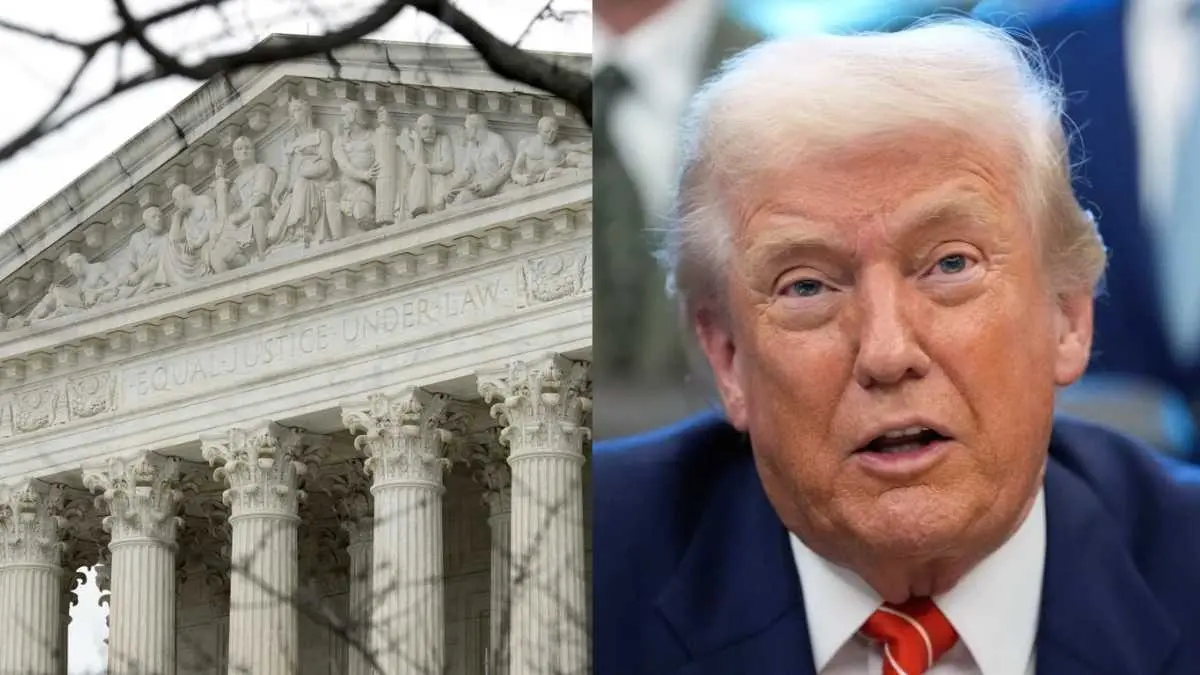
New Delhi: After the Supreme Court in the United States struck down Donald Trump's emergency tariffs, the Trump administration has some alternatives at hand, to stick to their tariff regime, through taking recourse to legal justification to keep them in place.
After the Supreme Court heard arguments in the case in November 2025, Trump had said that he would consider alternatives if the top court rules against him on tariffs. "We'll have to develop a 'game two' plan," he had then told reporters.
Treasury Secretary Scott Bessent and other administration officials said that the United States would invoke other legal justifications to retain as many of Trump's tariffs as possible.
Among others, these include a statutory provision that permits tariffs on imported goods that threaten U.S. national security and another that allows retaliatory actions including tariffs against trading partners that the Office of the U.S. Trade Representative determines have used unfair trade practices against American exporters.
Advertisement
The top court's 6-3 ruling struck down Trump's use of the International Emergency Economic Powers Act (IEEPA) to impose tariffs on most US trading partners, citing concerns over executive overreach.
These tariffs, which were imposed on April 2025, by the Trump administration, was claimed to address the US trade deficit and protect domestic industries. However, the court ruled that these actions exceeded his authority, and even questioned whether the IEEPA allows such tariff powers.
Advertisement
Chief Justice John Roberts had reported said, "The Framers did not vest any part of the taxing power in the Executive Branch."
Justice Brett Kavanaugh had said, "The tariffs at issue here may or may not be wise policy. But as a matter of text, history, and precedent, they are clearly lawful.”
The Supreme Court's decision might have huge implications for Trump's trade policy and the US economy. Trump may face challenges in renegotiating trade deals, with the tariffs struck down, and could lose a key bargaining chip. The ruling also raised questions about the limits of executive power and the role of Congress in shaping trade policy.
Scott Bessent stated that the Treasury Department could cover possible refunds if required, expressing confidence that the Supreme Court would uphold the tariffs. However, with the ruling going against Trump, importers are expected to seek refunds from the US Customs and Border Protection for duties paid over the past year.