
Tesla 'autopilot' mode was not active on Texas road where car crashed, reveals report
“All aspects of Tesla crash are probed as NTSB determines the cause, with intent of issuing safety recommendations to prevent similar crashes," NTSB said.
- World News
- 3 min read


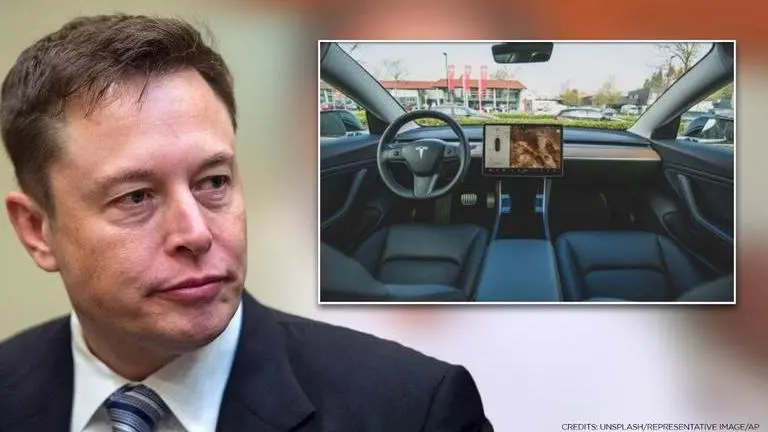
The advanced self-driving automated steering system of Tesla ‘autopilot’ was not available at the time of the ‘driverless’ Tesla car crash in the Houston-metro area as the street lacked demarcated lane lines for it to operate, and the driver had not purchased the Full Self-Driving Computer Installations, a report released by US National Transportation Safety Board on Monday said. Although it is yet to conclude what caused the crash. In the federal agency’s investigation, it was found that ahead of the fatal Tesla Model S crash that happened a few weeks ago in Texas, the driver may have been driving the car on their own. Authorities found that the self-driving feature in Tesla couldn't have been deployed, as the owner had not even purchased the Full Self-Driving kit.
NTSB issued Monday the preliminary report for its ongoing investigation of the fatal April 17, 2021, crash of a Tesla in Spring, Texas; https://t.co/54MGXqVKpM
— NTSB_Newsroom (@NTSB_Newsroom) May 10, 2021
"The vehicle was equipped with Autopilot, Tesla’s advanced driver assistance system. Using Autopilot requires both the Traffic Aware Cruise Control and the Autosteer systems to be engaged. NTSB tests of an exemplar car at the crash location showed that Traffic Aware Cruise Control could be engaged but that Autosteer was not available on that part of the road," read a part of the report.
Earlier, Tesla CEO Elon Musk had argued similarly on Twitter, saying, “Data logs recovered so far show Autopilot was not enabled & this car did not purchase FSD. Moreover, standard Autopilot would require lane lines to turn on, which this street did not have.” Musk implied that the street where the Tesla crashed, had no marked lane lines for the autopilot to operate. Tesla’s Autopilot system known as ‘Autosteer’ requires well-denoted lines to remain centered within a lane whilst driving.
Although strangely, at the time of the collision from the tree, there was nobody in the driver’s seat driving the Tesla, the Houston area police had told the local reporters following the crash. The car, they said, had swerved uncontrollably off the road, collided with a tree, and had caught ablaze. In a statement to CNBC, Tesla CEO Elon Musk and the automaker’s vice president of vehicle engineering, Lars Moravy had both denied that the motor vehicle’s auto seer feature was behind the accident.
“All aspects of the crash remain under investigation as the NTSB determines the probable cause, with the intent of issuing safety recommendations to prevent similar crashes,” NTSB report.
The NTSB tesla report “The crash trip originated at the owner’s residence near the end of a culdesac. Footage from the owner’s home security camera shows the owner entering the car’s driver’s seat and the passenger entering the front passenger seat.” $tsla https://t.co/27Hq8EyxzQ
— Ross Gerber (@GerberKawasaki) May 10, 2021
'Autoseer' could not be deployed
In its preliminary finding, the NTSB extracted the surveillance footage of the street and found that the victim occupants were driving the 2019 Model S of Tesla car company. They then conducted the test drives on the same road and attempted to engage in the autopilot feature. The agency found that it could not be activated successfully. ″NTSB tests of an exemplar car at the crash location showed that Traffic-Aware Cruise Control could be engaged but that Autosteer was not available on that part of the road,” the report concluded. It added, “The NTSB continues to collect data to analyze the crash dynamics, postmortem toxicology test results, seat belt use, occupant egress, and electric vehicle fires.”