
US calls for 'imminent' return to Vienna nuclear talks with Iran
The US has called for an “imminent” return to the Vienna talks to revive a nuclear deal with Iran, which has been in a deadlock since June.
- World News
- 3 min read

;'%3e%3cpath%20d='m8,15.99c4.41,0,7.99-3.58,7.99-7.99S12.41,0,8,0,0,3.59,0,8s3.58,7.99,7.99,7.99Z'%20style='stroke:%23fff;%20stroke-miterlimit:10;%20stroke-width:.02px;'/%3e%3cpath%20d='m3.08,3.37l3.82,5.11-3.84,4.15h.87l3.37-3.64,2.72,3.64h2.94l-4.04-5.39,3.58-3.87h-.86l-3.1,3.35-2.5-3.35h-2.94Zm1.27.64h1.35l5.97,7.99h-1.35l-5.97-7.99Z'%20style='fill:%23fff;'/%3e%3c/g%3e%3c/svg%3e)


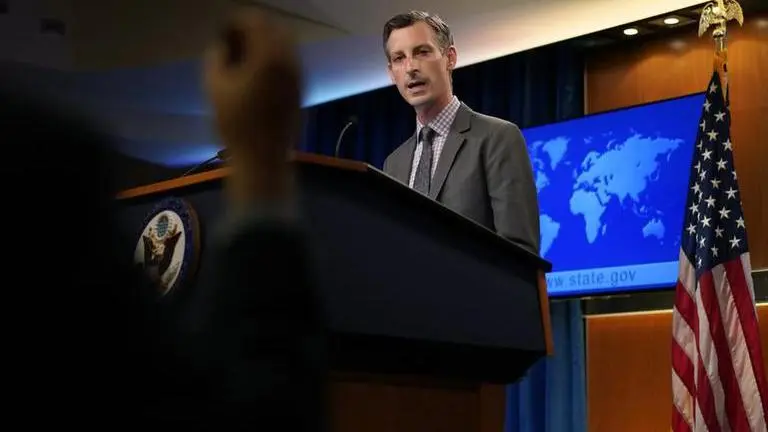
The US has called for an “imminent” return to the Vienna talks to revive a nuclear deal with Iran, which has been in a deadlock since June. Addressing media reporters in Washington, State Department Spokesperson Ned Price asserted that revival of negotiations was necessary as the process could not go on indefinitely. Earlier this week, Tehran also hinted that the talks could revive as soon as next month.
"We hope their (Iran's) definition of soon matches our definition of soon. We would like negotiations to resume in Vienna as soon as possible. We have been saying this not for weeks now, but for months now," Price told press reporters.
“An imminent return to Vienna is necessary because this is not a process that can go on indefinitely. This is not a process that can drag out or that can be dragged out. We are firmly of the belief that we need to work quickly, we need to work with alacrity and a great deal of speed to see to it if we can achieve that mutual return to compliance that we have been sincere and steadfast in seeking to achieve for the better part of a year now,” he added.
'Diplomatic paths are open'
The negotiations on the Joint Comprehensive Plan of Action (JCPOA) deal has been in hiatus since June with both sides demanding the other to return to compliance first. On Thursday, Price said that the resumption of the negotiations was “hinging on Iranians''. Stressing that diplomacy was still the preferred choice, Price said that Washington was willing to continue talks as soon as Tehran expressed its willingness to start negotiations.
“We have made very clear that we are prepared, willing and able to return to Vienna as soon as we have a partner to negotiate with,” Price added.
'Rotten deal'
The deal, signed in 2015 between Iran and other major world powers, including the United States, France, Britain, China, Russia, and Germany (P5+1), saw Washington lifting economic sanctions against Tehran and in return, the Islamic Republic agreed to bring down its uranium enrichment programme. However, former US President Donald Trump withdrew the US from the pact in 2018, calling the structure of the deal "rotten". The Islamic Republic then retaliated by ending its compliance with the deal. As of now, six talks have been held in an attempt to revive the controversial nuclear pact, but despite US President Joe Biden vowing to resume the pact at the earliest, negotiations continue to be in limbo.
(Image: AP)