
'Using Tariffs...To Suppress Other Countries Violates UN Charter, Undermines WTO Rules': China Backs India Over Trump Tariffs
Chinese Foreign Minister Wang Yi made this statement during a phone call with Celso Amorim, chief advisor to the President of Brazil.
- World News
- 4 min read

;'%3e%3cpath%20d='m8,15.99c4.41,0,7.99-3.58,7.99-7.99S12.41,0,8,0,0,3.59,0,8s3.58,7.99,7.99,7.99Z'%20style='stroke:%23fff;%20stroke-miterlimit:10;%20stroke-width:.02px;'/%3e%3cpath%20d='m3.08,3.37l3.82,5.11-3.84,4.15h.87l3.37-3.64,2.72,3.64h2.94l-4.04-5.39,3.58-3.87h-.86l-3.1,3.35-2.5-3.35h-2.94Zm1.27.64h1.35l5.97,7.99h-1.35l-5.97-7.99Z'%20style='fill:%23fff;'/%3e%3c/g%3e%3c/svg%3e)


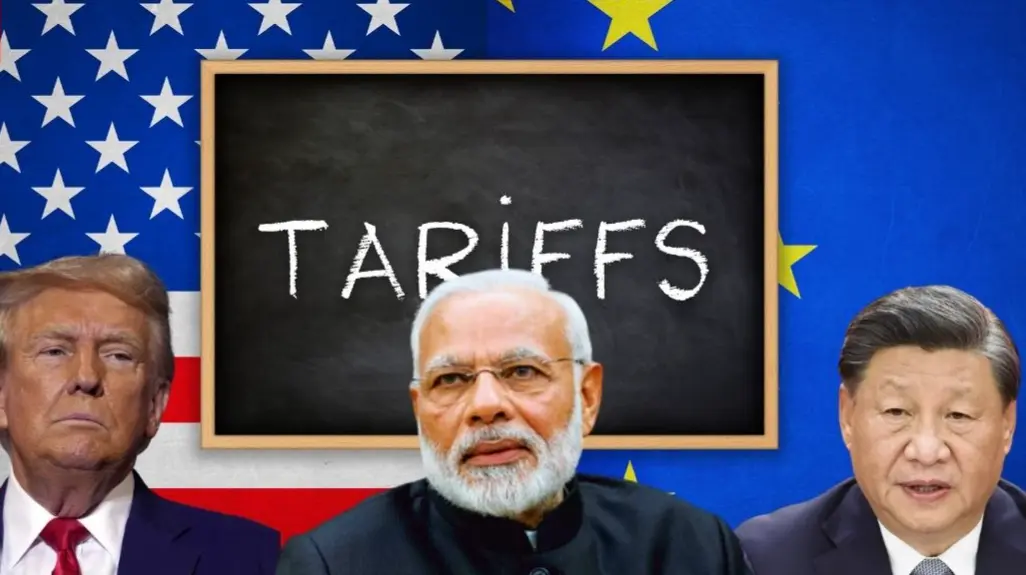
Chinese Foreign Minister Wang Yi has said that using tariffs to suppress other countries violates the United Nations Charter and undermines rules laid down by the World Trade Organization (WTO).
"Using tariffs as a weapon to suppress other countries violates the UN Charter, undermines WTO rules, and is both unpopular and unsustainable," Wang Yi said.
The Foreign Minister made this statement during a phone call with Celso Amorim, chief advisor to the President of Brazil, according to Chinese Ambassador to India Xu Feihong in a post on his official X account.
In his post, the Chinese Ambassador wrote, "Give the bully an inch, he will take a mile."
Advertisement
This statement follows US President Donald Trump’s indication that China could face secondary sanctions or additional tariffs for buying Russian oil. On Wednesday (local time), the US President imposed additional tariffs of 25% on India, specifically tied to its purchase of Russian oil.
At a White House news conference, the US President was asked if similar secondary sanctions would apply to China, given that it is the largest buyer of Russian crude oil. The President replied, "It may happen, I don’t know, I can’t tell you yet. We did it with India, and we are doing it probably with a couple of others, one of them could be China."
Advertisement
According to data from the Centre for Research on Energy and Clean Air (CERA) for June 2025, China has bought 47% of Russia’s crude exports, followed by India (38%), the EU (6%), and Türkiye (6%). CERA is an independent research organization registered as a nonprofit in Finland.
Türkiye is the largest buyer of Russian oil products, purchasing 26% of Russia’s oil product exports, followed by China (13%) and Brazil (12%).
The EU was the largest buyer of LNG from Russia, purchasing 51% of its LNG exports, followed by China (21%) and Japan (18%).
The EU was the largest buyer of LNG from Russia, purchasing 51% of its LNG exports, followed by China (21%) and Japan (18%).
The EU was also the largest buyer of Russia’s pipeline gas, purchasing 37%, followed by China (30%) and Türkiye (27%).
Neither China nor Türkiye currently faces additional US tariffs specifically tied to Russian oil or oil product imports.
On Wednesday, India’s Ministry of External Affairs pointed to China and Türkiye, arguing that targeting India with additional sanctions for Russian imports was unfair.
In its statement, the MEA said, "The United States has recently targeted India’s oil imports from Russia. We have already made clear our position on these issues, including that our imports are based on market factors and aim to ensure the energy security of 1.4 billion people in India."
"It is therefore extremely unfortunate that the US has chosen to impose additional tariffs on India for actions that several other countries are also taking in their own national interest. We reiterate that these actions are unfair, unjustified, and unreasonable. India will take all actions necessary to protect its national interests," the MEA added.
China has also backed India on its statement.
Spokesperson of Chinese Embassy in India, Yu Jing, said in a post on X, “India’s sovereignty is non-negotiable and its foreign policy choices cannot be manipulated by other countries, no matter how significant their own ties with India are.” This was quoted from the editorial page of a newspaper.
Meanwhile, White House Trade Adviser Peter Navarro justified the secondary tariffs on India, citing national security grounds.
At a news conference, Navarro said, "This was a pure national security issue associated with India’s abject refusal to stop buying Russian oil."
With the US framing the purchase of Russian oil as a national security issue, countries like China could soon face additional tariffs unless a peace deal is reached with Russia.