
'We Will Never Go Back To Square One': Iran Remains Open To US Nuclear Talks With Firm Conditions
Speaking on Monday against the backdrop of heightened Middle East tensions and ongoing economic sanctions, Iranian Foreign Ministry spokesperson Esmail Baghaei firmly rejected the idea that diplomacy can simply return to its original baseline.
- World News
- 4 min read

;'%3e%3cpath%20d='m8,15.99c4.41,0,7.99-3.58,7.99-7.99S12.41,0,8,0,0,3.59,0,8s3.58,7.99,7.99,7.99Z'%20style='stroke:%23fff;%20stroke-miterlimit:10;%20stroke-width:.02px;'/%3e%3cpath%20d='m3.08,3.37l3.82,5.11-3.84,4.15h.87l3.37-3.64,2.72,3.64h2.94l-4.04-5.39,3.58-3.87h-.86l-3.1,3.35-2.5-3.35h-2.94Zm1.27.64h1.35l5.97,7.99h-1.35l-5.97-7.99Z'%20style='fill:%23fff;'/%3e%3c/g%3e%3c/svg%3e)


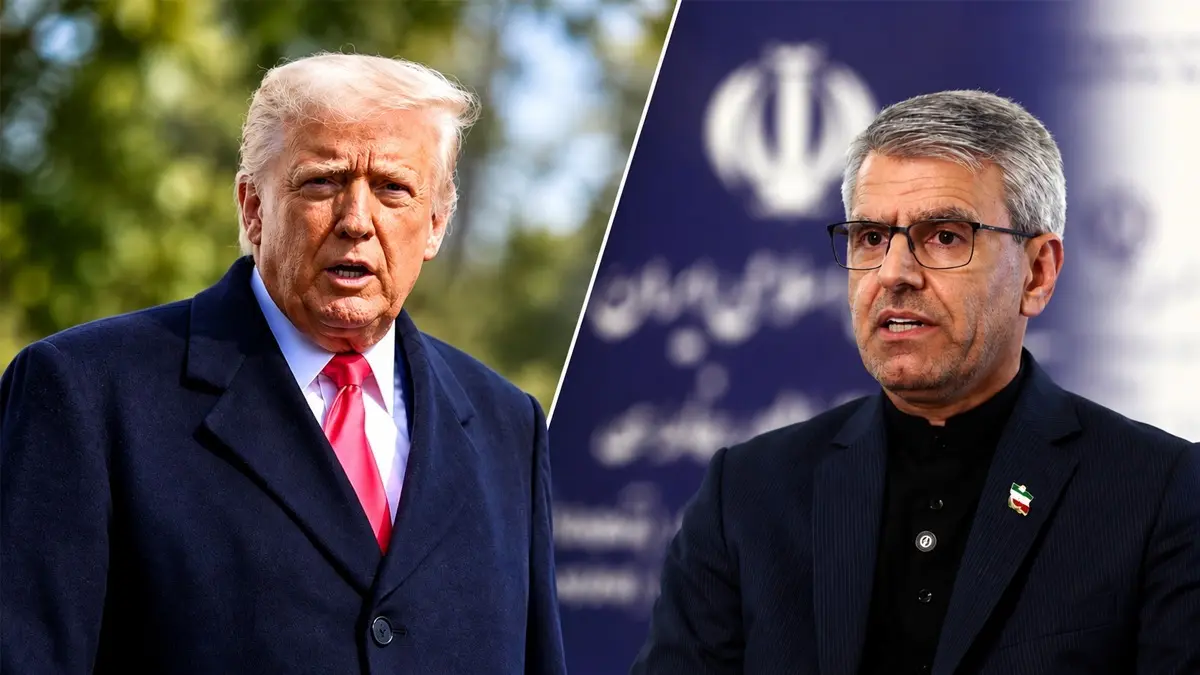
Tehran, Iran: In a definitive declaration outlining Tehran’s diplomatic stance, Iranian Foreign Ministry spokesperson Esmail Baghaei asserted that while Iran is willing to engage in nuclear negotiations with the United States, it will not reset the clock on past grievances or ignore the changing realities on the ground.
Speaking on Monday against the backdrop of heightened Middle East tensions and ongoing economic sanctions, Baghaei firmly rejected the idea that diplomacy can simply return to its original baseline.
"We will never go back to square one. Can you ignore the experiences of the past two years and then say that we are back to square one? Every day that passes, we will definitely use its experience, both in terms of strengthening our own capabilities and in terms of learning from the other side’s lapses," he said.
Baghaei emphasised that Tehran has not walked away from the negotiating table, framing diplomacy as an integral tool alongside national defence. "We are so confident that we will never run away from the negotiating table and diplomacy. Diplomacy is as important to us as the battlefield and war. We will definitely use the tools of diplomacy, wherever necessary and wherever possible, to secure our interests," said Baghaei.
Advertisement
However, he pointed out a direct contradiction in Western strategy, arguing that military pressure, sanctions, and economic warfare undermine the genuine spirit of negotiations.
"The party that should be solely blamed and held accountable for this situation is the party that destroyed the negotiating table in the middle of the negotiations and continues to insist on its previous excesses. How can one claim to negotiate and be diplomatic, while they have escalated the economic war, have practically maintained the conditions of war, and then claim that they are seeking negotiations?" questioned Baghaei.
Advertisement
Addressing Western anxieties over Iran’s potential departure from the Treaty on the Non-Proliferation of Nuclear Weapons (NPT), Baghaei noted that international inaction following attacks on Iranian peaceful nuclear infrastructure has fueled debate within the country.
"Why are they worried? There is no point in worrying. They have created this concern themselves. Self-inflicted is not a tactic," he said.
He added that those responsible for undermining global non-proliferation norms must be held accountable.
"Those who themselves have caused the weakening of the foundations of the non-proliferation regime must answer this question; not only in Iran, but in the entire region and globally," said Baghaei.
Responding to reports that the pre-war "Cairo Agreement", a framework negotiated between Iran's Foreign Minister and the International Atomic Energy Agency (IAEA) chief, could serve as a roadmap to break the deadlock, Baghaei signalled that the window for that arrangement had closed.
"The Cairo Agreement, which is now part of history, the opposing parties did not really appreciate its opportunity," said Baghaei.
Regarding third-party mediation, while Russian President Vladimir Putin discussed the Iranian nuclear situation with Iranian President Masoud Pezeshkian and subsequently US President Donald Trump, Baghaei reiterated the established official channels for US-Iran communications.
"We have always welcomed the wonderful efforts of friendly countries; But as you know, technically and in the strict sense of the word, Pakistan and Qatar continue to play the role of mediator between Iran and the United States," added Baghaei.
The spokesperson's remarks follow parallel political developments. Russian President Vladimir Putin stressed during discussions that "the scope for diplomacy on Iran is far from exhausted" and called an agreement both possible and necessary.
US President Donald Trump noted that the conflict with Iran would conclude "very soon," either through continued military pressure or an agreement on Washington's terms, reiterating that "Iran will never have a nuclear weapon".
Iran’s Supreme National Security Council Secretary Mohsen Rezaei stated that while the US addressed some of Iran's seven conditions regarding the reopening of the Strait of Hormuz, Washington's overall response remained "inadequate".