
What's Behind Europe's Unusual Record-Breaking Heatwave? Deadly 'Omega Block' Bakes Continent, Exposes Climate Vulnerabilities
Europe is experiencing an intense early-summer heatwave, driven by an "Omega Block" weather pattern, which traps hot air and prevents cooler systems from moving in. Record temperatures, including 40.9°C in Paris, have led to fatalities, drowning incidents, and disrupted daily life.
- World News
- 3 min read

;'%3e%3cpath%20d='m8,15.99c4.41,0,7.99-3.58,7.99-7.99S12.41,0,8,0,0,3.59,0,8s3.58,7.99,7.99,7.99Z'%20style='stroke:%23fff;%20stroke-miterlimit:10;%20stroke-width:.02px;'/%3e%3cpath%20d='m3.08,3.37l3.82,5.11-3.84,4.15h.87l3.37-3.64,2.72,3.64h2.94l-4.04-5.39,3.58-3.87h-.86l-3.1,3.35-2.5-3.35h-2.94Zm1.27.64h1.35l5.97,7.99h-1.35l-5.97-7.99Z'%20style='fill:%23fff;'/%3e%3c/g%3e%3c/svg%3e)


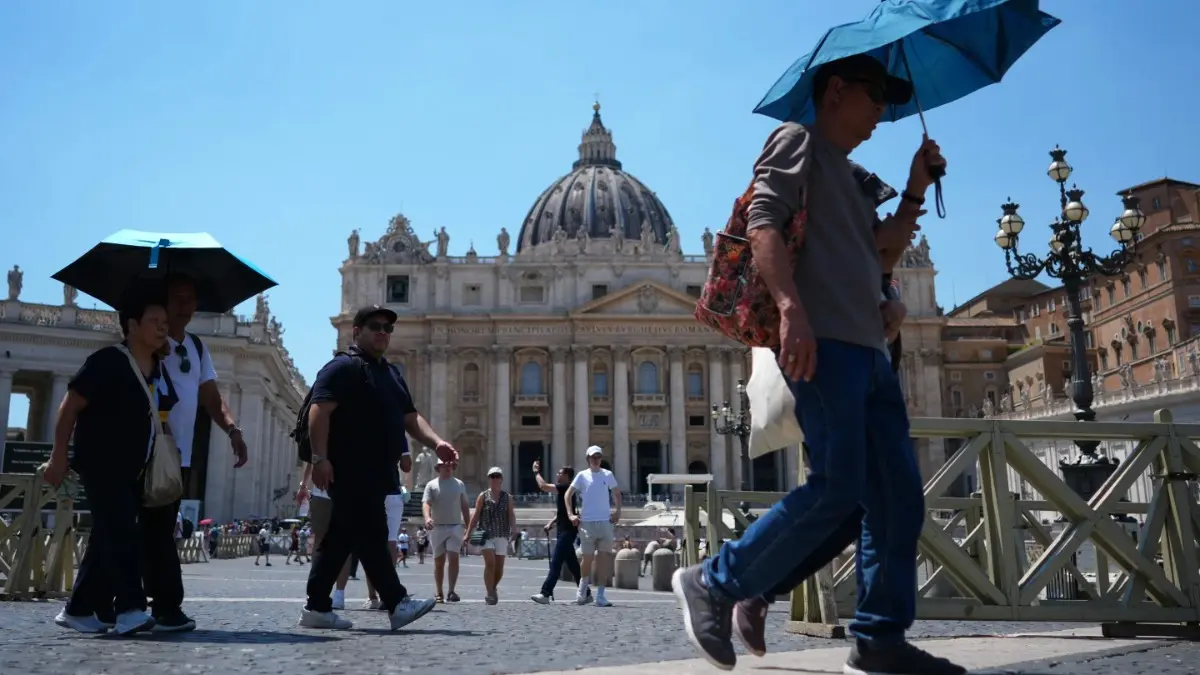
New Delhi: Europe is grappling with one of its most intense and widespread early-summer heatwaves in recent history, as record-breaking temperatures sweep across the continent, claiming lives, disrupting daily life, and exposing how ill-prepared much of Europe remains for prolonged extreme heat.
Meteorologists say the scorching conditions are being driven by a rare "Omega Block" weather pattern, while climate experts warn that human-induced climate change is amplifying its intensity.
The Omega Block is a high-pressure system that traps hot air over a region for days, preventing cooler Atlantic weather systems from moving in. The resulting "heat dome" has pushed temperatures to unprecedented levels across Western Europe.
Britain recorded its hottest June day on record at 36.7 degrees Celsius, Switzerland reached a June record of 38 degrees Celsius, while Paris soared to 40.9 degrees Celsius.
Advertisement
The relentless heat has already taken a deadly toll. Authorities have reported dozens of fatalities across Europe, including heat-related deaths in Italy and numerous drowning incidents in France and Germany as people sought relief from soaring temperatures.
Governments have repeatedly urged citizens to stay indoors during peak afternoon hours, remain hydrated, and avoid strenuous outdoor activities.
Advertisement
The extreme weather has forced authorities to introduce emergency measures across several countries. France banned public alcohol consumption in Paris to reduce health risks during the heatwave, while thousands of schools either shut down or altered schedules.
More than 13,000 schools in France were affected, and over 1,000 schools in the United Kingdom either shortened classes or closed entirely.
The heatwave has also exposed Europe's ageing infrastructure. Many schools lack air conditioning, with classroom temperatures climbing to nearly 40 degrees Celsius, making learning nearly impossible.
Teachers have resorted to using fans, ice packs and temporary cooling measures, while experts warn that prolonged exposure to such temperatures significantly affects students' health and academic performance.
Scientists say the crisis is another stark reminder that climate change is making heatwaves more frequent, more intense and longer-lasting. Europe, the world's fastest-warming continent, is increasingly experiencing extreme weather events that were once considered rare.
Researchers caution that while the Omega Block triggered the current event, global warming has significantly increased the likelihood and severity of such record-breaking heat.
The scorching temperatures have also affected agriculture, threatened workers exposed to outdoor conditions, increased electricity demand for cooling and reignited debate over whether Europe's homes, schools and public infrastructure are prepared for a rapidly warming climate.
As Europe battles the blistering conditions, experts say adapting cities, schools and workplaces to withstand extreme heat is no longer a future challenge but an urgent necessity, warning that similar heatwaves are likely to become increasingly common in the years ahead.