
When Hungary's Csárdás Met India's Kathak: An Evening of Harmony and Ecstasy Enthralls Delhiites
The performance was a living conversation between the spirited folk traditions of the Carpathian Basin and the refined classical vocabulary of Indian Kathak. Energetic ensemble dances and virtuoso couple sequences from Hungary flowed into the graceful footwork, intricate rhythms and expressive storytelling of Kathak, creating moments where two distinct languages of movement seemed to speak as one.
- World News
- 3 min read


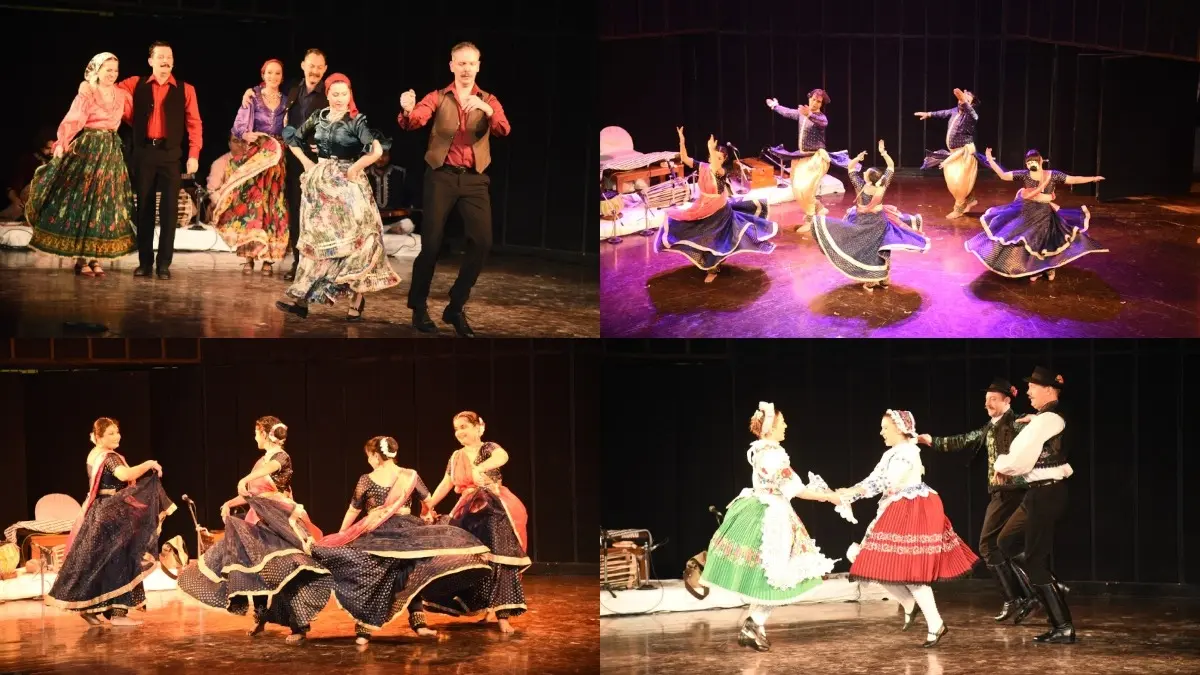
New Delhi: On a cool November evening in the capital, the Stein Auditorium at India Habitat Centre became a meeting ground of two distant yet kindred artistic worlds. The Hungarian State Folk Ensemble (Magyar Állami Népi Együttes), one of Hungary’s most celebrated folk companies, shared the stage with Padma Shri Guru Shovana Narayan and her ASAVARI Kathak Repertory in a special collaboration titled Sur aur Saroor – Harmony and Ecstasy.

Held on 23 November 2026, the performance marked more than a cultural evening. It was a living conversation between the spirited folk traditions of the Carpathian Basin and the refined classical vocabulary of Indian Kathak. Energetic ensemble dances and virtuoso couple sequences from Hungary flowed into the graceful footwork, intricate rhythms and expressive storytelling of Kathak, creating moments where two distinct languages of movement seemed to speak as one.
Founded in 1951 and currently marking its 75th anniversary, the Hungarian State Folk Ensemble arrived in New Delhi as a cultural ambassador of its homeland. Its repertoire offered audiences a vivid glimpse of traditional Hungarian dance and music -- complete with live performances on authentic folk instruments and the participatory spirit of táncház, the traditional dance-house experience that invites spectators to join the circle.
For Guru Shovana Narayan, the collaboration held a deeper meaning. “Dance knows no borders,” she reflected. “The coming together of my ASAVARI Kathak Repertory and the visiting Hungarian dance group celebrates the universal language of rhythm, movement and expression. Rooted in distinct cultural traditions, we discover a shared artistic heartbeat, where diversity inspires creativity and dance becomes a bridge of friendship, understanding and cultural harmony,” she said.
Advertisement
Dr Mariann Erdo, Director of the Liszt Institute – Hungarian Cultural Centre Delhi, echoed the sentiment. “We are truly delighted to bring the renowned Magyar Állami Népi Együttes to New Delhi, sharing the richness, beauty and vibrant spirit of Hungarian folk traditions,” she said. “What makes this performance particularly special is the unique artistic dialogue between Hungarian Csárdás and Indian Kathak… It is a celebration of friendship, creativity and the longstanding cultural ties between Hungary and India,” Dr Mariann said.
The Indian segment of the evening was conceptualised and artistically directed by Guru Shovana Narayan, with music composed by Pt. Madho Prasad and choreography by the Asavari Repertory. Dancers Dr Pallavi Lohani, Suparna Singh, Mahima Satsangi, Ruchi Arya, Anil Khichi and Ashish Kathik brought the Kathak portions to life, responding to the Hungarian artists in a seamless exchange of rhythm and emotion.
Advertisement
At its heart, Sur aur Saroor was less a formal presentation and more a reminder of what artistic exchange can achieve. In the meeting of Csárdás and Kathak, audiences witnessed not only technical brilliance but also the quiet power of cultural dialogue -- proof that music and movement can still build bridges where words sometimes fall short.