
Who Is Suresh Sallay? Sri Lankan Ex-Spy Chief Behind 2019 Easter Massacre That Killed 269
Major General (Retd.) Suresh Sallay, formerly a top intelligence official in Sri Lanka, is at the center of a significant terror investigation linked to the 2019 Easter Sunday bombings, while on hunger strike in a Colombo hospital. Arrested by the CID in February, he is accused of aiding the terrorist attacks that killed 269.
- World News
- 3 min read

;'%3e%3cpath%20d='m8,15.99c4.41,0,7.99-3.58,7.99-7.99S12.41,0,8,0,0,3.59,0,8s3.58,7.99,7.99,7.99Z'%20style='stroke:%23fff;%20stroke-miterlimit:10;%20stroke-width:.02px;'/%3e%3cpath%20d='m3.08,3.37l3.82,5.11-3.84,4.15h.87l3.37-3.64,2.72,3.64h2.94l-4.04-5.39,3.58-3.87h-.86l-3.1,3.35-2.5-3.35h-2.94Zm1.27.64h1.35l5.97,7.99h-1.35l-5.97-7.99Z'%20style='fill:%23fff;'/%3e%3c/g%3e%3c/svg%3e)


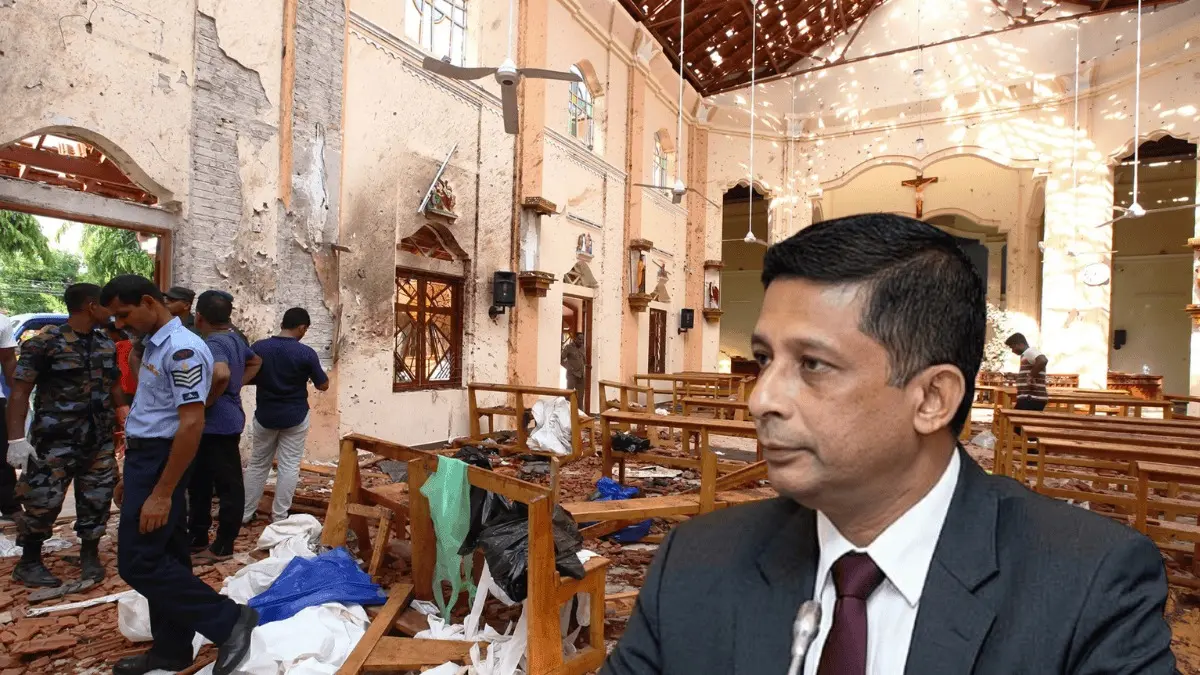
New Delhi: Major General (Retd.) Suresh Sallay, once regarded as one of Sri Lanka's most influential intelligence officials, has found himself at the centre of one of the country's biggest terror investigations.
The former head of Sri Lanka's State Intelligence Service (SIS) is currently hospitalised in Colombo while continuing an indefinite hunger strike after being detained over allegations linked to the 2019 Easter Sunday bombings.
Sallay, who previously served as Director of Military Intelligence before taking charge of the SIS under the Gotabaya Rajapaksa administration, was arrested by the Criminal Investigation Department (CID) in February this year under Sri Lanka's Prevention of Terrorism Act.
Investigators have accused him of aiding and abetting the coordinated Easter Sunday attacks that devastated the island nation.
Advertisement
The Easter Sunday bombings, carried out on April 21, 2019, targeted churches packed with worshippers and luxury hotels in Colombo. The attacks killed 269 people and injured more than 500, making them among the deadliest terrorist incidents in Sri Lanka's history.
In a dramatic development, Sri Lanka's Public Security Minister Ananda Wijepala informed Parliament that Sallay had allegedly "directed" the attacks - the first time a serving government minister has publicly linked the former intelligence chief directly to the bombings.
Advertisement
According to the minister, Sallay had identified at least one Catholic church as a target for the attackers.
Sallay, however, has strongly denied the allegations through his legal representatives. His lawyer has maintained that the retired military officer had no involvement in the attacks and is being unfairly targeted.
The former intelligence chief launched a hunger strike while in detention, alleging violations of his rights and demanding improved conditions. His deteriorating health led to his transfer to a hospital in Colombo, where he continues the protest under medical supervision.
Reports indicate that Sallay has set specific conditions for ending the hunger strike, including guarantees regarding his treatment and legal process.
Sallay's arrest reignited debate over unanswered questions surrounding the Easter bombings. Allegations linking elements of Sri Lanka's intelligence establishment to the attacks first gained prominence following investigative reports and whistleblower claims in recent years.
The ongoing CID probe is expected to determine whether sufficient evidence exists to formally prosecute the former spy chief.
The case has also acquired political overtones, with opposition leaders criticising the manner of Sallay's detention and demanding transparency in the investigation, even as victims' families continue their long-standing quest for accountability and justice.
As Sri Lanka revisits one of the darkest chapters in its recent history, the investigation into Suresh Sallay could prove pivotal in uncovering whether there was a deeper conspiracy behind the Easter Sunday tragedy that shook the nation seven years ago.