
Why Iran Suddenly Delayed Ayatollah Ali Khamenei's Final Funeral In Mashhad? The Reason Lies In Iraq
The final funeral procession and burial of Iran's late Supreme Leader Ayatollah Ali Khamenei were pushed back after unprecedented crowds in Iraq stretched ceremonies far beyond schedule, with officials claiming millions joined the mourning.
- World News
- 3 min read

;'%3e%3cpath%20d='m8,15.99c4.41,0,7.99-3.58,7.99-7.99S12.41,0,8,0,0,3.59,0,8s3.58,7.99,7.99,7.99Z'%20style='stroke:%23fff;%20stroke-miterlimit:10;%20stroke-width:.02px;'/%3e%3cpath%20d='m3.08,3.37l3.82,5.11-3.84,4.15h.87l3.37-3.64,2.72,3.64h2.94l-4.04-5.39,3.58-3.87h-.86l-3.1,3.35-2.5-3.35h-2.94Zm1.27.64h1.35l5.97,7.99h-1.35l-5.97-7.99Z'%20style='fill:%23fff;'/%3e%3c/g%3e%3c/svg%3e)


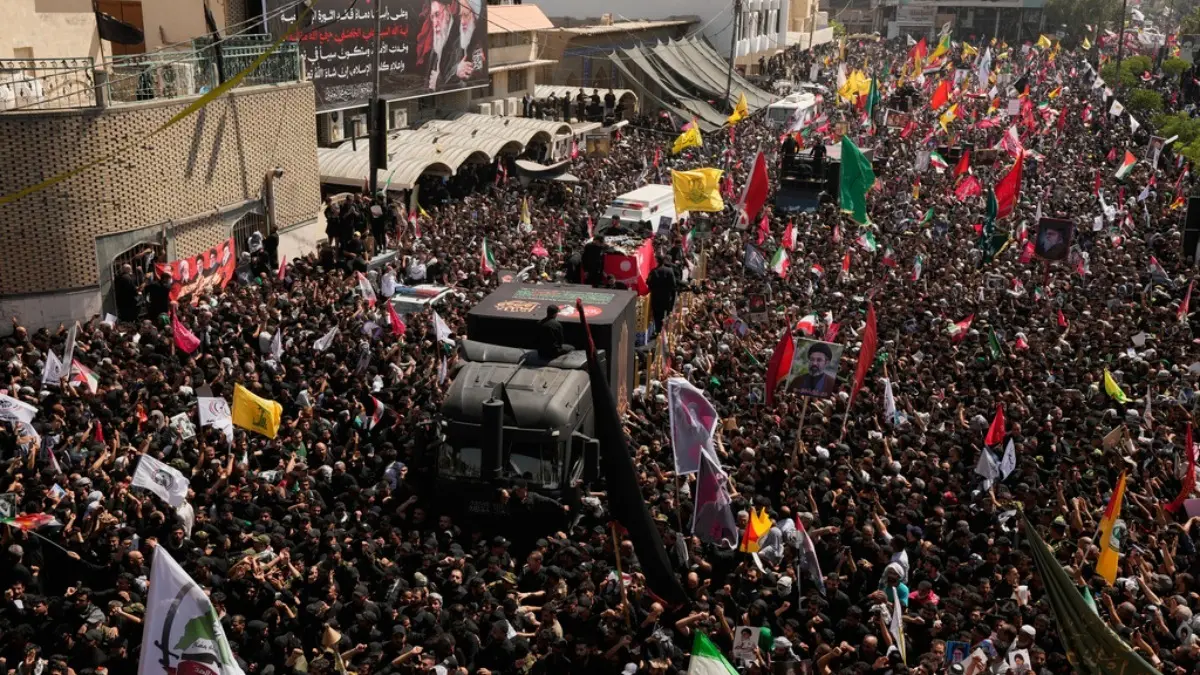
Iran has postponed the final funeral procession and burial of its late Supreme Leader, Ayatollah Ali Khamenei, in the northeastern city of Mashhad after massive crowds attending funeral ceremonies in neighbouring Iraq disrupted the original schedule.
The final procession was initially slated to begin early Thursday morning. However, Iranian authorities rescheduled it to 2 pm local time after funeral events in the Iraqi holy cities of Najaf and Karbala continued for hours due to an overwhelming turnout of mourners.
According to Iranian state broadcaster Press TV, the delay was necessitated by the extended ceremonies in Iraq, where officials, resistance leaders, tribal representatives and millions of supporters gathered to pay their last respects.

Millions Turn Out In Iraq
Iraqi officials estimated that at least four million mourners participated in the funeral procession in Najaf alone. The ceremonies later moved to Karbala, another sacred city for Shiite Muslims, where equally large crowds assembled despite soaring temperatures.
Advertisement
At several points during the processions, the scenes turned chaotic as mourners surged towards the glass-encased coffin draped in Iran's national flag. Pallbearers were repeatedly forced to lower the casket to prevent it from falling as people attempted to touch or carry it in a gesture of reverence.
Some supporters performed self-flagellation rituals, while others waved Iranian, red and black flags symbolising mourning and calls for revenge.
Advertisement
Funeral Journey Across Holy Shiite Cities
Khamenei's body arrived in Najaf on Tuesday, accompanied by Iranian President Masoud Pezeshkian and Foreign Minister Abbas Araghchi.
Funeral prayers were led at the revered Shrine of Imam Ali before the body was taken to Karbala, home to the shrine of Imam Hussein, where another massive procession was held.
Officials struggled to manage the crowds throughout the journey, with mourners repeatedly pressing towards the coffin in hopes of receiving blessings.
Burial Delayed, Regional Tensions Continue
Khamenei, 86, was killed in late February during large-scale US and Israeli strikes on Iran that triggered a wider regional conflict. His funeral ceremonies have unfolded over several days across Iran and Iraq.
The postponement comes as diplomatic efforts to end the conflict remain stalled until after the burial. Meanwhile, fresh military exchanges in the Persian Gulf, including US strikes following attacks on commercial vessels and Iran's reported retaliatory strikes on Kuwait and Bahrain, have heightened concerns that the fragile ceasefire could collapse.
Iran's new Supreme Leader, Ayatollah Mojtaba Khamenei, has not yet appeared publicly during the funeral ceremonies. Reports suggest he has remained out of public view after allegedly sustaining injuries in the airstrike that killed his father.