
The Green Dividend: Why Breathable Space is the New Capital in Urban India
Today’s homebuyers are not just evaluating square footage or location; they are assessing how a space contributes to their overall quality of life.

India’s luxury real estate market is undergoing a quiet but meaningful transformation. The era of unchecked expansion and price-driven decision-making is giving way to a more thoughtful, value-oriented approach. Today’s homebuyers are not just evaluating square footage or location; they are assessing how a space contributes to their overall quality of life.
As urban centres grow denser and more congested, the definition of luxury is being reimagined. Increasingly, it is not about excess, but about access, to cleaner air, open landscapes, and a sense of calm within the city. This shift reflects a deeper change in buyer priorities, where long-term liveability is becoming as important as investment potential.
In markets such as Delhi-NCR, this transition is already visible. Demand patterns indicate a clear tilt towards developments that offer a more balanced living environment, projects that integrate open spaces, thoughtful planning, and lower density alongside urban connectivity. Rather than moving away from cities, buyers are becoming more selective about how they live within them.
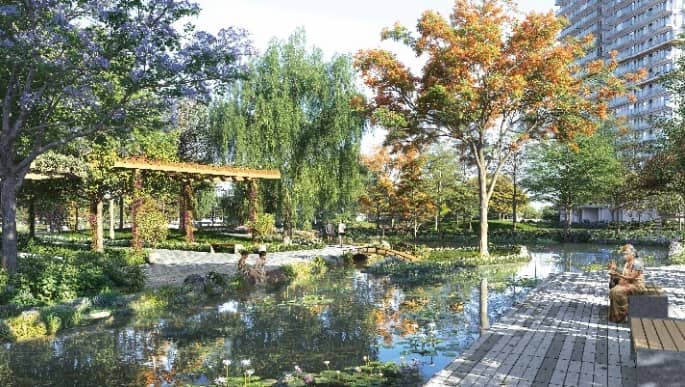
Globally, the relationship between green spaces and residential desirability has long been acknowledged. Proximity to parks, landscaped environments, and natural ecosystems tends to enhance both the appeal and perceived value of residential communities. These elements are not merely aesthetic, they contribute to wellness, encourage outdoor activity, and create a more sustainable urban experience.
India is now aligning with this broader shift. Across key cities, there is a growing preference for developments that prioritise wellness-centric design, open layouts, and integrated green infrastructure. Buyers are increasingly drawn to communities that offer breathing room, both physically and psychologically, within otherwise dense urban settings.
This evolution is also reshaping the idea of what constitutes a “premium” home. For today’s buyer, luxury is less about ornamentation and more about intentional design. Features such as expansive green zones, walkable layouts, and reduced crowding are being valued not as add-ons, but as essential components of modern living.
Projects that embrace this philosophy are beginning to stand apart. For instance, developments like Serenity Hills in Gurugram’s Sector 86 reflect this new approach by prioritising openness over density. Spread across a large land parcel with a significant portion dedicated to outdoor spaces, the project focuses on creating a seamless connection between built and natural environments. Its IGBC Platinum Pre-Certification further reinforces a commitment to sustainability, not as a marketing feature, but as a core design principle.
As Indian cities continue to expand, truly open and green spaces are becoming increasingly scarce. In real estate, scarcity has always been a key driver of long-term value. Today, that scarcity is no longer just about land, it is about liveable, breathable environments within urban limits.
Ultimately, the premium attached to such developments is not driven by superficial luxury, but by the enduring advantages they offer. In a landscape where congestion is the norm, the ability to live amidst openness, greenery, and thoughtful design is emerging as one of the most valuable assets of all.
Published By : Deepti Verma
Published On: 18 April 2026 at 14:57 IST