
NASA Plans Historic Artemis 3 Moon Landing in 2027: First Human After Neil Armstrong To Step On Lunar Surface After 55 Years
NASA will launch Artemis II, the first crewed mission around the Moon in over 50 years, on February 5, 2026. The milestone flight clears the path for Artemis III, planned for 2027, which will attempt the first human landing at the Moon’s South Pole, if SpaceX’s Starship is ready in time.
- Science News
- 3 min read

NASA has announced that its ambitious Artemis II mission, the first crewed moonshot in more than 50 years, could launch as early as February 5, 2026.
The 10-day mission will send four astronauts on a journey around the Moon and back, marking humanity’s closest approach to the lunar surface since Apollo 17 in 1972.
“This is a crucial step toward putting humans back on the Moon,” NASA said, underscoring that Artemis II will validate systems needed for future lunar landings.
The mission was initially expected to launch in 2024 but was delayed after engineers found that the Orion capsule’s heat shield was charred more severely than expected during the uncrewed Artemis I test flight in November 2022. Hydrogen leak issues were also resolved to ensure crew safety.
Artemis II Will Pave the Way for a Lunar Landing
While Artemis II will not land on the Moon, it is designed as a crewed test flight to prove NASA’s Space Launch System (SLS) rocket, the Orion spacecraft, and mission operations. The success of Artemis II is a prerequisite for Artemis III, the mission that will put humans back on the lunar surface in 2027.
NASA officials stressed, “Safety remains our top priority,” calling Artemis II a “stepping stone toward Artemis III.”
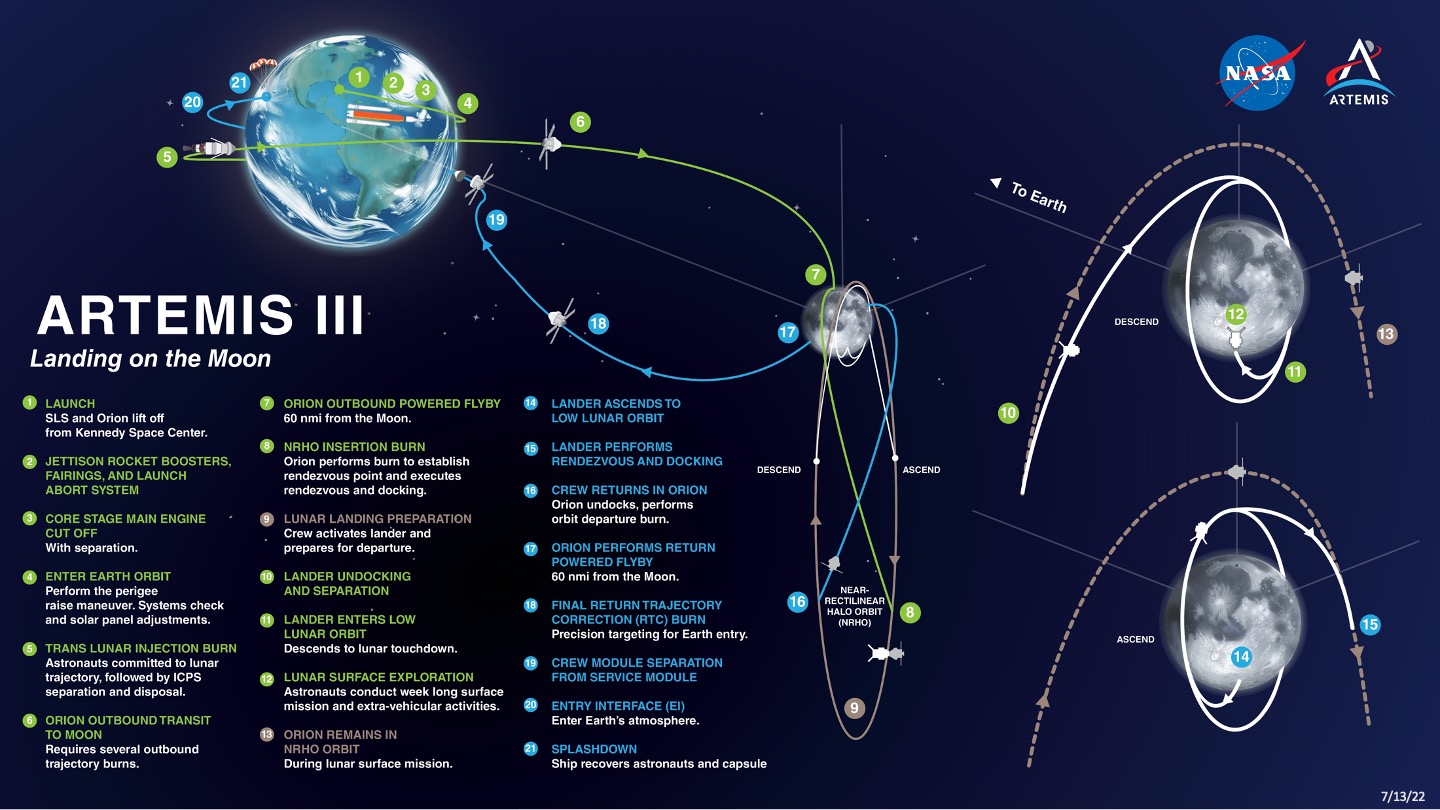
Artemis III: First Human Moon Landing Since 1972
Artemis III is currently planned for 2027 and will be the first mission to land astronauts on the Moon’s South Pole, a region that has never been explored by humans. The landing site is of huge scientific interest because of its permanently shadowed craters that may contain water ice, potentially a game-changer for future deep-space exploration.
NASA’s Orion spacecraft will ferry astronauts to lunar orbit, where it will dock with SpaceX’s Starship Human Landing System (HLS). Two astronauts will transfer to Starship for descent to the surface, while the remaining two will stay in orbit aboard Orion. After about 6.5 days of surface exploration, the crew will reunite and head back to Earth.
SpaceX’s Starship Is Critical and a Risk
SpaceX’s Starship plays a pivotal role in Artemis III’s success, but its readiness is one of the biggest variables in meeting the 2027 timeline. As per reports, NASA’s Aerospace Safety Advisory Panel (ASAP) has warned that there is “every chance” Starship may not be ready on time.
When SpaceX won the NASA contract, the plan was to attempt a lunar landing by 2024. Several delays and the complexity of Starship’s refueling system have pushed the schedule back.
According to The New York Times, Starship might not be ready until 2032, a claim SpaceX CEO Elon Musk dismissed, saying, “It’s not worth lining a parrot cage with NY Times, let alone reading it.”
Why Artemis III Matters
Artemis III will be one of the most ambitious space missions in history. Beyond symbolic value, it aims to collect samples, conduct cutting-edge science, and test technologies that will eventually enable humans to live and work on the Moon.
NASA calls this “the Artemis Generation”, a vision of sustained lunar exploration that will ultimately prepare humanity for the first human mission to Mars.
Countdown to a New Era of Lunar Exploration
If Artemis II succeeds in 2026 and Starship is ready, Artemis III will mark humanity’s return to the Moon for the first time in 55 years. But experts caution that any significant delay could push the landing beyond 2027, leaving the door open for China, which is targeting its own crewed lunar landing before the decade ends.
For now, NASA remains focused on Artemis II. If all goes according to plan, the mission will clear the path for what could be one of the most historic human spaceflights of the 21st century.
Read More - Save the Date: Humans To Return To Moon On Feb 5, 2026 With Artemis 2
Published By : Gunjan Rajput
Published On: 24 September 2025 at 08:48 IST