
NISAR Launch LIVE: NASA-ISRO Earth Observation Satellite Launched from Sriharikota
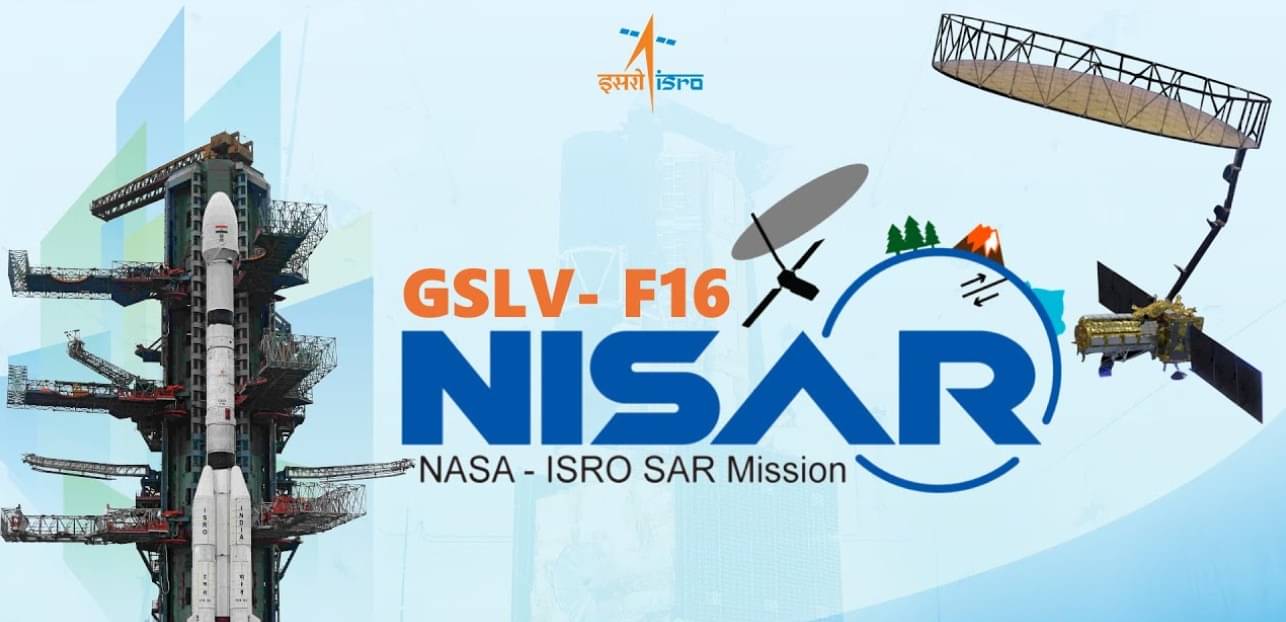
ISRO has launched the joint NASA-ISRO NISAR Earth observation satellite today at 5:40 PM from Sriharikota using a GSLV-F16 rocket. This first-of-its-kind hardware collaboration will provide high-resolution data to monitor natural hazards, infrastructure, and agriculture.
- Science News
- 6 min read

The Indian Space Research Organisation (ISRO) has successfully launched the NASA-ISRO Synthetic Aperture Radar (NISAR), an Earth observation satellite, today. The liftoff took place at 5:40 PM from the Satish Dhawan Space Centre in Sriharikota, using the GSLV-F16 rocket.
NISAR Launch LIVE: Livestreaming Link
The choice of the GSLV rocket over the more frequently used PSLV is due to NISAR's substantial weight, as it will be placed into a Sun Synchronous Polar Orbit. This mission marks a significant milestone, being the first hardware collaboration between the Indian and US space agencies, with each contributing a unique radar system for the satellite.
Live Blog
The NISAR (NASA-ISRO Synthetic Aperture Radar) mission, a joint endeavour between NASA and the Indian Space Research Organisation (ISRO).
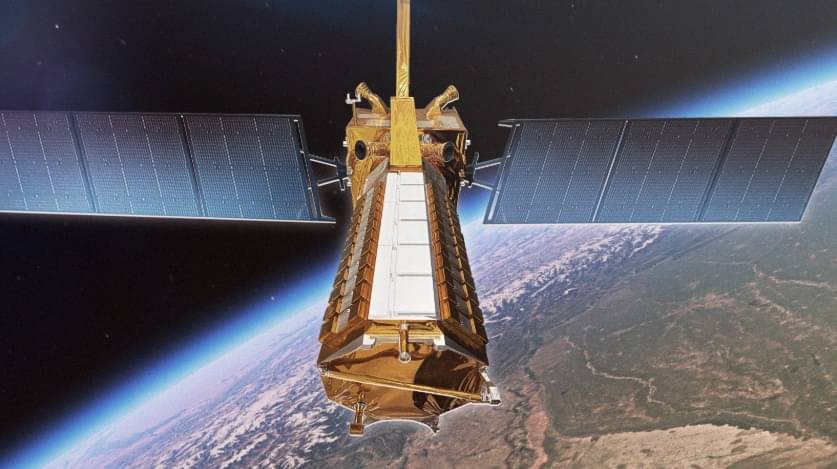
The satellite, approximately the size of a pickup truck, is designed to deliver high-resolution data. This information will be invaluable for decision-makers, local communities, and scientists, enabling them to monitor crucial infrastructure and agricultural areas. Furthermore, it will enhance our comprehension of natural hazards like landslides and earthquakes, and assist teams in preparing for and responding to disasters such as hurricanes, floods, and volcanic eruptions.
- Listen to this article
30 July 2025 at 18:16 IST
NISAR to Scan Global Land and Ice Every 12 Days for Three Years
Following its successful launch today, July 30, the NISAR satellite is expected to operate in Earth's orbit for a minimum of three years. During this period, its advanced radar systems will meticulously scan nearly all of the planet's land and ice-covered regions twice every 12 days.
30 July 2025 at 18:01 IST
NISAR Launch Live Updates: GSLV-F16/NISAR Separation Confirmed
Advertisement
30 July 2025 at 17:55 IST
NISAR Launch LIVE: Satellite Lifts Off from Sriharikota
On Wednesday, July 30, 2025, at 5:40 PM IST, the Geosynchronous Satellite Launch Vehicle (GSLV) successfully lifted off from the second launch pad at the Satish Dhawan Space Centre in Sriharikota, India. The rocket is carrying the 2,392-kilogram NISAR satellite.
30 July 2025 at 17:52 IST
Watch | NISAR Mission Launch Live: GSLV Stages One and Two Performed as Expected
The initial two stages of the GSLV rocket have performed as expected, successfully propelling the NISAR satellite on its trajectory. The cryogenic upper stage has now commenced its operation.
Advertisement
30 July 2025 at 17:45 IST
NASA ISRO Nisar Satellite Launch Live: India Launches NASA-ISRO Nisar Satellite
30 July 2025 at 17:44 IST
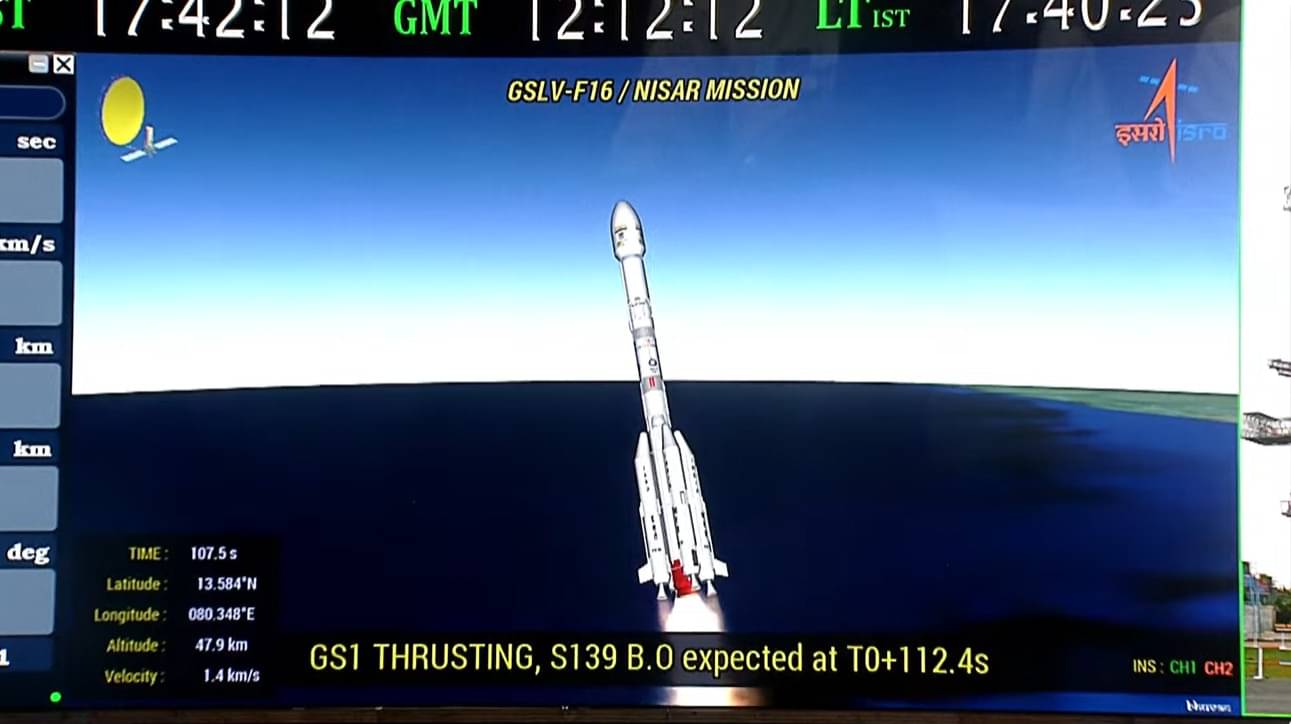
NISAR Launch Live Updates: Successfully Launched
ISRO and NASA's joint mission, the Nisar satellite, was launched on Wednesday evening on its scheduled time.
30 July 2025 at 17:31 IST
NISAR Launch Live Updates: Liftoff Shortly
30 July 2025 at 17:29 IST
Nisar Satellite Launch Live Updates: ISRO’s Most Advanced Earth Observation Satellite Set for Liftoff from Sriharikota Shortly
NISAR is slated to launch from the Satish Dhawan Space Centre in Sriharikota in Andhra Pradesh today at 17:40 IST.
30 July 2025 at 17:30 IST
NISAR Launch LIVE: Automatic Launch Sequence Begins
The NASA-ISRO NISAR mission has now authorised its automatic launch sequence.
Following the launch, the mission will receive support from the ground stations of both space agencies. This support is crucial for downloading the images captured by the satellite. Once these images undergo the necessary processing, they will be distributed to the wider user community.

30 July 2025 at 17:21 IST
NISAR Launch Live Updates: Ready for Liftoff?
30 July 2025 at 17:19 IST
NISAR Launch LIVE: Understanding L-Band and S-Band Radar
L-Band and S-Band refer to distinct frequency ranges within the microwave spectrum that are employed by radar systems like Synthetic Aperture Radar (SAR).
The L-Band operates at frequencies of approximately 1–2 Gigahertz (GHz), corresponding to a longer wavelength of about 15–30 centimetres. This longer wavelength allows the L-Band radar to deeply penetrate various surfaces such as vegetation, soil, and snow. In terms of applications, L-Band SAR is particularly effective for studying forests, measuring soil moisture, and detecting ground movement, although it provides slightly lower resolution imagery.
In contrast, the S-Band operates at a higher frequency of 2–4 GHz, resulting in a shorter wavelength of about 7.5–15 centimetres. This makes it more adept at capturing finer structural details and observing surface features, including bodies of water. S-Band SAR offers higher resolution but has a shallower penetration depth. Consequently, it is better suited for tasks like monitoring urban infrastructure, tracking floods, and assessing storm-affected regions.
By combining these two bands, NISAR gains the advantage of complementary insights into Earth's diverse surface and ongoing processes.
30 July 2025 at 17:16 IST
GSLV-F16 Launch with NASA-ISRO NISAR Earth Observation Satellite
30 July 2025 at 17:11 IST
NISAR Launch Live Updates
30 July 2025 at 17:10 IST
NISAR Satellite Launch: Countdown Begins
The countdown for the GSLV-F16/NISAR mission is currently in progress. The GSLV-F16 rocket, carrying the Earth observation satellite, is scheduled to lift off from the second launch pad at the Satish Dhawan Space Centre at 5:40 PM IST today.
30 July 2025 at 16:28 IST
NISAR Launch Live Updates: NISAR to Provide Continuous 'Health Check-up' for Earth, Says Former ISRO Scientist
30 July 2025 at 16:25 IST
NISAR Launch LIVE: About NISAR
NASA-ISRO Synthetic Aperture Radar (NISAR) is the first joint satellite of the Indian Space Research Organisation (ISRO) and the National Aeronautics and Space Administration (NASA).
30 July 2025 at 16:24 IST
NISAR Launch Live Updates: Satellite to Reach Orbit in 19 Minutes
Approximately 19 minutes after its launch, the GSLV-F16 rocket will place the NISAR satellite into a 743-kilometre sun-synchronous orbit.
30 July 2025 at 15:19 IST
ISRO GSLV-F16 to Launch NISAR Today
NISAR is NASA-ISRO Synthetic Aperture Radar, which will scan the entire globe every 12 days to provide high-resolution, all-weather, day-night data.
30 July 2025 at 15:06 IST
Nisar Satellite Launch Live Updates: What Makes this Launch Unique?
Nisar Satellite Launch Live: This is the first time a GSLV rocket will place a satellite into Sun-synchronous Polar Orbit (SSPO), a task usually handled by ISRO’s PSLV rockets. The mission will be executed in four stages: launch, deployment, commissioning, and scientific operations.
30 July 2025 at 15:03 IST
Nisar Satellite Launch Live Updates: What Does this Mean for Indo-US Space Cooperation?
The NISAR mission stands as a strong symbol of technological synergy between India and the US. It is not just a space milestone but also a scientific one, showcasing how international collaboration can yield tools to better understand and protect our planet.
30 July 2025 at 14:09 IST
NISAR Launch Live Updates: What Will NISAR Study?
The NISAR mission aims to thoroughly investigate the Earth, providing essential information to scientists worldwide. Its main goals include examining shifts in land and ice, studying land-based ecosystems, and observing oceanic areas that are of particular interest to both American and Indian scientific communities.
30 July 2025 at 14:00 IST
When is NISAR Set to Launch?
The NISAR satellite is scheduled to launch today, Wednesday, July 30, 2025, at 5:40 PM IST.
The countdown for the launch began at 2:10 PM IST on July 29th and is proceeding as planned. ISRO has also announced that the mission will comprise four distinct phases: the launch phase, the deployment phase, the commissioning phase, and finally, the science phase.
30 July 2025 at 13:57 IST
NISAR Launch LIVE: Latest Update
NASA-ISRO’s NISAR Earth satellite is ready for launch.
30 July 2025 at 13:51 IST
NISAR's Earth-Scanning Capabilities:
The NISAR satellite is equipped with a pioneering dual-radar system. This innovative setup includes an L-band system, utilising a 25-centimetre wavelength, alongside an S-band system, which features a 10-centimetre wavelength.
30 July 2025 at 13:47 IST
NISAR Launch LIVE: Satellite to Map Planet's Surface Fortnightly
The spacecraft will circle Earth 14 times a day, scanning nearly all the planet’s land and ice surfaces twice every 12 days.
30 July 2025 at 13:46 IST
NISAR Launch LIVE: Where to Watch
Live coverage of the NISAR mission launch will commence at 7:00 AM EDT (which is 4:30 PM IST in India) today, Wednesday, 30th July. The broadcast will originate from NASA's Jet Propulsion Laboratory in Southern California, where the U.S. segment of the mission is coordinated. You can watch the launch live on NASA+ and the agency's official YouTube channel.
Published By : Animesh Bhardwaj
Published On: 30 July 2025 at 13:54 IST