
Waymo’s San Francisco Outage Raises Doubts Over Robotaxi Readiness During Crises
A widespread power outage in San Francisco that led to Waymo robotaxis stalling and snarling traffic earlier this month has raised concerns about the readiness of autonomous vehicle operators to tackle major emergencies like earthquakes and floods.
- Automobile News
- 4 min read

;'%3e%3cpath%20d='m8,15.99c4.41,0,7.99-3.58,7.99-7.99S12.41,0,8,0,0,3.59,0,8s3.58,7.99,7.99,7.99Z'%20style='stroke:%23fff;%20stroke-miterlimit:10;%20stroke-width:.02px;'/%3e%3cpath%20d='m3.08,3.37l3.82,5.11-3.84,4.15h.87l3.37-3.64,2.72,3.64h2.94l-4.04-5.39,3.58-3.87h-.86l-3.1,3.35-2.5-3.35h-2.94Zm1.27.64h1.35l5.97,7.99h-1.35l-5.97-7.99Z'%20style='fill:%23fff;'/%3e%3c/g%3e%3c/svg%3e)


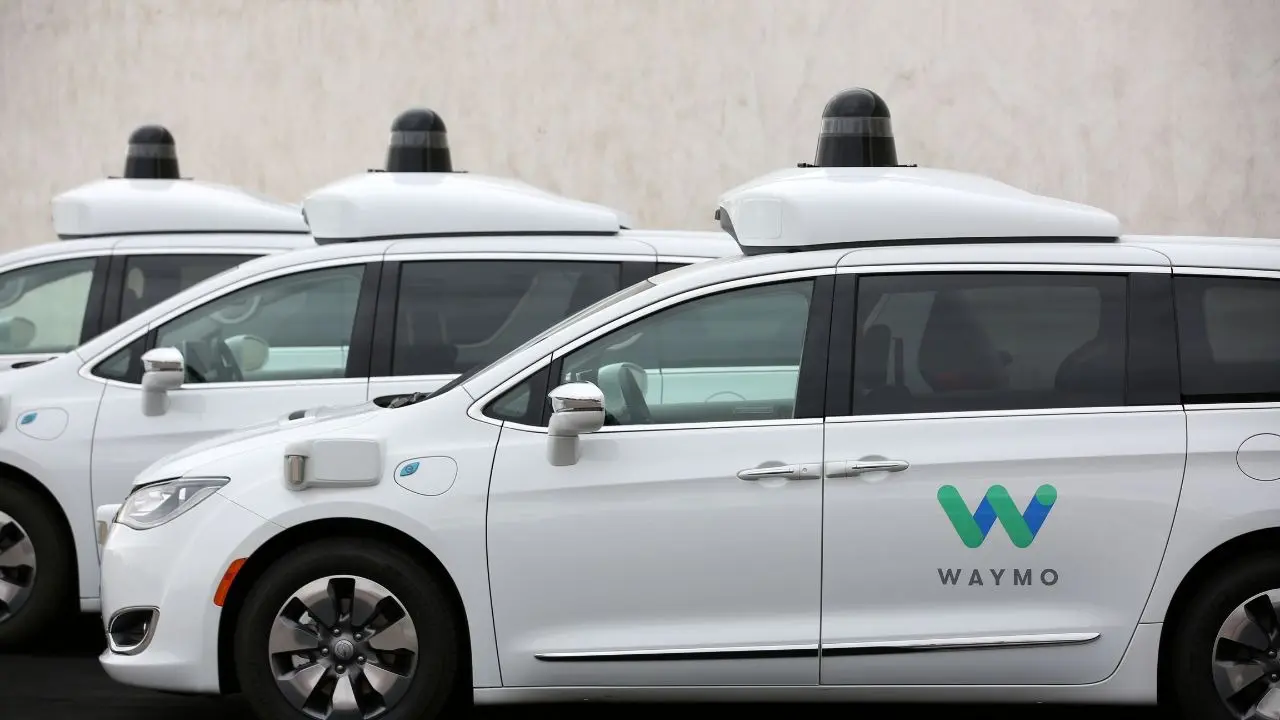
A widespread power outage in San Francisco that led to Waymo robotaxis stalling and snarling traffic earlier this month has raised concerns about the readiness of autonomous vehicle operators to tackle major emergencies like earthquakes and floods.
Driverless taxis from Alphabet unit Waymo, a ubiquitous feature on the city's streets, were stuck at intersections with their hazard lights turned on as traffic lights stopped working following a fire at a PG&E substation that knocked out power to roughly one-third of the city on December 20, videos posted on social media showed. Waymo halted operations, resuming a day later.
The incident has renewed calls for stricter regulation of the nascent but fast-growing industry as other companies, including Tesla and Amazon's Zoox, race to expand robotaxi services in several cities.
"If you get a response to a blackout wrong, regulators are derelict if they do not respond to that by requiring some sort of proof that the earthquake scenario will be handled properly," said Philip Koopman, a Carnegie Mellon University computer-engineering professor and autonomous-technology expert.
Advertisement
In a statement on Tuesday, Waymo said that while its robotaxis are designed to handle non-operational traffic signals as four-way stops, they occasionally request a confirmation check. Though the vehicles successfully traversed more than 7,000 darkened signals on Saturday, "the outage created a concentrated spike" in confirmation requests that "led to response delays contributing to congestion on already-overwhelmed streets," Waymo said.
Robotaxi operators around the globe use remote access by humans - known in the industry as "teleoperation" - in varying degrees to monitor and control vehicles. Waymo, for example, has a team of human "fleet response" agents who respond to questions from the Waymo Driver, its bot, when it encounters a particular situation.
Advertisement
But such remote assistance has its limitations, and the Waymo outage highlights the need to regulate how robotaxi operators use the technology, said Missy Cummings, director of the George Mason University Autonomy and Robotics Centre and former adviser to the U.S. road safety regulator.
"The whole point of having remote operations is for humans to be there when the system is not responsive in the way it should be," she said. "The federal government needs to regulate remote operations," Cummings said. "They need to make sure that there's backup remote operations when there's some kind of catastrophic failure."
California's Department of Motor Vehicles and the California Public Utilities Commission, which regulate and issue permits for the testing and commercial deployment of robotaxis, have said they are looking into the incident.
The DMV said it was talking to Waymo and other autonomous vehicle makers about actions related to emergency response. It also said it was formulating regulations to ensure remote drivers "meet high standards for safety, accountability and responsiveness."
'A SHOT ACROSS THE BOW'
Deploying and commercialising fully autonomous vehicles has been harder than expected with high investments to ensure the technology is safe and public outcry after collisions, forcing many to shut shop.
Following a high-profile accident in 2023 when a robotaxi from General Motors' Cruise dragged a pedestrian, regulators revoked its permit, eventually leading the company to cease operations.
But robotaxis have returned to the spotlight with Tesla rolling out its service in Austin, Texas, earlier this year and CEO Elon Musk promising rapid expansion. Waymo, which has grown slowly and steadily over the years since its launch as Google's self-driving project in 2009, has also accelerated expansion.
With a fleet of more than 2,500 vehicles, Waymo operates in the San Francisco Bay Area, Los Angeles, Metro Phoenix, Austin and Atlanta.
The company said the confirmation processes its vehicles follow were established during early deployment and that it was now refining them to match its current scale. Waymo is implementing fleet-wide updates that provide vehicles with "specific power outage context, allowing it to navigate more decisively."
Both Cummings and Koopman said robotaxi operators should face additional permitting requirements once their fleets grow beyond a certain size to ensure that they have adequate capabilities to deal with large-scale failures.
"If this had been an earthquake, it would have been a problem," Koopman said. “This is just a shot across the bow.”