
Cabinet Clears ₹10,000-Cr ATF Fund to Support Airlines and Protect 77 Lakh Jobs
Union Cabinet has approved a Rs 10,000 crore Aviation Turbine Fuel (ATF) Price Stabilisation Fund to support domestic and international airlines. The intervention comes as jet fuel prices soared 2.5 times due to the ongoing geopolitical crisis in West Asia. Operating through interest-free advances to Oil Marketing Companies (OMCs), this intervention sets a fixed-price mechanism for airlines.
- Republic Business
- 3 min read

;'%3e%3cpath%20d='m8,15.99c4.41,0,7.99-3.58,7.99-7.99S12.41,0,8,0,0,3.59,0,8s3.58,7.99,7.99,7.99Z'%20style='stroke:%23fff;%20stroke-miterlimit:10;%20stroke-width:.02px;'/%3e%3cpath%20d='m3.08,3.37l3.82,5.11-3.84,4.15h.87l3.37-3.64,2.72,3.64h2.94l-4.04-5.39,3.58-3.87h-.86l-3.1,3.35-2.5-3.35h-2.94Zm1.27.64h1.35l5.97,7.99h-1.35l-5.97-7.99Z'%20style='fill:%23fff;'/%3e%3c/g%3e%3c/svg%3e)


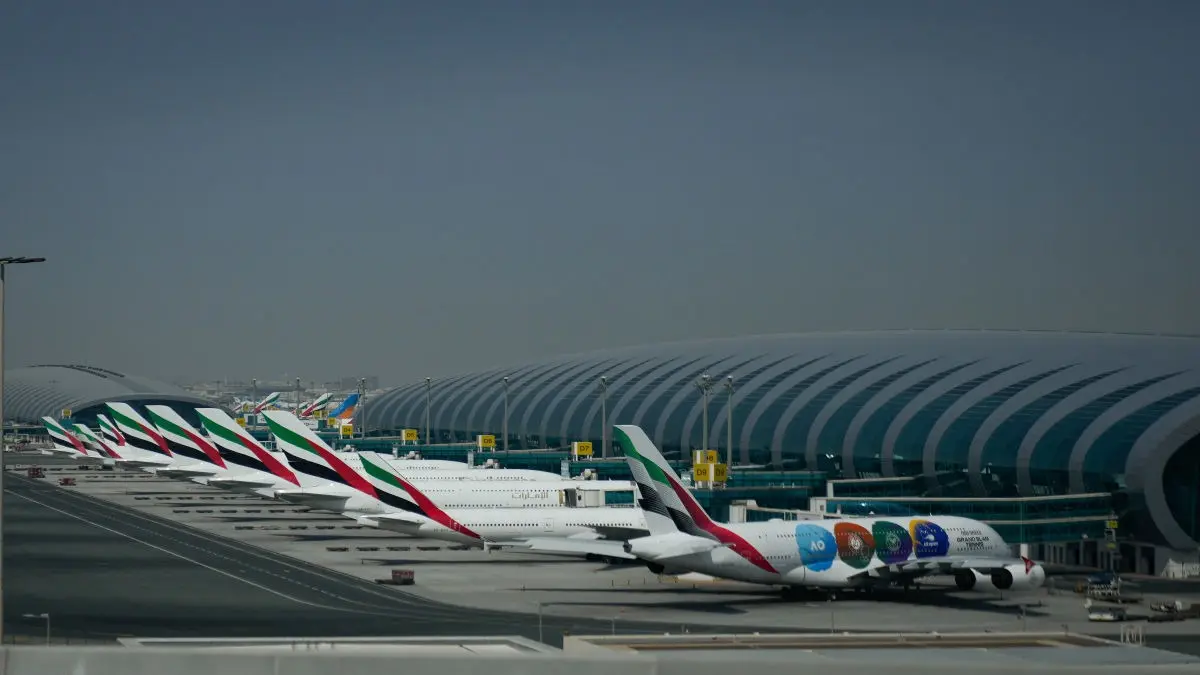
India has approved a 100-billion-rupee ($1.20 billion) emergency rescue package to protect domestic airlines from soaring global oil prices and save millions of jobs, the government announced on Wednesday. The Union Cabinet cleared the one-time financial support package to give price relief to Indian airlines for both their domestic and international flights.
Announcing the Union Cabinet decision, Information & Broadcasting Minister Ashwini Vaishnaw stated that the financial package is aimed at shielding both carriers and flyers from intense external shocks.
Government intervention comes as conflicts in West Asia trigger severe energy supply shocks. Jet fuel prices in India have skyrocketed nearly 2.5 times in just two months, jumping from ₹60.50 per litre in March 2026 to ₹142 per litre in May 2026.
Fixed Prices for Airlines
Jet fuel is the single biggest expense for Indian carriers, usually making up 40% of their running costs. However, the recent global price spike has pushed that number up to 60%, draining airline finances and threatening to shut down flights.
Advertisement
Under the new plan, the government will give up to ₹10,000 crore in interest-free advances to state-run Oil Marketing Companies (OMCs). This money will cover the losses when international oil prices get too high. In return, airlines will sign deals to buy fuel from these oil companies at a fixed price for up to three years.
Thus, giving airlines predictable costs stops sudden ticket price hikes and protects passengers from expensive fares.
Advertisement
Long Detours
On top of high fuel prices, the closure of Pakistan's airspace has forced Indian planes to take much longer routes to Europe and North America. These detours burn more fuel and drive up operational costs, forcing airlines to suspend some international flights.
Keeping airlines stable ensures that flights continue running to smaller towns and regional cities. Many of these routes depend on the government’s UDAN regional connectivity scheme and use newly built local airports.
How the Money Will Be Recovered
This relief package is designed as a revolving fund, not a permanent government handout. When international jet fuel prices drop below a certain level, the oil companies will collect the difference from airlines and pay the money back to the government. This process will continue until the entire ₹10,000 crore advance is fully returned to the state treasury.
The stabilization program will run for 36 months and will be reviewed every year by a joint committee of aviation, petroleum, and finance ministry officials. The policy is also aimed at protecting 77 lakh jobs across airlines, airports, travel agencies, ground handling, and the hospitality sector.