
Centre Gives Big Tax-Free Push To Green Fuel, Exempts Excise Duty On Higher Ethanol-Blended Petrol
The Centre has exempted excise duty on petrol blends with 22% to 30% ethanol (E22 to E30) to accelerate India's shift to cleaner fuels and reduce reliance on crude oil imports. This move aims to enhance ethanol use beyond the E20 program, encouraging oil companies to distribute these blends effectively.
- Republic Business
- 3 min read

;'%3e%3cpath%20d='m8,15.99c4.41,0,7.99-3.58,7.99-7.99S12.41,0,8,0,0,3.59,0,8s3.58,7.99,7.99,7.99Z'%20style='stroke:%23fff;%20stroke-miterlimit:10;%20stroke-width:.02px;'/%3e%3cpath%20d='m3.08,3.37l3.82,5.11-3.84,4.15h.87l3.37-3.64,2.72,3.64h2.94l-4.04-5.39,3.58-3.87h-.86l-3.1,3.35-2.5-3.35h-2.94Zm1.27.64h1.35l5.97,7.99h-1.35l-5.97-7.99Z'%20style='fill:%23fff;'/%3e%3c/g%3e%3c/svg%3e)


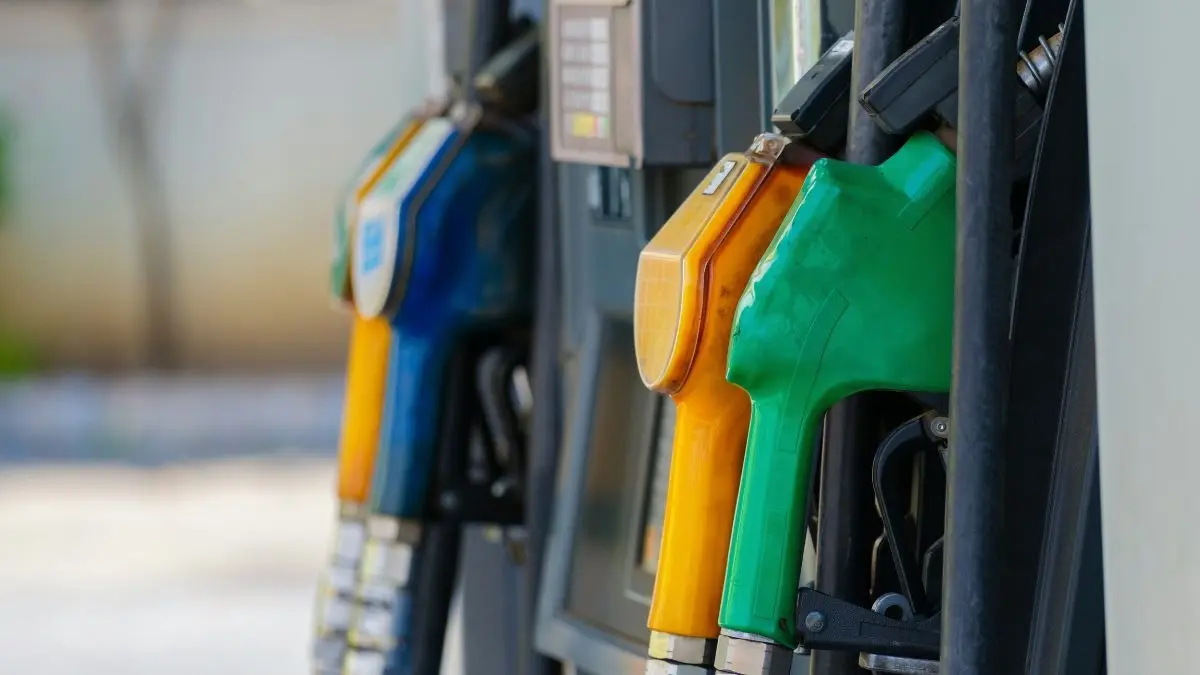
New Delhi: In a major step aimed at accelerating India's transition towards cleaner fuels and reducing dependence on imported crude oil, the Centre has exempted higher ethanol-blended petrol from excise duty.
The exemption applies to petrol blends containing 22 per cent to 30 per cent ethanol, covering E22, E25, E27 and E30 fuels, according to a notification issued by the Finance Ministry. The move comes as the government intensifies efforts to expand ethanol use beyond the existing E20 programme.
Under the notification, the exempted fuels will comprise varying proportions of petrol and ethanol. E22 will contain 78 per cent motor spirit and 22 per cent ethanol, E25 will consist of 75 per cent motor spirit and 25 per cent ethanol, E27 will have 73 per cent petrol and 27 per cent ethanol, while E30 will contain 70 per cent petrol blended with 30 per cent ethanol.
The decision is expected to improve the economic viability of higher ethanol blends and encourage oil marketing companies to expand their availability across the country.
Advertisement
The latest exemption builds on India's ethanol blending programme, which has been one of the government's flagship initiatives to cut the country's massive crude oil import bill, support domestic farmers and sugar mills, and lower vehicular emissions. India, the world's third-largest oil importer and consumer, imports a substantial portion of its crude oil requirements, making alternative fuel adoption a strategic priority.
Union Minister for Road Transport and Highways Nitin Gadkari has been one of the strongest advocates of ethanol-based fuels. He has repeatedly argued that greater ethanol adoption can help reduce pollution, lessen India's dependence on fossil fuel imports and create an additional revenue stream for farmers through the use of agricultural produce and residues for fuel production.
Advertisement
The move also signals the government's intent to pave the way for the next phase of flex-fuel mobility. While E20 fuel has already been rolled out in several parts of the country, the excise waiver on E22-E30 blends could facilitate a gradual shift towards vehicles capable of running on higher ethanol concentrations.
However, the announcement does not immediately translate into lower retail petrol prices for consumers. The exemption primarily seeks to incentivise the production and distribution of higher ethanol blends, with any impact on pump prices likely to depend on broader pricing decisions by oil marketing companies.
The decision marks another significant policy intervention in India's broader clean energy strategy as the country pushes towards diversified fuel sources and enhanced energy security.