
Union Budget 2026: Fiscal Deficit, IT Slabs to Capex, 5 Key Aspects to Watch Out For
As Finance Minister Nirmala Sitharaman prepares to present the Union Budget 2026, attention is centred on five critical pillars that will define the government’s fiscal and economic strategy for FY27. These include the fiscal deficit trajectory, income tax structure, capital expenditure allocation, revenue mobilisation, and macroeconomic growth assumptions.
- Republic Business
- 3 min read

;'%3e%3cpath%20d='m8,15.99c4.41,0,7.99-3.58,7.99-7.99S12.41,0,8,0,0,3.59,0,8s3.58,7.99,7.99,7.99Z'%20style='stroke:%23fff;%20stroke-miterlimit:10;%20stroke-width:.02px;'/%3e%3cpath%20d='m3.08,3.37l3.82,5.11-3.84,4.15h.87l3.37-3.64,2.72,3.64h2.94l-4.04-5.39,3.58-3.87h-.86l-3.1,3.35-2.5-3.35h-2.94Zm1.27.64h1.35l5.97,7.99h-1.35l-5.97-7.99Z'%20style='fill:%23fff;'/%3e%3c/g%3e%3c/svg%3e)


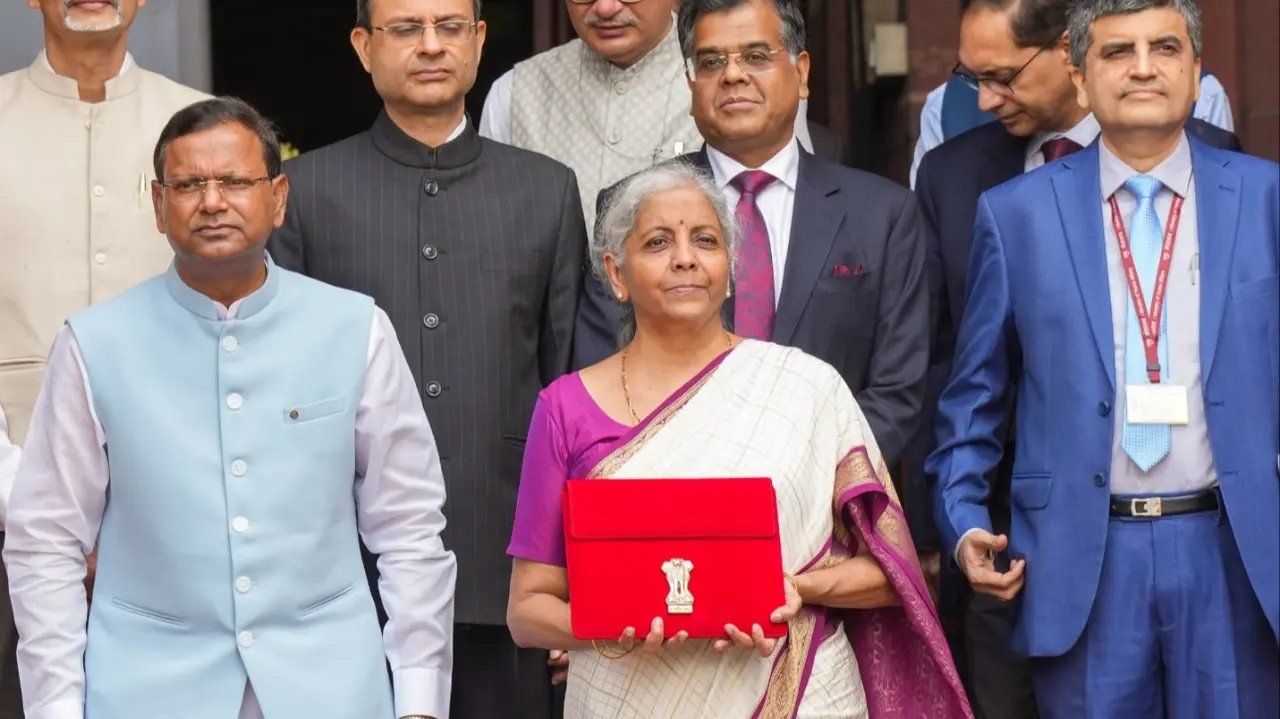
As Finance Minister Nirmala Sitharaman prepares to present the Union Budget 2026, attention is centred on five critical pillars that will define the government’s fiscal and economic strategy for FY27.
Fiscal Deficit: Staying on the Consolidation Path
The fiscal deficit remains one of the most closely watched numbers in Budget 2026, as it reflects the government’s ability to balance growth support with fiscal discipline.
For FY26, the Centre had set a fiscal deficit target of 4.4% of GDP, continuing its glide path from pandemic-era highs. Provisional data for the ongoing fiscal year shows the deficit front-loaded due to higher expenditure and subsidy outgo in the first half, even as revenue collections have remained broadly stable.
In Budget 2026, markets will track:
Advertisement
• Whether the government reaffirms the 4.4% target for FY26 outcomes
• The fiscal deficit target for FY27, and whether it moves closer to the medium-term goal of sub-4% consolidation
Advertisement
• Borrowing requirements and gross market borrowing numbers, which influence bond yields and liquidity
Any deviation from the stated consolidation roadmap would have implications for borrowing costs and investor confidence.
Income Tax Slabs: Structure, Thresholds, and Relief
Income tax remains a focal point for individual taxpayers, particularly as the new tax regime has become the default option.
Budget 2026 will be watched for:
• Changes, if any, to income tax slab thresholds
• Adjustments to standard deduction levels
• Rationalisation of slab rates to improve progressivity
In recent years, the government has used tax policy to support consumption without significantly compromising revenue. With direct tax collections showing steady growth, Budget 2026 may assess whether there is fiscal room to recalibrate slabs or rebates, especially for middle-income earners.
Capital Expenditure: Sustaining Infrastructure-led Growth
Capital expenditure has been a central lever of the government’s growth strategy, with sustained increases over successive budgets.
In FY26, public capex focused on:
• Transport and logistics infrastructure
• Railways and roads
• Energy transition and urban development
Budget 2026 will provide clarity on:
• Whether the high capex trajectory continues
• Allocation priorities across infrastructure segments
• The balance between public capex and crowding-in private investment
Given the role of capex in job creation and multiplier effects, the size and composition of capital spending will be a key signal of the government’s growth intent.
Revenue Assumptions and Tax Buoyancy
The government’s expenditure capacity is directly linked to its revenue performance. Budget 2026 will be based on updated assumptions around:
• Direct tax collections, including personal income tax and corporate tax
• Indirect taxes, especially GST
• Non-tax revenues such as dividends and disinvestment receipts
Recent trends show improved tax compliance and digitalisation-led efficiency gains, which have supported revenue buoyancy. However, global slowdown risks and domestic demand trends will influence revenue projections for FY27.
How conservative or optimistic these assumptions are will shape the credibility of the budget arithmetic.
Growth Projections and Macroeconomic Backdrop
Budget 2026 will be presented against a backdrop of India remaining one of the fastest-growing major economies.
Key macro indicators likely to inform the budget framework include:
• GDP growth estimates for FY26 and FY27
• Inflation trends and food price stability
• External sector indicators such as exports and current account balance