
4 Days Of Communal Riots, Over 10,000 Deaths: Know The Chilling Story Of Great Calcutta Killings Depicted In The Bengal Files
Before its release, let us look at the real story behind The Bengal Files, which revives the forgotten horror of the 1946 Great Calcutta Killings.
- Entertainment News
- 2 min read

;'%3e%3cpath%20d='m8,15.99c4.41,0,7.99-3.58,7.99-7.99S12.41,0,8,0,0,3.59,0,8s3.58,7.99,7.99,7.99Z'%20style='stroke:%23fff;%20stroke-miterlimit:10;%20stroke-width:.02px;'/%3e%3cpath%20d='m3.08,3.37l3.82,5.11-3.84,4.15h.87l3.37-3.64,2.72,3.64h2.94l-4.04-5.39,3.58-3.87h-.86l-3.1,3.35-2.5-3.35h-2.94Zm1.27.64h1.35l5.97,7.99h-1.35l-5.97-7.99Z'%20style='fill:%23fff;'/%3e%3c/g%3e%3c/svg%3e)


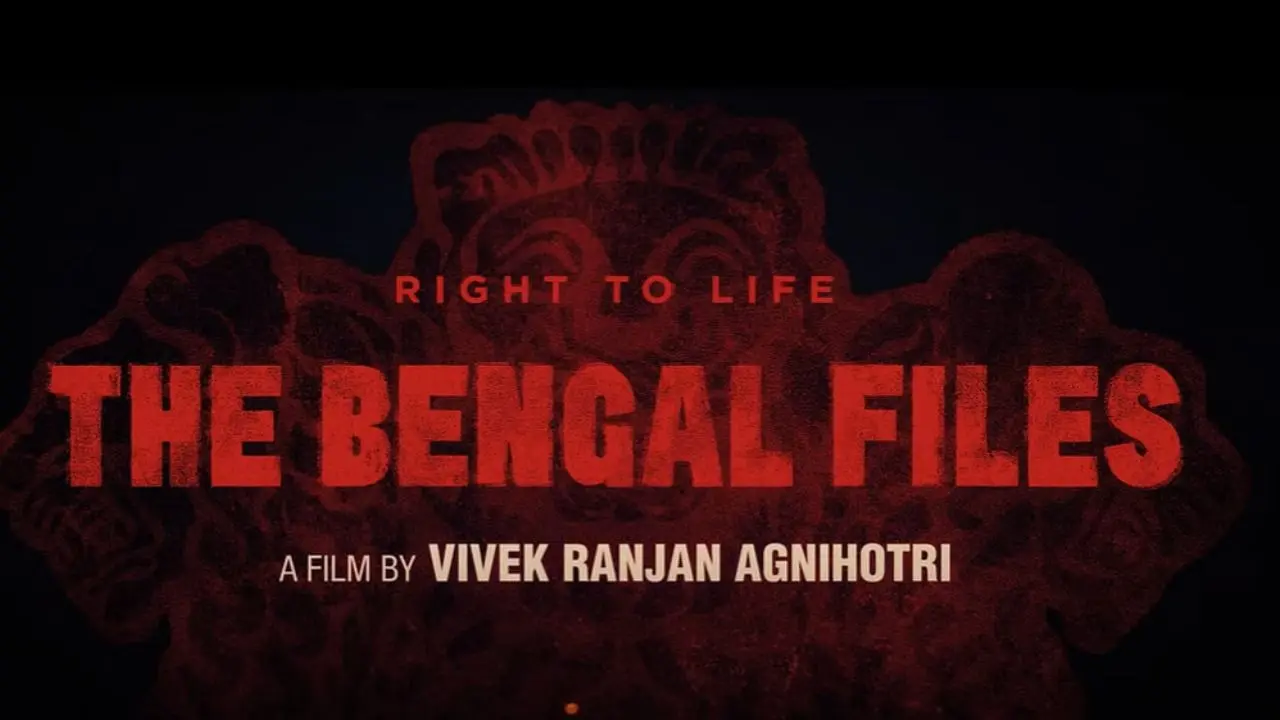
The Bengal Files: Vivek Agnihotri will release his controversial film in cinemas on September 5. This movie is the second part of his planned trilogy, following the blockbuster The Kashmir Files (2022). Before its release, let us look at the real story behind The Bengal Files, which revives the forgotten horror of Noakhali 1946 and also shows the persecution of Hindus across Bengal.
What is the real story of Bengal Files?
The Bengal Files is about the tragic events of Direct Action Day that happened on August 16, 1946. Known as the 1946 Great Calcutta Killings, the violence spread across the Bengal Presidency, reaching areas like Noakhali, Tipperah, and Comilla, all depicted in the movie in a way through a cinematic lens. Based on real incidents of communal unrest, the story will also show moments that deeply influenced India’s journey towards independence and partition.
As per IMDb, the plot follows a criminal investigator who, while handling a missing person case, exposes a web of corruption. At the same time, another character reflects on the communal violence that erupted before India’s partition.
Advertisement
What happened in The Great Calcutta Killings?
The Great Calcutta Killings, also called the 1946 Calcutta Riots or Direct Action Day, marked a period of intense communal violence in Calcutta (now Kolkata), British India. The All-India Muslim League’s call for “direct action” to demand a separate Muslim homeland triggered the violence, mainly between Muslims and Hindus.
In Kolkata, the call turned into a massacre. Mobs, driven by violent rhetoric, stormed Hindu neighbourhoods. As per reports, eyewitnesses suggested that law enforcement under Premier Huseyn Shaheed Suhrawardy stood aside, while Hindu officers were transferred before the violence began. Within 48 hours, mobs reportedly killed over 40,000 Hindus, burned homes, violated women, and wiped out entire families. However, the exact numbers are still not officially mentioned.
Advertisement
Many reports stated that more than 100,000 residents lost their homes within three days. The violence quickly spread to Noakhali, Bihar, United Provinces (now Uttar Pradesh), Punjab, including the Rawalpindi massacres, and the North-Western Frontier Province.
This day became known as The Week of the Long Knives. While historians agree on the scale of the killings and their immediate effects, disputes remain over the exact sequence of events, the roles of different actors, and the long-term political impact. These events eventually paved the way for the Partition of India.
Get Current Updates on India News, Entertainment News, Cricket News along with Latest News and Web Stories from India and around the world.