
Huge Milestone: All You Need to Know About Adfalcivax - India's First Indigenous Multi-stage Malaria Vaccine
India has developed its first indigenous multi-stage malaria vaccine, named Adfalcivax. This breakthrough marks a major step in the nation’s fight against Malaria.
- Health News
- 3 min read

;'%3e%3cpath%20d='m8,15.99c4.41,0,7.99-3.58,7.99-7.99S12.41,0,8,0,0,3.59,0,8s3.58,7.99,7.99,7.99Z'%20style='stroke:%23fff;%20stroke-miterlimit:10;%20stroke-width:.02px;'/%3e%3cpath%20d='m3.08,3.37l3.82,5.11-3.84,4.15h.87l3.37-3.64,2.72,3.64h2.94l-4.04-5.39,3.58-3.87h-.86l-3.1,3.35-2.5-3.35h-2.94Zm1.27.64h1.35l5.97,7.99h-1.35l-5.97-7.99Z'%20style='fill:%23fff;'/%3e%3c/g%3e%3c/svg%3e)


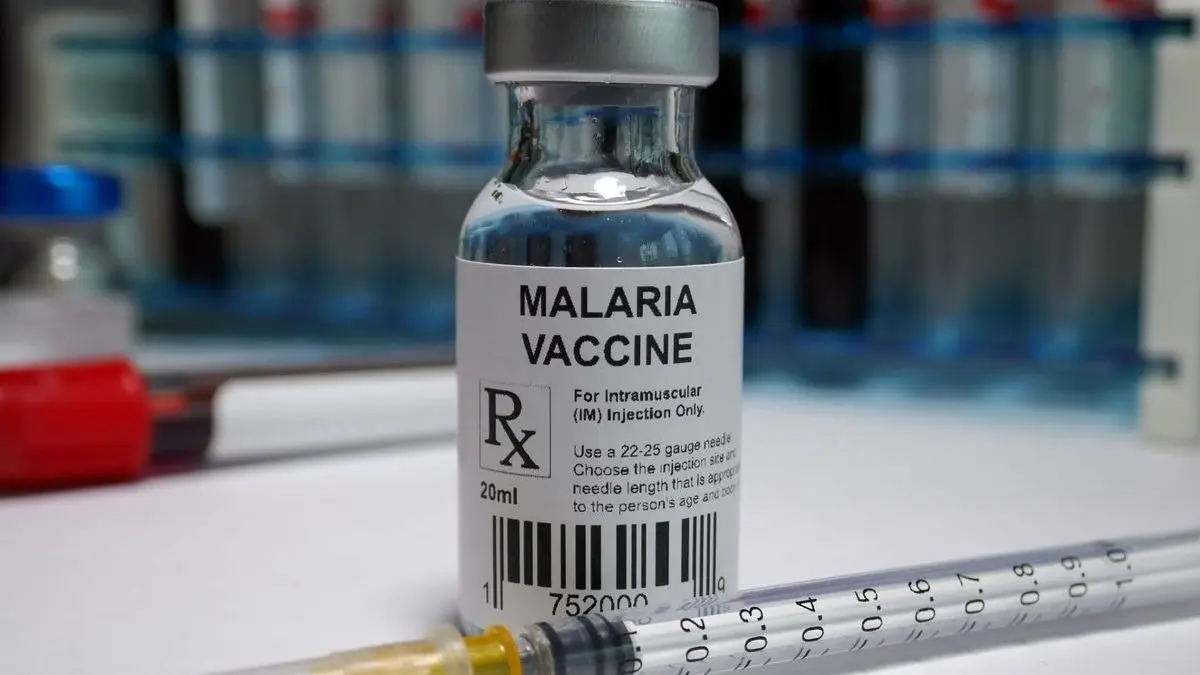
In a big victory towards eliminating malaria by 2030, the Indian Council of Medical Research (ICMR) and partners licensed the first multi-stage malaria vaccine AdFalciVax to five companies earlier this week. This comes as a big breakthrough in India's decades-long fight against the infection. AdFalciVax is the first indigenous recombinant chimeric malaria vaccine specifically designed to target two critical stages of Plasmodium falciparum, the parasite responsible for the most lethal form of malaria. The vaccine aims to protect against human infection while also reducing vector-borne community transmission of the parasite.
Earlier this week, the ICMR licensed its multi-stage vaccine to 5 companies - Indian Immunologicals Limited, Techinvention Lifecare Private Limited, Panacea Biotec Limited, Biological E Limited, and Zydus Lifesciences. The announcement for the same was made at the India MedTech Expo 2025 held in the National Capital. As of now, the vaccine has been licensed to the 5 companies for scale-up and manufacturing, with human trials yet to take place. In an official release, the ICMR shared that the AdFalciVax vaccine will target the parasite before it enters the bloodstream, preventing its transmission. As per the officials, “It is affordable, scalable and remains effective for over nine months at room temperature."
The vaccine has demonstrated excellent efficacy in the preclinical stage of development. Preclinical data suggest that AdFalciVax may have advantages over existing single-stage vaccines, including broader protection by targeting two vulnerable parasite stages, lower risk of immune evasion, potential for better long-term immunity, and extended thermal stability with functionality maintained for over nine months at room temperature.

As per a press release by the Ministry of Health & Family Welfare, “the country has achieved a reduction of over 78% in malaria cases and nearly 78% in malaria-related deaths between 2015 and 2024. Further, 160 districts have reported zero malaria cases between 2022-24, and 33 States/UTs have achieved API (Annual Parasite Incidence) less than one, except three states.”
Also Read: Is Gen Z More Prone to Acid Reflux? Doctor Answers
Advertisement
The release further states, “the Government of India has launched multiple initiatives towards malaria elimination, including the National Strategic Plan for Malaria Elimination (2023-27), implementation of the Integrated Health Management Platform (IHIP) for real-time monitoring, enhanced ASHA incentives, large-scale distribution of Long-Lasting Insecticidal Nets (LLINs), refresher trainings for laboratory technicians, and recognition of districts achieving “Zero Malaria” status. India has set the goal of eliminating malaria by 2030.”
Also Read: Heart Attacks Could Be "Infectious," Caused by Hidden Bacteria