
What Is Hara Hachi Bu? The Japanese Eating Habit Linked To Longevity
Hara Hachi Bu is a traditional Japanese eating habit that encourages people to stop eating when they feel about 80 per cent full. The practice, commonly followed in Okinawa, is often linked to mindful eating, portion control and the region’s high life expectancy.
- Health News
- 3 min read

;'%3e%3cpath%20d='m8,15.99c4.41,0,7.99-3.58,7.99-7.99S12.41,0,8,0,0,3.59,0,8s3.58,7.99,7.99,7.99Z'%20style='stroke:%23fff;%20stroke-miterlimit:10;%20stroke-width:.02px;'/%3e%3cpath%20d='m3.08,3.37l3.82,5.11-3.84,4.15h.87l3.37-3.64,2.72,3.64h2.94l-4.04-5.39,3.58-3.87h-.86l-3.1,3.35-2.5-3.35h-2.94Zm1.27.64h1.35l5.97,7.99h-1.35l-5.97-7.99Z'%20style='fill:%23fff;'/%3e%3c/g%3e%3c/svg%3e)


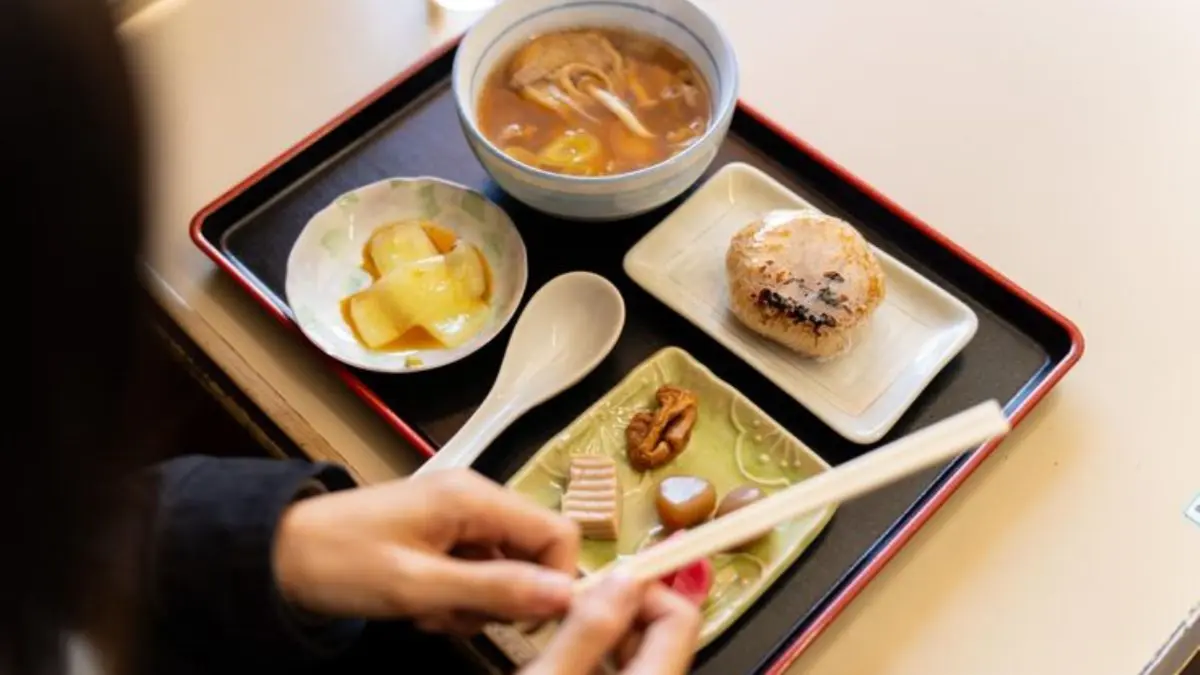
In a world where rushed meals, overeating and binge-eating snacks have become common, a traditional Japanese eating habit called Hara Hachi Bu is grabbing attention online. This practice encourages people to stop eating before feeling full, and is associated with mindful eating and moderation. This practice is commonly followed in the healthiest city in Japan, Okinawa. It is a region known for its large population of centenarians, individuals who have reached or surpassed the age of 100. Hara Hachi Bu has been linked to healthy ageing and balanced eating habits.
What does Hara Hachi Bu mean?

The term translates to "eat until you're 80 per cent full." The phrase originates from a Confucian teaching that was adopted into Okinawan cultural practice centuries ago. The phrase serves as a self-reminder spoken before or during meals to stop eating when the stomach feels approximately 80 per cent full rather than continuing to feel full. It is commonly practised in Okinawan culture as a reminder to avoid overeating. The number one reason why this city has a large number of centenarians is that Hara Hachi Bu is one of several lifestyle habits commonly associated with Okinawan culture, along with active living and balanced diets.
How is it connected to mindful eating?
Experts often connect Hara Hachi Bu with mindful eating because the practice encourages people to pay attention to hunger and fullness cues instead of eating quickly or distractedly. According to Harvard Health Publishing, mindful eating involves paying attention to the eating experience and recognising feelings of hunger and satiety. Research also suggests that eating slowly may help people recognise fullness signals more effectively.
Advertisement
Health benefits of Hara Hachi Bu
The practice is associated with mindful eating and portion awareness, which helps support healthy eating habits over time. Here are some of the health benefits of the mentioned practice:
Supports digestion
Eating moderate portions rather than heavy meals helps people feel less uncomfortable after eating. Mindful eating habits are associated with slower eating and better awareness of hunger signals.
Advertisement
Encourages portion control
Rather than focusing on restriction, the practice focuses on moderation, which naturally supports portion awareness and balanced eating habits. Portion control is considered an important part of maintaining a healthy lifestyle.
Supports weight management
While this practice is not designed for weight loss, it can support healthy weight management. Mindful eating and moderate calorie intake, with healthier weight management habits, can be combined with balanced nutrition and physical activity.
Often linked to healthy ageing and longevity
According to the National Institute of Health, it supports longevity by preventing overeating, allowing natural calorie restriction, and reducing metabolic stress. This mindful approach helps lower the risk of age-related diseases and keeps the body lean over the decades.
Promotes mindful eating habits
According to the Cleveland Clinic, the practice promotes mindful eating by encouraging an individual to stop eating when they are 80 per cent full. It trains a person to pause, chew slowly, and tune into their body's natural satiety cues rather than eating until they feel uncomfortably stuffed