
500 GW By 2030: Is India's Biggest Energy Bet Finally Paying Off?
India's surging power demand is driving a rapid clean energy shift with 308 GW of non-fossil capacity, including 171 GW of solar, as policy push and C&I demand accelerate towards a 500 GW target by 2030.
- India News
- 6 min read


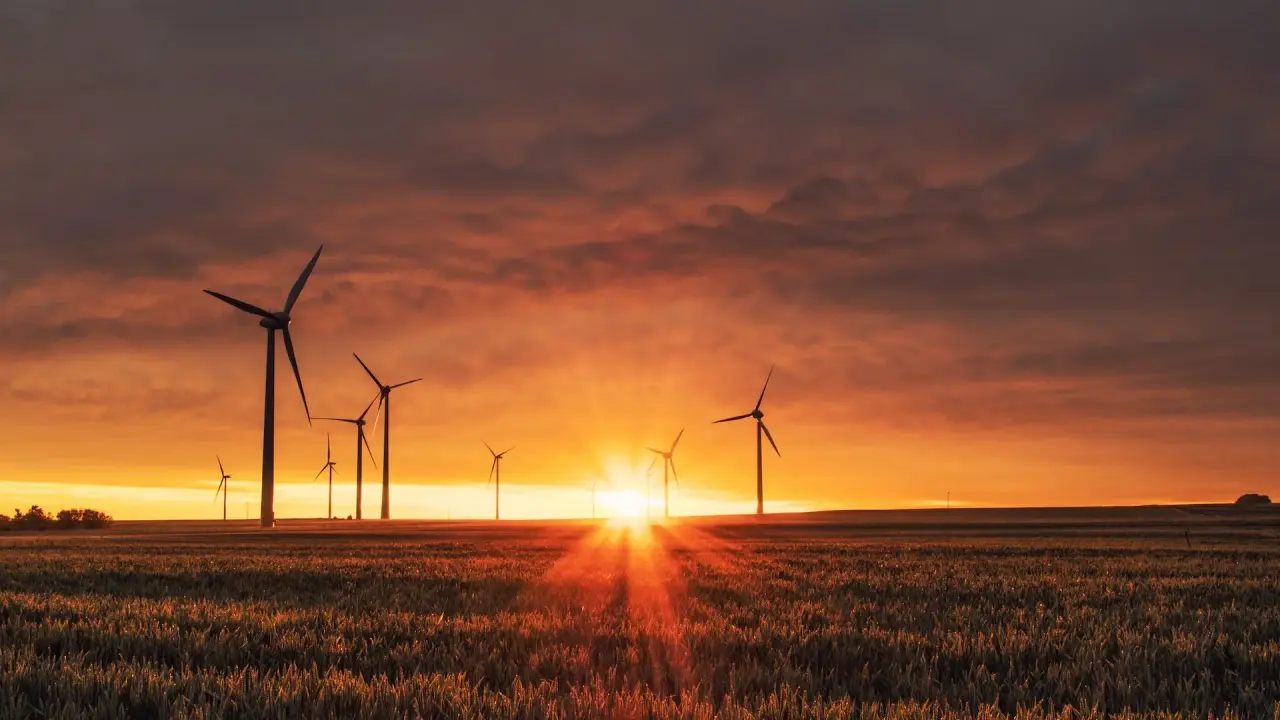
New Delhi: India's appetite for power is growing faster than ever, driven by a rapidly expanding economy, accelerating urbanisation, and a population increasingly reliant on energy-intensive manufacturing and digital infrastructure. Amidst growing demand, the nation faces a dual challenge of securing reliable electricity and curbing emissions, a challenge that Prime Minister Narendra Modi has placed at the centre of India's development agenda.
The change towards clean energy for a country like India that still depends heavily on fossil fuels for base-load power is no longer just an environmental commitment, but under the Narendra Modi government, it has become an economic and energy security imperative, linked to the Prime Minister's vision of Atmanirbhar Bharat and net-zero by 2070.
The urgency can be seen in the scale of progress already achieved under government-led reforms. The country's installed renewable capacity excluding large hydro has reached 247.18 GW, taking total non-fossil capacity to 308.03 GW, with solar power now forming the bedrock at 171.05 GW supported by 59.20 GW of wind. Driven by a record addition of 55.29 GW in FY 2025–26 alone, including 44.61 GW of solar, India is steadily advancing towards the ambitious 500 GW non-fossil capacity target by 2030 set by Prime Minister Modi.
The industrial depth is what is making this transition viable and not just installation. The policy mechanisms championed by the Centre, such as the Approved List of Models and Manufacturers and Production Linked Incentive schemes, are building a domestic manufacturing base for high-efficiency solar modules and advanced chemistry cells, while surging demand from commercial and industrial buyers through open access and round-the-clock green power agreements is making clean energy commercially competitive.
Advertisement
Now, at a time when costs are falling and scale is improving, commercial and industrial buyers are rapidly shifting towards open access, group captive models and round-the-clock green power purchase agreements to meet competitive tariffs and stringent ESG commitments, aligning with the government's push for Make in India and green growth.
Underpinning the expansion is a strong manufacturing and storage strategy, a theme that took centre stage at the 19th edition of the Renewable Energy India Expo, which opened in Greater Noida this week. The 3-day event, being held from October 22 to 24 at the India Expo Mart, is co-located with the 4th edition of The Battery Show India (TBSI) and the 2nd edition of the Energy Storage Summit India (ESSI), platforms that showcase the outcomes of the Modi government's clean energy roadmap.
Advertisement
Domestic Manufacturing And Policy Push Powering Growth
The experts noted at the event that critical policy interventions are shaping domestic supply chains. The expo showed the scale of industry interest, with the organisers saying that the platform brings together over 1080 exhibitors, 1400 brands and over 54,000 industry professionals, with participation spanning international markets. It is positioned as a meeting point for global businesses, technology providers, industry leaders and policymakers to exchange perspectives, explore emerging technologies and forge partnerships that will shape the future of clean energy and energy storage.
As intermittent solar and wind scale up, Battery Energy Storage Systems (BESS) have emerged as the absolute backbone of grid integration and peak demand management. Under the Central Electricity Authority's National Electricity Plan, India is projected to require a staggering 208 GWh of battery storage capacity by 2030, with over 35.8 GWh already under active construction.
To support the ramp-up, central frameworks including the PLI scheme for Advanced Chemistry Cell (ACC) manufacturing and major grid initiatives such as the Green Energy Corridor Phase III are unlocking billions in capital to set up localised gigafactories. Covering everything from advanced cell chemistries like LFP and sodium-ion and Battery Management Systems to utility-scale containerised BESS and battery recycling, the market is now attracting high-value joint ventures between global technology leaders and domestic energy majors to build a self-reliant and future-ready energy storage supply chain.
The inaugural ceremony saw the presence of government officials and industry leaders, including John Swinney MSP, First Minister of Scotland; HE Philip Green OAM, Australia's High Commissioner to India; Dr Jai Asundi, Executive Director, Centre for Study of Science, Technology and Policy, India; H.E. Inga Ionesii, Ambassador of the Republic of Moldova to India; and Levente Kardos, Economic and Commercial Counsellor, Embassy of Hungary.
Madhya Pradesh's Additional Chief Secretary for Power and Renewable Energy, Manu Srivastav, said, "The Renewable Energy India Expo continues to witness growing participation and enthusiasm, reflecting the increasing potential and economic viability of the clean energy sector. Renewable energy is becoming more affordable by the day, with declining costs and economies of scale making it increasingly competitive with conventional power. These trends create significant opportunities to scale up adoption over the next two to five years. India also has a strong clean energy story to share with other countries as the sector continues to evolve. With the economic case for renewable energy strengthening, the outlook remains encouraging for the industry's growth and expansion."
Scotland And Industry Leaders Call For Collaboration
First Minister of Scotland John Swinney said, "Scotland and India share a common ambition: to build prosperous, modern economies powered by clean energy, innovation and international partnerships. If we work together, we can help ensure that more of the economic benefits of the energy transition are felt in our communities, support our businesses and create lasting opportunities for people in both of our countries. It was a privilege to address the Renewable Energy India Expo today, one of the largest clean energy events in Asia. Scotland is ready to be a partner in India's energy transition and together we can realise our ambitions by combining Scottish expertise and innovation with India's scale, talent and capability."
Speakers also outlined that India has made impressive progress in the renewable energy journey, crossing 300 GW of installed renewable energy capacity and establishing itself as a major global player in clean energy. As the country works towards the target of 500 GW of non-fossil fuel-based electricity capacity by 2030 and net-zero emissions by 2070, the focus must now shift towards building a resilient, reliable and globally competitive clean energy ecosystem. The efforts will require continued investment in domestic manufacturing, energy storage, grid infrastructure, research and innovation, alongside a skilled workforce and stronger industry-academia partnerships. Equally important is ensuring that the benefits of the energy transition reach households, farmers and businesses across all regions, a journey that is supported through rigorous research, technology assessment and evidence-based policy recommendations.
The REI Expo focuses on expanding renewable power generation across utility-scale solar, bioenergy, green hydrogen and decentralised applications. International participation was highlighted by Australia as the Official Partner Country, dedicated country pavilions from Germany and Australia, and a Bioenergy Pavilion featuring over 50 global companies. Delegations from Scotland, the European Union, South Korea, Japan, Taiwan and China are also attending, while the Startup Pavilion and Investor Zone are offering opportunities for emerging businesses, investors and industry stakeholders to connect.
Running concurrently, The Battery Show India and Energy Storage Summit 2026, supported by the Ministry of Heavy Industries, address the critical systems needed to power electric mobility and integrate renewable energy into the grid.
Get Current Updates on India News, Entertainment News, Cricket News along with Latest News and Web Stories from India and around the world.