
Updated 12 July 2025 at 15:09 IST
Air India Plane Crash Report: Flying Experience Of Two Pilots Who Tried To Save AI-171 After Fuel Cutoff
Two Air India pilots made desperate efforts to save their Boeing 787 after the engines suddenly shut down during takeoff, according to a preliminary crash investigation report. Captain Sumeet Sabharwal and First Officer Clive Kunde worked to restart the engines moments before the aircraft crashed near Ahmedabad airport. Here’s what the report reveals about who they were and their flying experience.
- India News
- 3 min read

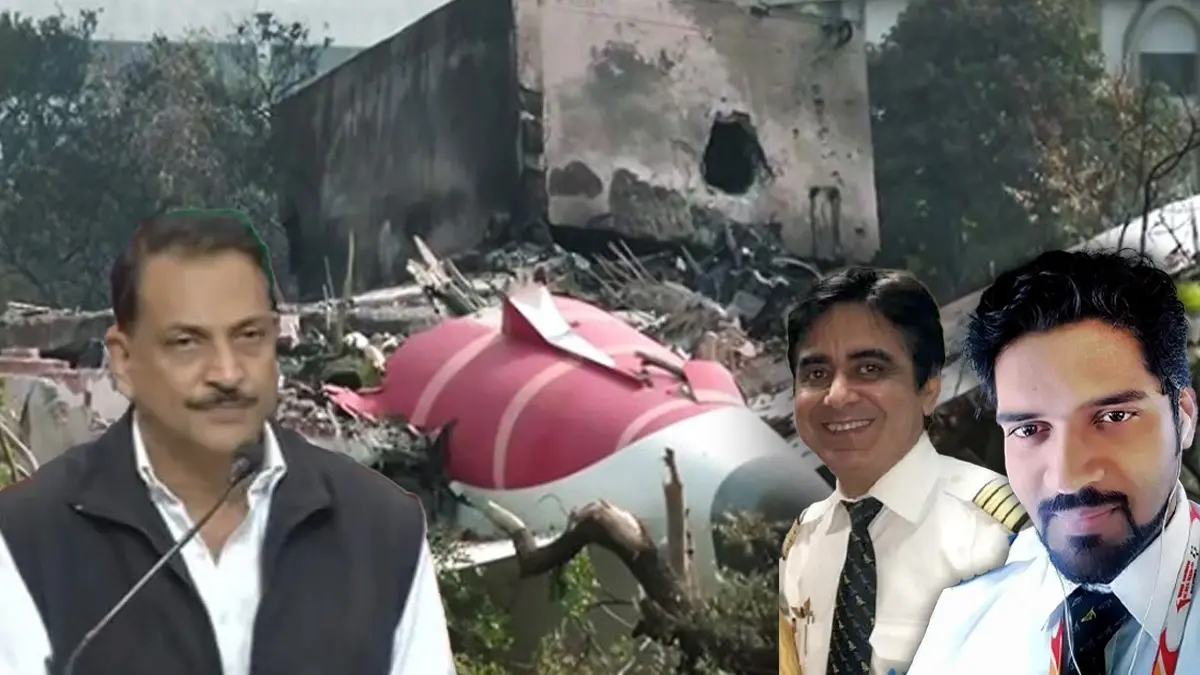
Investigators probing last month’s deadly Air India crash have revealed in a preliminary report that the Boeing 787’s engines were abruptly cut off when their fuel switches were flipped to the “off” position during initial climb-out. The incident confused the cockpit and led to a rapid loss of thrust.
According to the report from India’s Aircraft Accident Investigation Bureau, the switches were turned off one after the other, only seconds apart, as the plane climbed out of Ahmedabad airport on June 12, bound for London.
A cockpit voice recording captured one of the pilots urgently asking the other, “Why did you cut off?” to which the response was, “I did not.”
BJP MP Rajiv Pratap Rudy said, "The AAIB report states that the aircraft took flight normally, meaning it was capable of getting airborne. The jet fuel switch was in its required position. Later, the pilots reported engine power decreasing. Further probe will bring out why the engines had ‘flame out.’ Captain Sabharwal and his co-pilot, using their years of experience, tried to relight the engines... How and why this happened will be known through further investigation..."
Advertisement
Who Were The Two Pilots On Duty?
Captain Sumeet Sabharwal, a 56-year-old with more than 15,600 hours of total flying time, over 8,500 of those hours on the Boeing 787. He held a valid airline transport pilot’s license and was cleared to command multiple wide-body jets.
According to Reuters, before departure, Captain Sabharwal called his family to assure them he would phone again after landing in London. A fellow pilot who knew him described him as “a gentleman.”
Advertisement
First Officer Clive Kunder, 32, was the pilot flying the aircraft during takeoff, the report said. Kunder had logged 3,400 flight hours overall, with about 1,100 hours on the 787 as co-pilot. He began his career in 2012 and joined Air India in 2017, fulfilling a dream he had held since his school days.
What Did The Investigation Report Read?
Flight data shows that after the fuel switches were mistakenly turned off, both engines began to spool down, causing the aircraft to lose altitude almost immediately. The crew tried to recover by re-selecting the fuel switches to “run” and triggering an engine relight sequence. Engine readouts indicated partial success on one engine, but there was not enough time or altitude to regain full thrust before impact.
The aircraft struck trees and then crashed into several buildings beyond the airport perimeter. All 241 people on board perished.
Investigators noted that no maintenance defect had been reported with the fuel control switches in recent years. The switches were found in the “run” position in the wreckage, indicating the pilots had tried to save the aircraft by restoring fuel flow.
The report concluded that while the accident sequence was triggered by the unexpected cutoff, the experienced captain and the younger first officer made determined efforts to relight the engines in the final moments.
“At this stage of the investigation, no safety recommendations have been issued to Boeing 787 or engine operators,” the report said, adding that further analysis is underway.
Get Current Updates on India News, Entertainment News, Cricket News along with Latest News and Web Stories from India and around the world.
Published By : Anubhav Maurya
Published On: 12 July 2025 at 15:04 IST