
Airbus Finds Rare Triple Hydraulic Failure On Air India Phuket-Delhi Flight, Pilots Lost Control For 4 Seconds
An assessment by Airbus on the Air India Phuket-Delhi flight incident revealed that all three hydraulic systems of the A320 briefly lost pressure mid-flight, impairing elevator and aileron control for about four seconds. The simultaneous pressure drop caused the aircraft to descend rapidly by 300 feet, injuring 24 people onboard.
- India News
- 3 min read

;'%3e%3cpath%20d='m8,15.99c4.41,0,7.99-3.58,7.99-7.99S12.41,0,8,0,0,3.59,0,8s3.58,7.99,7.99,7.99Z'%20style='stroke:%23fff;%20stroke-miterlimit:10;%20stroke-width:.02px;'/%3e%3cpath%20d='m3.08,3.37l3.82,5.11-3.84,4.15h.87l3.37-3.64,2.72,3.64h2.94l-4.04-5.39,3.58-3.87h-.86l-3.1,3.35-2.5-3.35h-2.94Zm1.27.64h1.35l5.97,7.99h-1.35l-5.97-7.99Z'%20style='fill:%23fff;'/%3e%3c/g%3e%3c/svg%3e)


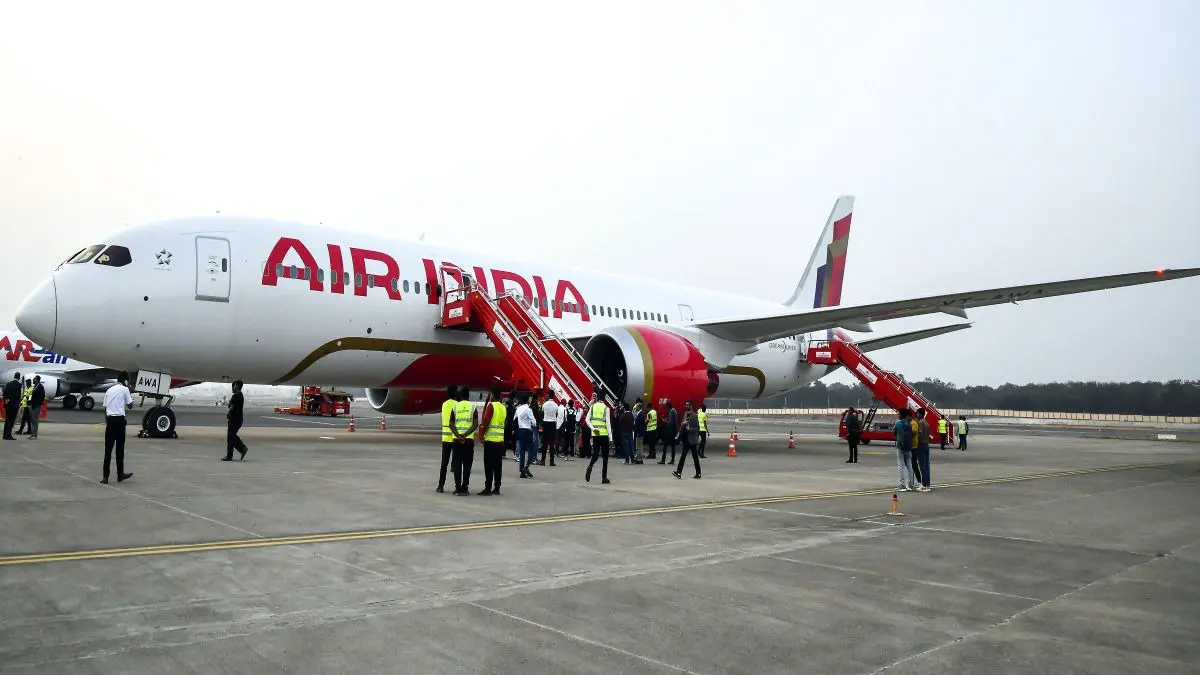
New Delhi: An initial assessment by Airbus into the Air India Phuket-Delhi flight incident has found that all three hydraulic systems of the Airbus A320 briefly lost pressure mid-flight, leaving the pilots without normal elevator and aileron control for several seconds.
The preliminary findings, based on an assessment of the aircraft's flight data recorders, indicate that the Green, Blue and Yellow hydraulic systems registered a pressure drop within about one second of each other. The simultaneous loss of pressure affected the aircraft's flight controls and left the pilots struggling to respond to the sudden change in aircraft attitude.
According to the preliminary assessment shared by Airbus, the aircraft was without effective elevator and aileron control for around four seconds. During the episode, the co-pilot applied full nose-down input, but the aircraft's controls initially failed to respond. Hydraulic pressure was subsequently restored, allowing the flight-control systems to reconnect and respond to pilot inputs.

The incident occurred when the A320 rapidly lost altitude after an unexpected change in its flight path. The aircraft dropped by around 300 feet, throwing passengers and cabin crew upwards and injuring 24 people.
Advertisement
What Happened Inside the Aircraft?
The A320 is equipped with three independent hydraulic systems - Green, Blue and Yellow - designed to provide redundancy so that the failure of one system does not result in a loss of aircraft control. In the Air India aircraft, however, all three systems showed a pressure drop almost simultaneously.
The loss of hydraulic control temporarily affected the aircraft's elevators and ailerons, which are crucial for controlling pitch and roll. The ailerons control the aircraft's movement around its longitudinal axis, while the elevators control its nose-up and nose-down movement.
Advertisement
According to the preliminary assessment, the ailerons moved in the same direction during the incident instead of operating in opposite directions. This generated additional lift on the wings and caused the aircraft's nose to rise sharply without pilot input.
The autopilot then disengaged as the aircraft entered an abnormal condition. The first officer took manual control and pushed the aircraft's nose down sharply. The resulting rapid downward acceleration caused passengers and cabin crew to be thrown upwards, resulting in injuries.
Around five seconds later, hydraulic pressure was restored across all three systems and the flight-control computers reconnected, after which the aircraft began responding normally to pilot commands.
Airbus Yet to Establish Root Cause
Despite the preliminary findings, Airbus has not yet determined whether there was an actual simultaneous failure of all three hydraulic systems or whether the recorded pressure drop was triggered by an erroneous signal.
Get Current Updates on India News, Entertainment News, Cricket News along with Latest News and Web Stories from India and around the world.