
As India Marks IFS Day on October 9, Take a Look at the Roles, Responsibilities and Duties of Indian Diplomats
The core responsibilities of Indian diplomats serving across missions include protecting India’s national interests in the country of posting and promoting friendly relations with the host state and its people, including Non-Resident Indians (NRIs) and Persons of Indian Origin (PIOs).
- India News
- 4 min read

;'%3e%3cpath%20d='m8,15.99c4.41,0,7.99-3.58,7.99-7.99S12.41,0,8,0,0,3.59,0,8s3.58,7.99,7.99,7.99Z'%20style='stroke:%23fff;%20stroke-miterlimit:10;%20stroke-width:.02px;'/%3e%3cpath%20d='m3.08,3.37l3.82,5.11-3.84,4.15h.87l3.37-3.64,2.72,3.64h2.94l-4.04-5.39,3.58-3.87h-.86l-3.1,3.35-2.5-3.35h-2.94Zm1.27.64h1.35l5.97,7.99h-1.35l-5.97-7.99Z'%20style='fill:%23fff;'/%3e%3c/g%3e%3c/svg%3e)


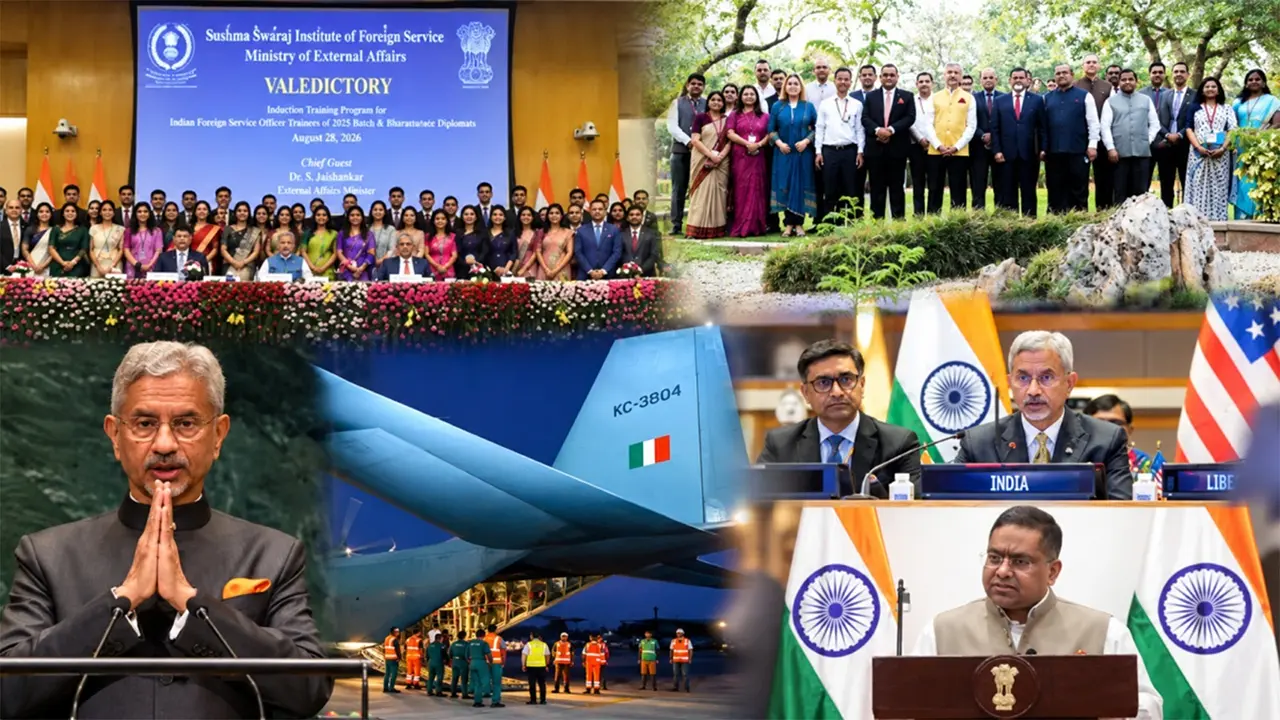
New Delhi: India today observed Indian Foreign Service (IFS) Day, commemorating the establishment of the service on October 9, 1946, for the country’s diplomatic, consular and commercial representation overseas. The occasion highlights the work of IFS officers who staff India’s network of over 200 missions and posts abroad and the Ministry of External Affairs (MEA) at headquarters.
External Affairs Minister S. Jaishankar extended warm greetings to all members of the Indian Foreign Service. In a post on X, he wrote, “Warm greetings to all members of the Indian Foreign Service on #IFSDay 2026. You play a vital role in advancing India’s priorities & interests, building partnerships and contributing to the goal of #ViksitBharat. Your dedication & professionalism continue to enhance India’s voice & standing on the global stage.”
Foreign Secretary Vikram Misri, too, wished colleagues on the day. In a post on X, he wrote, “Happy #IFSDay to all colleagues! For eighty years, we have carried India’s voice at global negotiating tables, in distant postings, and in moments when a citizen needed bringing home. My deepest gratitude to every officer and to the families who share the sacrifice. Jai Hind!”
MEA official spokesperson Randhir Jaiswal also marked the day, stating, “On Indian Foreign Service Day, we reaffirm our commitment to VIKSIT BHARAT and to serving India and her people. From protecting the welfare of Indians abroad to building bridges of friendship and cooperation, we remain dedicated to the service of the nation.”
Advertisement
The IFS was created in September 1946 on the eve of Independence. In 1947, the Foreign and Political Department of the erstwhile government transitioned into the Ministry of External Affairs and Commonwealth Relations. The first batch of officers recruited through the Union Public Service Commission’s combined Civil Services Examination joined in 1948, a system that continues today.
According to the Ministry of External Affairs, the core functions of an Indian diplomat are:
Advertisement
--Representing India in its Embassies, High Commissions, Consulates, and Permanent Missions to multilateral organisations such as the United Nations.
--Protecting India’s national interests in the country of posting.
--Promoting friendly relations with the host state and its people, including Non-Resident Indians (NRIs) and Persons of Indian Origin (PIOs).
--Reporting accurately on developments in the host country that may influence the formulation of India’s policies.
--Negotiating agreements on various issues with the authorities of the receiving state.
--Extending consular facilities to foreigners and Indian nationals abroad.
These duties encompass bilateral political and economic cooperation, trade and investment promotion, cultural interaction, press and media liaison, and engagement on multilateral issues.
At MEA headquarters in New Delhi, officers handle territorial divisions for bilateral work and functional divisions covering policy planning, multilateral organisations, legal matters, disarmament, protocol, consular affairs, the Indian diaspora, and related areas.
Career progression typically begins abroad as Third Secretary (often during language training). Upon confirmation, officers advance to Second Secretary, First Secretary, Counsellor, Minister, and ultimately Ambassador, High Commissioner or Permanent Representative. In consulates, the ranks are Vice-Consul, Consul and Consul General. At headquarters, the hierarchy runs from Under Secretary through Deputy Secretary, Director, Joint Secretary and Additional Secretary to Secretary.
New recruits undergo foundation training at the Lal Bahadur Shastri National Academy of Administration in Mussoorie alongside other civil service officers, followed by specialised diplomatic training at the Sushma Swaraj Institute of Foreign Service in New Delhi. This includes lectures, attachments, familiarisation tours, and assignment of a compulsory foreign language, in which officers must achieve proficiency before confirmation.
Through these roles, IFS officers advance India’s foreign policy objectives, safeguard citizens overseas, foster economic and cultural ties, and strengthen the country’s global partnerships in support of national development goals.
Get Current Updates on India News, Entertainment News, Cricket News along with Latest News and Web Stories from India and around the world.