
Border Peace, Core Concerns, ‘Three Mutuals’: India’s Clear Message To China At PM Modi-Xi BRICS Meet
India stresses ‘mutual respect, interest and sensitivity’ in Modi-Xi talks, with border peace, existing agreements and a long-term boundary solution taking centre stage.
- India News
- 3 min read

;'%3e%3cpath%20d='m8,15.99c4.41,0,7.99-3.58,7.99-7.99S12.41,0,8,0,0,3.59,0,8s3.58,7.99,7.99,7.99Z'%20style='stroke:%23fff;%20stroke-miterlimit:10;%20stroke-width:.02px;'/%3e%3cpath%20d='m3.08,3.37l3.82,5.11-3.84,4.15h.87l3.37-3.64,2.72,3.64h2.94l-4.04-5.39,3.58-3.87h-.86l-3.1,3.35-2.5-3.35h-2.94Zm1.27.64h1.35l5.97,7.99h-1.35l-5.97-7.99Z'%20style='fill:%23fff;'/%3e%3c/g%3e%3c/svg%3e)


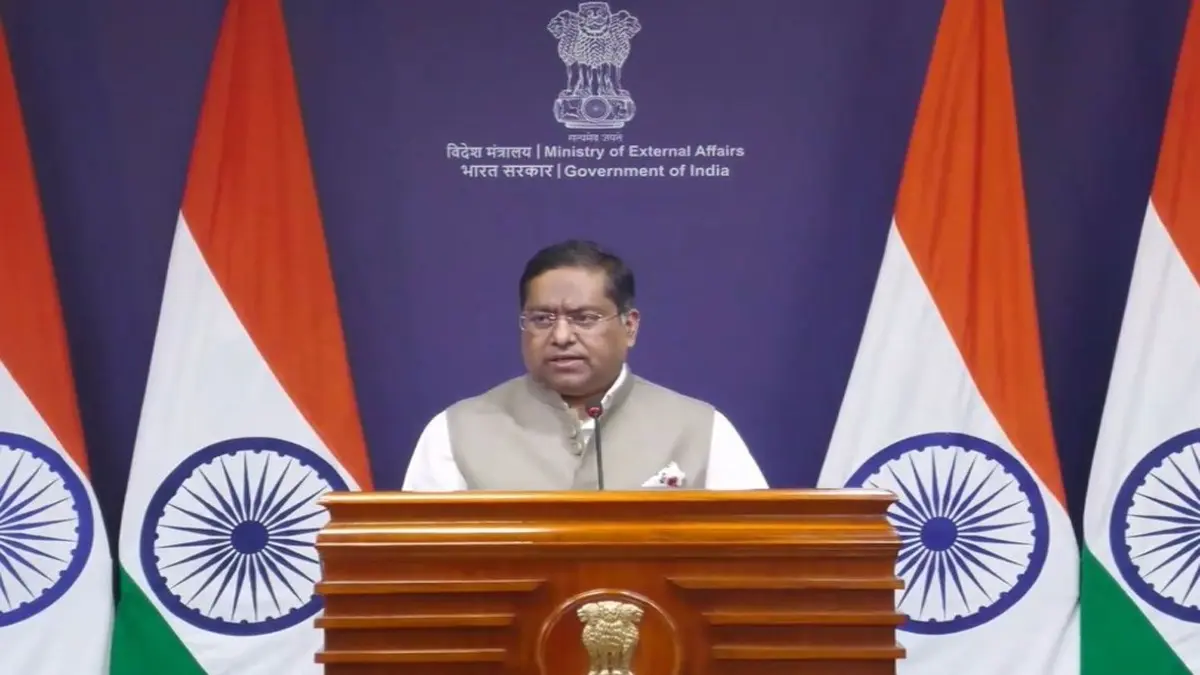
New Delhi: Ministry of External Affairs (MEA) spokesperson Randhir Jaiswal on Tuesday provided key updates on high-profile diplomatic developments, including bilateral talks between Prime Minister Narendra Modi and Chinese President Xi Jinping on the sidelines of the 18th BRICS Summit.
During the bi-weekly media briefing, Jaiswal reiterated that bilateral ties must be anchored by the "three mutuals": mutual respect, mutual interest, and mutual sensitivity, after Prime Minister Narendra Modi raised core Indian concerns with Chinese President Xi Jinping during their meeting at the 18th BRICS Summit in New Delhi.
"Prime Minister referred to Indian concerns as well and underlined that both sides should show sensitivity to each other's core concerns and be guided by the 'three mutuals': mutual respect, mutual interest, and mutual sensitivity," the spokesperson added.
Prime Minister Modi reaffirmed that peace and tranquillity on the border remain essential for sustained progress in bilateral relations, reiterating the necessity of respecting existing agreements.
Advertisement
In line with MEA's formal statement released following the bilateral talks, "Prime Minister emphasised that peace and tranquillity in the border areas remain an essential basis for the continued development of bilateral relations," while stressing "the need for both sides to observe existing agreements and understandings on border-related issues."
Both sides expressed commitment to resolving the boundary question from a strategic, long-term political perspective to achieve a fair, reasonable, and mutually acceptable outcome.
Advertisement
The MEA noted that "the two leaders agreed that both sides must continue to expand common ground on regional and global issues, and in addressing challenges," reaffirming New Delhi's independent foreign policy approach.
The MEA noted that on boundary resolution, India’s position remains focused on constructive, long-term diplomatic channels, with both leaders expressing "commitment to a fair, reasonable, and mutually acceptable resolution of the boundary question proceeding from the political perspective of their overall bilateral relations and the long-term interests of the two peoples."
While Beijing's statement described the two nations as "partners rather than rivals," New Delhi maintained a strategic stance focusing on shared challenges without adopting Beijing's exact phrasing, reflecting a nuanced shift from previous summit readouts.
Meanwhile, the Chinese readout claimed that India reiterated specific stances on Taiwan and Tibet and promised not to allow anti-China activities on its territory.
Beijing’s readout of the talks cited assertions regarding India’s foreign policy orientation and positions on Taiwan and Tibet, noting that "it will not allow any force to engage in anti-China activities on its territory." India's official communications highlight a principle-driven framework centred on shared challenges and mutual respect.
Hosted at Bharat Mandapam, New Delhi, under the theme "Building for Resilience, Innovation, Cooperation and Sustainability," the summit concluded with the adoption of the New Delhi Declaration 2026, which addressed global geopolitical conflicts, including tensions in West Asia.
Get Current Updates on India News, Entertainment News, Cricket News along with Latest News and Web Stories from India and around the world.