
Opposition Submits Notice for Impeachment Motion Against CEC Gyanesh Kumar – Can He Be Removed? What Do the Rules Say?
This marks the first attempt in independent India’s history to impeach a sitting CEC. But can Gyanesh Kumar actually be removed? The answer is yes--but only through an extraordinarily rigorous, quasi-judicial process that mirrors the removal of a Supreme Court judge.
- India News
- 5 min read

;'%3e%3cpath%20d='m8,15.99c4.41,0,7.99-3.58,7.99-7.99S12.41,0,8,0,0,3.59,0,8s3.58,7.99,7.99,7.99Z'%20style='stroke:%23fff;%20stroke-miterlimit:10;%20stroke-width:.02px;'/%3e%3cpath%20d='m3.08,3.37l3.82,5.11-3.84,4.15h.87l3.37-3.64,2.72,3.64h2.94l-4.04-5.39,3.58-3.87h-.86l-3.1,3.35-2.5-3.35h-2.94Zm1.27.64h1.35l5.97,7.99h-1.35l-5.97-7.99Z'%20style='fill:%23fff;'/%3e%3c/g%3e%3c/svg%3e)


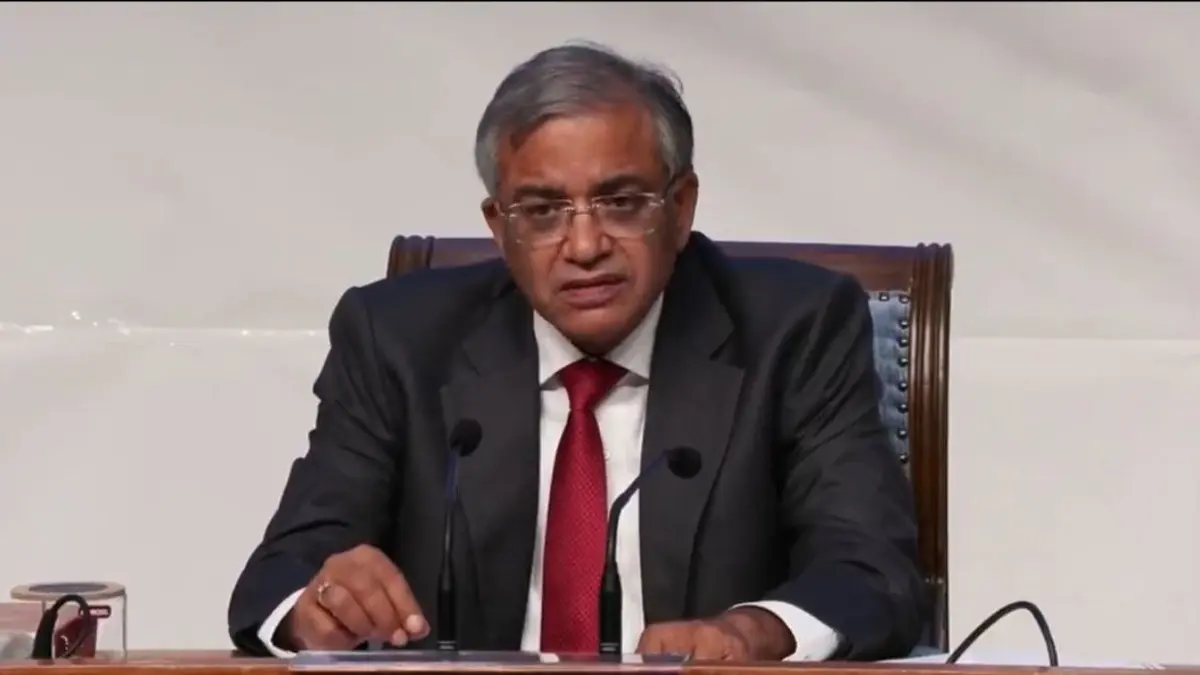
In a rare and unprecedented move, opposition parties under the INDIA bloc, led by the Trinamool Congress (TMC) and supported by the Aam Aadmi Party (AAP), have submitted notices in both Houses of the Parliament seeking the removal of Chief Election Commissioner (CEC) Gyanesh Kumar. With signatures from 193 MPs (including around 130 in Lok Sabha and 63 in Rajya Sabha), the motion cites alleged “partisan and discriminatory conduct,” irregularities in the Special Intensive Revision (SIR) of electoral rolls in West Bengal, mass disenfranchisement of voters, and bias favouring the ruling BJP. Opposition leaders, including TMC MP Saugata Roy, have framed it as an exposure of how the SIR allegedly caused chaos and even loss of lives in the state ahead of crucial assembly polls.
This marks the first attempt in independent India’s history to impeach a sitting CEC. But can Gyanesh Kumar actually be removed? The short answer is yes--but only through an extraordinarily rigorous, quasi-judicial process that mirrors the removal of a Supreme Court judge. The high constitutional bar is deliberately designed to shield the Election Commission of India (ECI) from political interference, underscoring its role as the guardian of free and fair elections.
What the Constitution and Law Explicitly Say?
The foundational provision is Article 324(5) of the Constitution of India, which states, “the Chief Election Commissioner shall not be removed from his office except in like manner and on the like grounds as a Judge of the Supreme Court.” The conditions of service of the CEC also cannot be varied to his disadvantage after appointment. Other Election Commissioners, by contrast, can be removed only on the recommendation of the CEC himself.
This is reinforced by the Chief Election Commissioner and Other Election Commissioners (Appointment, Conditions of Service and Term of Office) Act, 2023 (Section 11), which repeats the exact wording: removal of the CEC is permitted only “in like manner and on the like grounds as a Judge of the Supreme Court.” The grounds are strictly limited to two: proved misbehaviour (such as abuse of power, corruption, or deliberate partiality) or incapacity (physical or mental inability to discharge duties). No other reasons--political disagreement or policy differences--qualify.
Advertisement
The Step-by-Step Removal Process
The procedure, drawn from Article 124(4) of the Constitution and regulated by the Judges (Inquiry) Act, 1968, is deliberately cumbersome:
-A motion must be signed by at least 100 members of the Lok Sabha or 50 members of the Rajya Sabha and submitted to the Speaker or Chairman. Opposition parties have cleared this threshold.
Advertisement
-The Speaker (Lok Sabha) or Chairman (Rajya Sabha) examines and may admit or refuse the motion.
-If admitted, a three-member independent committee is constituted--one sitting Supreme Court judge, one Chief Justice of a High Court, and a distinguished jurist. This panel conducts a formal investigation, hears evidence, and submits a report on whether “proved misbehaviour or incapacity” is established.
-Only if the committee finds the CEC guilty does the motion proceed to debate. It must be passed in both Houses in the same session by a special majority: a majority of the total membership of the House and at least two-thirds of members present and voting.
-An address is presented to the President, who then issues the formal order of removal.
The process typically takes months and involves judicial scrutiny, making it far more demanding than a simple no-confidence motion or censure.
Analytical Perspective: High Bar, Low Likelihood of Success
While the opposition has cleared the first procedural hurdle, the numbers for actual removal are daunting. In the current Lok Sabha, the ruling NDA holds a comfortable majority; achieving a two-thirds majority (roughly 362 votes in a 543-member House, counting total strength) plus support from more than half the total membership is politically improbable without cross-party defections. Rajya Sabha presents a similar arithmetic challenge. No CEC has ever been removed in India’s history, and even Supreme Court judges have rarely faced successful impeachment motions (none have been removed via this route to date).
This stringent safeguard is not accidental. It flows from the framers’ intent to insulate the ECI, the “watchdog of democracy”, from executive or legislative pressure. As the Supreme Court has noted in related rulings, the CEC’s security of tenure ensures the Commission can function without fear or favour. Critics of the current motion argue it risks politicising a constitutional office, especially when allegations centre on routine administrative exercises like voter-list revision. Supporters counter that proven bias or systemic disenfranchisement would constitute exactly the “misbehaviour” the Constitution contemplates.
In practice, therefore, the motion is more symbolic than decisive: it puts the CEC and the ECI under intense public and parliamentary scrutiny, forces an inquiry (if admitted), and amplifies opposition grievances ahead of state polls. Yet the constitutional architecture makes removal exceptionally difficult, precisely to prevent the very partisan battles now playing out.
Ultimately, whether Gyanesh Kumar faces an inquiry or the motion is dismissed will test the resilience of India’s democratic institutions. The rules are clear: impeachment is possible, but only when misbehaviour or incapacity is not merely alleged, but rigorously proved. In a democracy, accountability must coexist with independence, and Article 324(5) strikes that delicate balance. The coming weeks will show whether Parliament respects this constitutional guardrail or tests its limits.
Get Current Updates on India News, Entertainment News, Cricket News along with Latest News and Web Stories from India and around the world.