
Census 2027: Wrong Answers To 33 Questions? Fine, Legal Action & Key Rules You Must Know
India’s Digital Census 2027 begins with 33 questions in phase one. Giving incorrect information or refusing can lead to penalties under the Census Act—know fines, legal rules, and what questions will be asked before you respond.
- India News
- 2 min read

;'%3e%3cpath%20d='m8,15.99c4.41,0,7.99-3.58,7.99-7.99S12.41,0,8,0,0,3.59,0,8s3.58,7.99,7.99,7.99Z'%20style='stroke:%23fff;%20stroke-miterlimit:10;%20stroke-width:.02px;'/%3e%3cpath%20d='m3.08,3.37l3.82,5.11-3.84,4.15h.87l3.37-3.64,2.72,3.64h2.94l-4.04-5.39,3.58-3.87h-.86l-3.1,3.35-2.5-3.35h-2.94Zm1.27.64h1.35l5.97,7.99h-1.35l-5.97-7.99Z'%20style='fill:%23fff;'/%3e%3c/g%3e%3c/svg%3e)


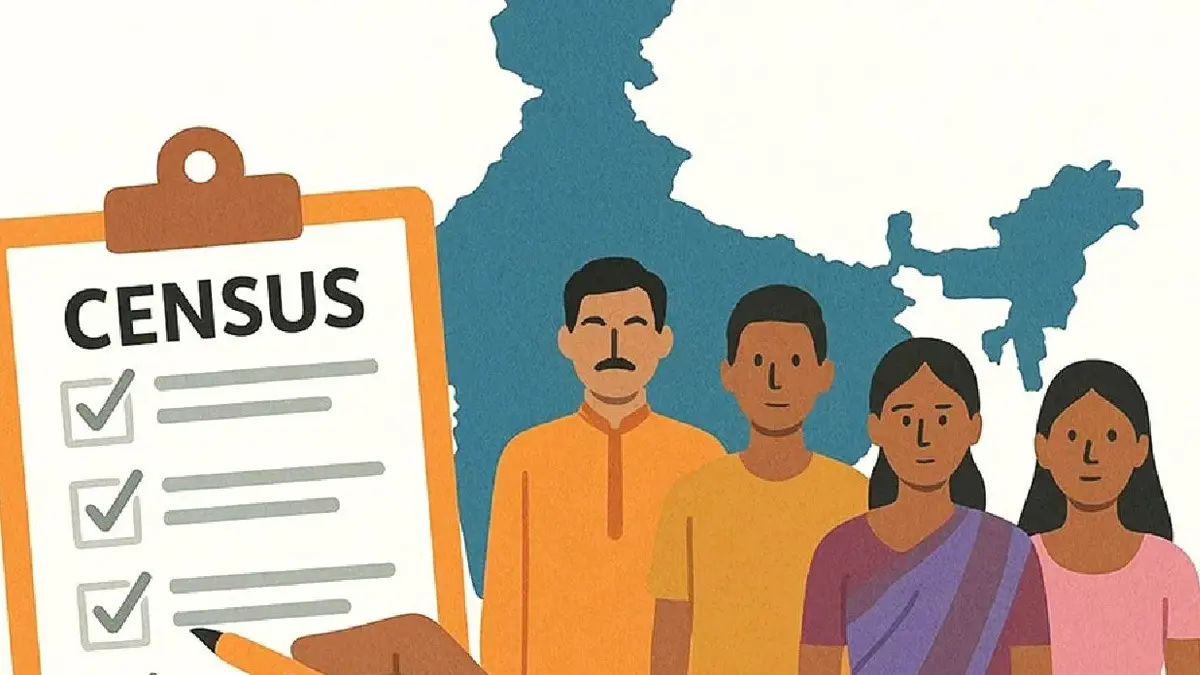
New Delhi: As India prepares for the massive undertaking of the 2027 National Census, the Central Government has issued a warning to citizens regarding the accuracy of the information provided.
Under the updated framework for the upcoming exercise, providing false answers or intentionally misleading officials on any of the 33 scheduled questions could lead to heavy fines, legal prosecution, and a permanent entry on official records.
The Cost of Misinformation
To ensure the integrity of the data, the government is strictly enforcing provisions of the Census Act.
Officials have clarified that while accidental errors may be corrected, deliberate furnishing of false information is a punishable offence.
Advertisement
The penalties for non-compliance or misinformation include:
Immediate administrative fines for those who refuse to answer or provide blatantly false data.
Advertisement
Prosecution under the Census Act, which can lead to imprisonment in extreme cases of organised data manipulation.
Digital cross-referencing with existing databases such as Aadhaar and PAN to identify discrepancies.
33 Questions: What You Need to Know?
The 2027 Census will feature a questionnaire comprising 33 specific points.
These cover a wide range of demographics, including access to basic amenities (electricity, water, sanitation), educational qualifications, employment status, and digital literacy.
For the first time, questions regarding the consumption of digital services and the use of smartphones are expected to be included to map India’s Digital Divide.
Key Rules for Citizens
To avoid legal complications, the government has released a set of guidelines for the public:
1. Every head of the household is legally bound to provide information to the Census officer.
2. While the citizen must be honest, the government is also legally bound to keep individual data confidential.
3. Census data cannot be used as evidence in a court of law against the individual.
4. Citizens are encouraged to use the Self-Enumeration portal, which allows families to fill out the 33 questions online before the enumerator visits, reducing the margin for verbal errors.
As the 2027 Census approaches, authorities emphasise that accurate data is a civic duty, essential for the fair distribution of resources and the successful implementation of welfare schemes over the next decade.
Get Current Updates on India News, Entertainment News, Cricket News along with Latest News and Web Stories from India and around the world.