
Connecting 12 Districts, Over 500 Villages: How Ganga Expressway Is Going To Transform Uttar Pradesh
The 594-km Ganga Expressway, India's longest greenfield corridor, nears launch to connect 12 UP districts and boost economy, trade, and mobility.
- India News
- 4 min read

;'%3e%3cpath%20d='m8,15.99c4.41,0,7.99-3.58,7.99-7.99S12.41,0,8,0,0,3.59,0,8s3.58,7.99,7.99,7.99Z'%20style='stroke:%23fff;%20stroke-miterlimit:10;%20stroke-width:.02px;'/%3e%3cpath%20d='m3.08,3.37l3.82,5.11-3.84,4.15h.87l3.37-3.64,2.72,3.64h2.94l-4.04-5.39,3.58-3.87h-.86l-3.1,3.35-2.5-3.35h-2.94Zm1.27.64h1.35l5.97,7.99h-1.35l-5.97-7.99Z'%20style='fill:%23fff;'/%3e%3c/g%3e%3c/svg%3e)


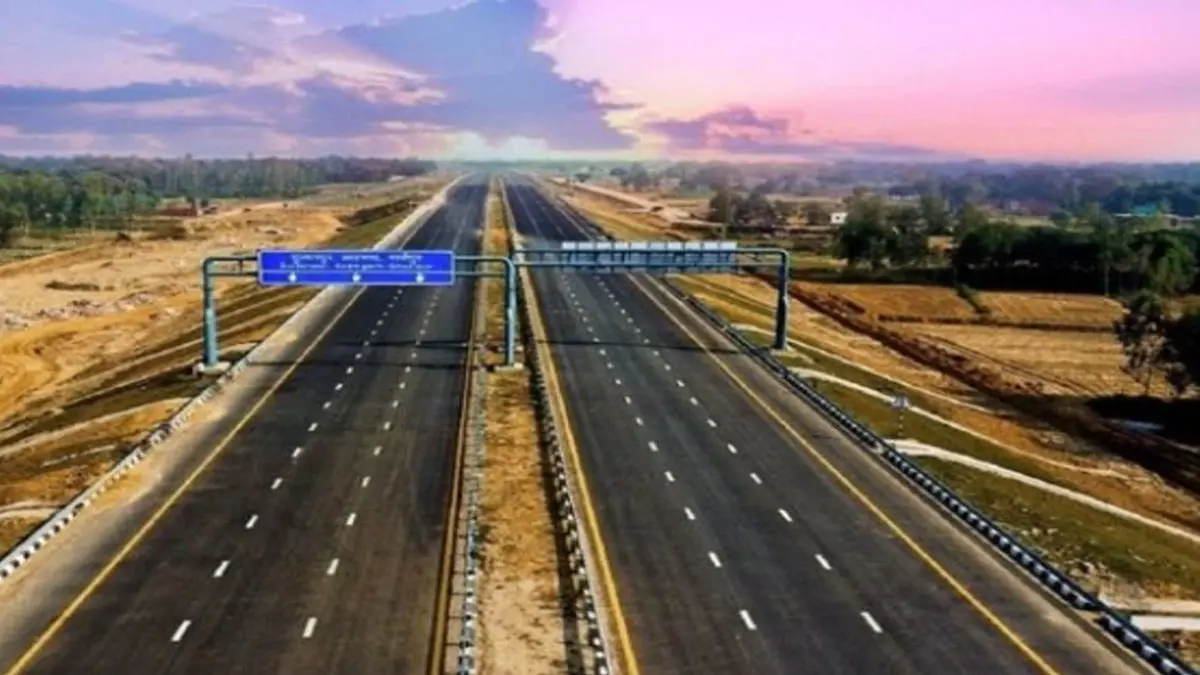
New Delhi: The Ganga Expressway, named after the river that has sustained one of the world’s most fertile and populous regions, is nearing completion and is expected to significantly transform connectivity and economic activity across Uttar Pradesh.
Stretching 594 kilometres from Meerut to Prayagraj, the expressway is set to become India’s longest greenfield expressway and designed to strengthen the regional economy, the project aims to improve transportation efficiency, reduce travel time, and support large-scale industrial and tourism development across the state.

Connecting districts, villages and millions of people
The six-lane expressway, which is expandable to eight lanes, will connect 12 districts and more than 519 villages, benefiting nearly eight crore people in the region.
The districts connected by the corridor include Meerut, Hapur, Bulandshahr, Amroha, Sambhal, Badaun, Shahjahanpur, Hardoi, Unnao, Rae Bareli, Pratapgarh, and Prayagraj. By linking these regions, the expressway is expected to improve mobility, facilitate trade, and boost economic activity in both urban and rural areas.
Advertisement
India’s largest BOT expressway project
The Ganga Expressway has been developed as India’s largest Build-Operate-Transfer (BOT) infrastructure project, with a 30-year concession period under which traffic and throughput risks are borne by Adani Road Transport Ltd., a wholly owned subsidiary of Adani Enterprises Ltd.
Of the total stretch, Adani Enterprises has developed approximately 464 km, accounting for nearly 80% of the project, while IRB Infrastructure Developers Ltd. has constructed around 130 km, representing about 20% of the corridor.
Advertisement
The project has been built at a cost of over ₹36,000 crore and is being delivered in just three years and three months, making it one of the fastest large-scale expressway developments in the country.
Faster travel and lower fuel consumption
One of the biggest advantages of the expressway will be a significant reduction in travel time between key cities.
The journey between Meerut and Prayagraj, which currently takes around 11 hours, will be reduced to about six hours, saving nearly five hours of travel time. The improved road design is also expected to lead to fuel savings of nearly 30 percent, improving efficiency for both passenger and freight transport.
The Uttar Pradesh government plans to develop 11 industrial corridors along the expressway, covering all 12 connected districts.
These industrial zones are expected to attract manufacturing, logistics, and commercial investments, potentially creating millions of employment opportunities over time and accelerating regional development.
Boost to spiritual tourism
The expressway will also play a key role in strengthening the region’s spiritual tourism economy.
It will provide improved connectivity to seven major pilgrimage and tourist destinations, including Garhmukteshwar, Kalkidham, Belhadevi, Chandrika Shakti Peeth, and the Triveni Sangam in Prayagraj. Better road access is expected to encourage higher tourist inflow and boost local economies around these religious hubs.
Further, the expressway has been designed with multiple advanced infrastructure features to ensure smoother traffic movement and safety.
Key structural components include 437 underpasses, 21 flyovers, and 76 minor bridges, along with crossing structures placed roughly every 860 metres to allow seamless movement across both sides of the corridor.
The road has been constructed at a height of six metres, about one metre above the highest flood level, with a 120-metre right-of-way width to ensure long-term resilience.
Amenities and modern facilities for travellers
To improve user experience, the expressway will feature over 20 world-class amenities on both sides, including food courts, fuel stations, motels, cafeterias, shopping plazas, and vehicle service centres.
Dedicated facilities such as dormitories and dhabas for truck drivers will also be developed at multiple locations along the route. In addition, the highway will include electric vehicle charging stations, 24/7 CCTV surveillance, and trauma centres for emergency response.
Environmental and technological considerations have also been integrated into the project. More than nine lakh saplings have been planted in the median along the stretch developed by Adani, while the state forest department has planted around 4.5 lakh trees along the avenue plantation.
The expressway will also feature dark fibre connectivity for faster and secure data transmission and uses polymer modified bitumen (PMB) in its pavement layers to increase road durability and improve riding comfort.
With its scale, connectivity and economic potential, the Ganga Expressway is expected to play a pivotal role in reshaping transportation, industrial growth and tourism in Uttar Pradesh, marking a major milestone in India’s infrastructure development.
Get Current Updates on India News, Entertainment News, Cricket News along with Latest News and Web Stories from India and around the world.