
Delhi Chokes Under 'Severe' Smog as Overall AQI Breaches 400 Mark
Monitoring stations across the city recorded alarming spikes, with Uttam Nagar logging an AQI of 426, while R.K. Puram and CRRI Mathura Road both hit 419. Wazirpur followed closely at 417, Dilshad Garden recorded 411, and Jharoda Kalan reached 408.
- India News
- 2 min read


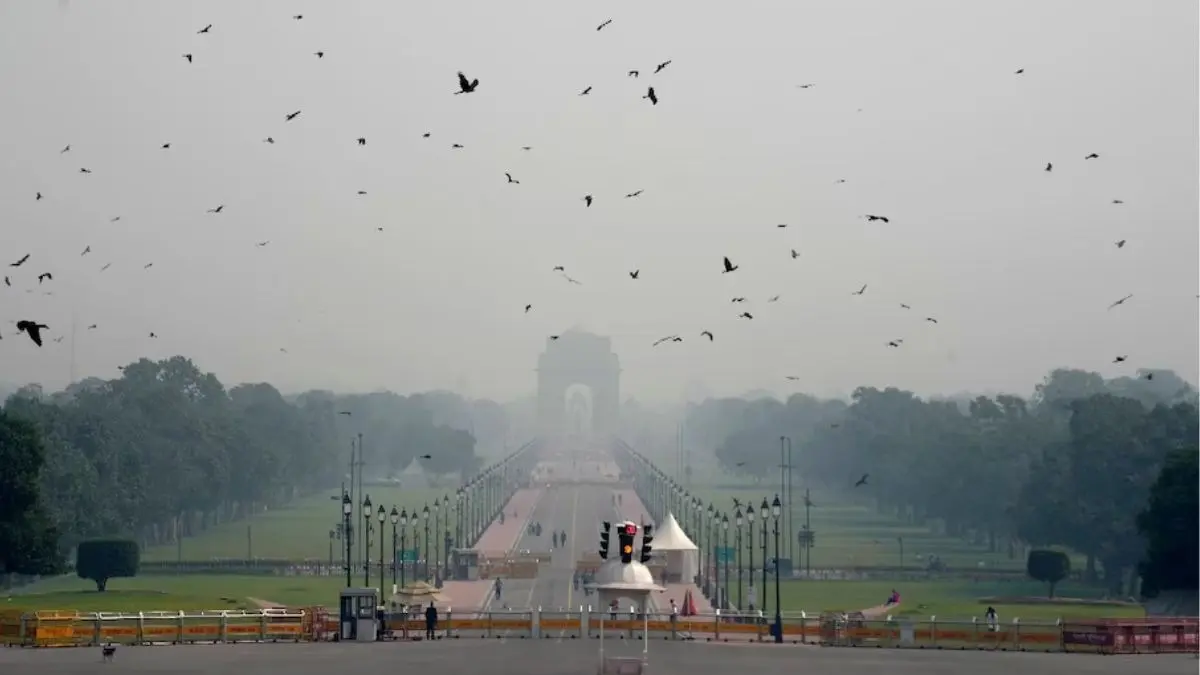
New Delhi: The national capital woke up to a thick, toxic blanket of smog on Sunday morning as air quality plummeted deep into the 'Severe' category.
According to real-time monitoring data from the Central Pollution Control Board (CPCB) and the Delhi Pollution Control Committee (DPCC), Delhi’s overall Air Quality Index (AQI) breached the 400 mark, hovering around 411 during the early morning hours.
The sharp deterioration has pushed several neighbourhoods into hazardous territory, with fine particulate matter (PM2.5) acting as the primary pollutant.
Monitoring stations across the city recorded alarming spikes, with Uttam Nagar logging an AQI of 426, while R.K. Puram and CRRI Mathura Road both hit 419. Wazirpur followed closely at 417, Dilshad Garden recorded 411, and Jharoda Kalan reached 408.
Advertisement
Even typically greener pockets like Lodhi Road registered a 'severe' reading of 406. Across the broader National Capital Region (NCR), neighbouring hubs fared no better; Greater Noida recorded an AQI of 412, Gurgaon hit 400, and both Noida and Ghaziabad hovered just below the threshold at 398.
Meteorological conditions have heavily contributed to trapping pollutants near the surface. With temperatures dipping to a morning minimum of around 14°C to 16°C, sluggish wind speeds and an absence of rainfall have prevented the dispersion of noxious emissions.
Advertisement
The ongoing pollution spell—which has persisted since post-Diwali celebrations earlier this month—has also sparked fresh political sparring over governance and environmental enforcement.
With Graded Response Action Plan (GRAP) restrictions already active across the region, health authorities have issued urgent advisories urging residents to minimise outdoor exposure.
At AQI levels above 400, prolonged exposure can cause respiratory distress even in healthy individuals while posing severe risks to children, the elderly, and those with pre-existing heart or lung conditions. Doctors recommend keeping windows shut, using indoor air purifiers where possible, and wearing well-fitted N95 masks when stepping outside.
Forecasters indicate that without a significant shift in wind patterns or precipitation, Delhi-NCR residents are unlikely to see immediate relief, with hazy skies and hazardous air expected to persist over the coming days.
Get Current Updates on India News, Entertainment News, Cricket News along with Latest News and Web Stories from India and around the world.