
Delhi HC Asks Centre To Consider PIL Seeking Mandatory Body Cameras For Police
Delhi HC asks Centre to consider a PIL seeking mandatory body-worn cameras for police during protests, with an SOP on footage storage, retention and use.
- India News
- 3 min read

;'%3e%3cpath%20d='m8,15.99c4.41,0,7.99-3.58,7.99-7.99S12.41,0,8,0,0,3.59,0,8s3.58,7.99,7.99,7.99Z'%20style='stroke:%23fff;%20stroke-miterlimit:10;%20stroke-width:.02px;'/%3e%3cpath%20d='m3.08,3.37l3.82,5.11-3.84,4.15h.87l3.37-3.64,2.72,3.64h2.94l-4.04-5.39,3.58-3.87h-.86l-3.1,3.35-2.5-3.35h-2.94Zm1.27.64h1.35l5.97,7.99h-1.35l-5.97-7.99Z'%20style='fill:%23fff;'/%3e%3c/g%3e%3c/svg%3e)


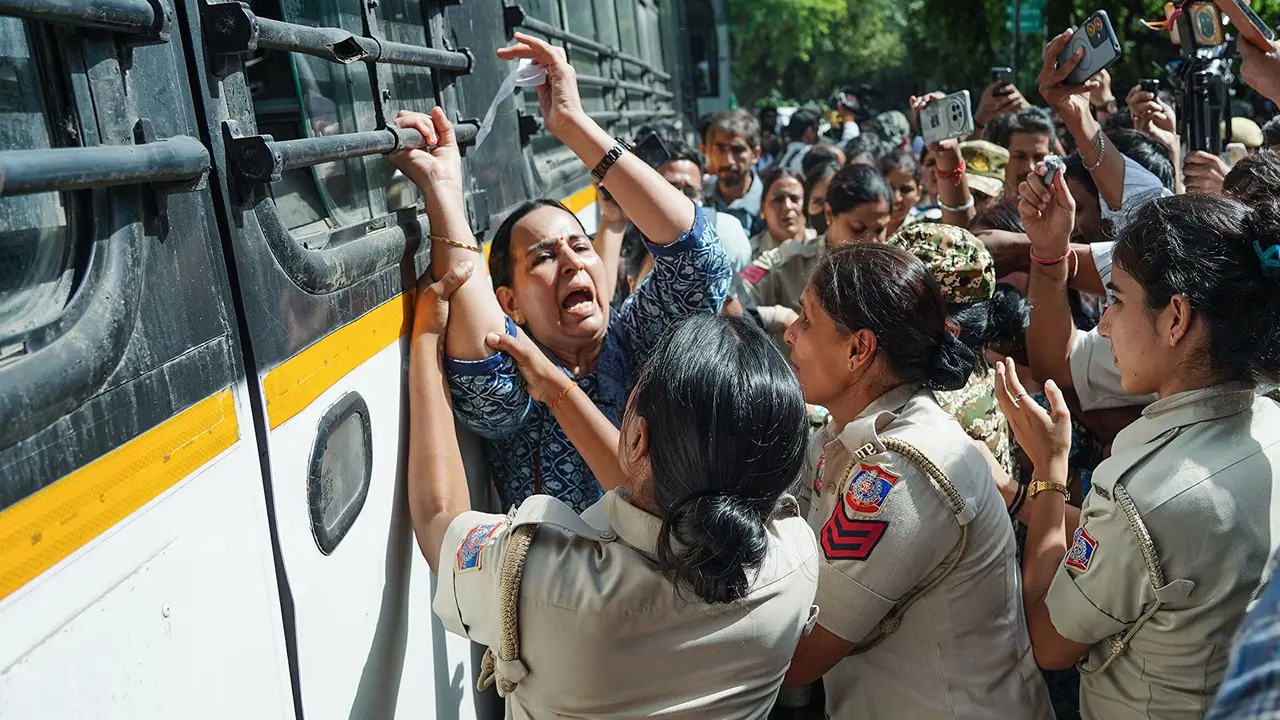
New Delhi: The Delhi High Court has asked the Centre to consider, as a representation, a PIL seeking mandatory use of body-worn cameras by police personnel during protests and crowd-control operations, observing that the issue cannot simply be treated as a “grey area” requiring judicial intervention.
A bench headed by Acting Chief Justice Nitin Sambhre said the court must consider the wider implications of any direction on the use of body-worn cameras, as the issue concerns policing as a whole and not just the Delhi Police.
“Why should we direct them to legislate? It cannot be said that it is a grey area,” the bench observed while hearing the plea.
The court questioned why a judicial order was necessary when the legislature had already made statutory provisions in areas where it intended to regulate police procedures.
Advertisement
“We are not concerned about Delhi Police only, but we are concerned with entire policing,” the bench said.
The PIL, filed by Chahat Raghav, seeks directions for mandatory use of body-worn cameras by Delhi Police and Rapid Action Force personnel deployed during protests and crowd-control situations. It also seeks a comprehensive framework for the storage, retention, integrity and evidentiary use of footage recorded through such cameras.
Advertisement
Senior Advocate Akhil Sibal, appearing for the petitioner, submitted that body-worn cameras could improve transparency and accountability during protests, particularly where allegations of police excesses are followed by counter-allegations against protesters.
Sibal said body-worn cameras were already being used by police in some situations but only sporadically. He argued that the Delhi Police’s 2022 standing order governing rallies and demonstrations did not specifically provide for body-worn cameras and that a clear protocol was required.
The petitioner has relied on the use of such technology by traffic police and a tender issued for procurement of body-worn cameras, arguing that the technology is already available and accessible to the authorities.
The court, however, questioned the need for judicial intervention and whether the issue should instead be addressed by the executive or legislature.
Additional Solicitor General Chetan Sharma, appearing for the respondents, submitted that the Delhi High Court’s PIL rules require a petitioner to first make a representation to the concerned authorities. He said the present petition could be treated as such a representation.
Sharma also submitted that the Supreme Court, while dealing with protests at Jantar Mantar, had directed the authorities to frame an SOP and that the existing mechanism already provides for videography of protests.
Sibal disputed that the existing videography mechanism adequately addressed the issue, submitting that the recording contemplated under the Delhi Police’s standing order was different from body-worn cameras worn by police personnel directly involved in crowd control.
The court ultimately recorded the ASG’s statement and directed the respondents to communicate their decision on framing an SOP concerning the use of body-worn cameras within six months.
The petitioner was granted liberty to approach the High Court again if aggrieved by any inaction.
Get Current Updates on India News, Entertainment News, Cricket News along with Latest News and Web Stories from India and around the world.