
Delhi High Court Stays Adverse Remarks Against CBI in Excise Policy Case, Issues Notice to Kejriwal, Sisodia
The Delhi High Court on Monday stayed the trial court's adverse remarks against the CBI in the Delhi Excise Policy case, which had discharged all 23 accused, including Arvind Kejriwal and Manish Sisodia.
- India News
- 5 min read

;'%3e%3cpath%20d='m8,15.99c4.41,0,7.99-3.58,7.99-7.99S12.41,0,8,0,0,3.59,0,8s3.58,7.99,7.99,7.99Z'%20style='stroke:%23fff;%20stroke-miterlimit:10;%20stroke-width:.02px;'/%3e%3cpath%20d='m3.08,3.37l3.82,5.11-3.84,4.15h.87l3.37-3.64,2.72,3.64h2.94l-4.04-5.39,3.58-3.87h-.86l-3.1,3.35-2.5-3.35h-2.94Zm1.27.64h1.35l5.97,7.99h-1.35l-5.97-7.99Z'%20style='fill:%23fff;'/%3e%3c/g%3e%3c/svg%3e)


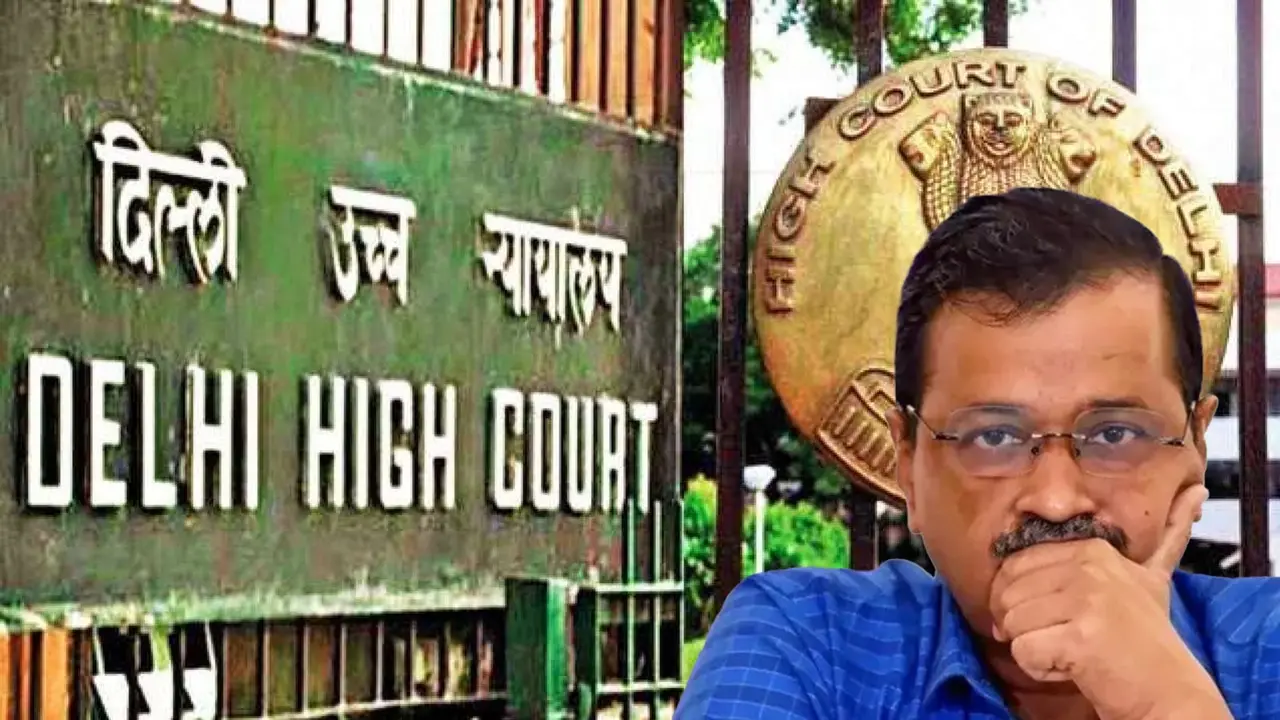
New Delhi: The Delhi High Court on Monday stayed the operation of the trial court's adverse remarks against the CBI and its investigating officer in the Delhi Excise Policy case.
Earlier, the trial court had discharged all 23 accused, including Arvind Kejriwal and Manish Sisodia, after calling the CBI's case "demonstrably erroneous, economically illiterate, and legally unsustainable" due to lack of solid evidence.
The High Court also issued notice to the respondents after none appeared on their behalf during the hearing.
Justice Swarna Kanta Sharma passed the directions while hearing an appeal filed by the CBI challenging the discharge order passed earlier by the trial court.
Advertisement
CBI argues trial court order amounted to ‘acquittal without trial’
The High Court also directed the trial court to defer proceedings in the related money laundering case under the Prevention of Money Laundering Act (PMLA) until the matter is further heard by the High Court. The appeal arises from the February 27 order passed by Special Judge Jitender Singh of the Rouse Avenue Court, who discharged all 23 accused in the case registered by the CBI in connection with the Delhi Excise Policy 2021–22.
Appearing for the CBI, Solicitor General Tushar Mehta argued that the trial court’s decision effectively amounted to an “acquittal without trial.” He told the court that the alleged conspiracy involved bribe payments routed through hawala channels and made in several tranches, supported by meetings and forensic evidence gathered during the investigation.
Advertisement
Mehta submitted that the trial court had misapplied the law at the stage of discharge by analysing the prosecution’s evidence as if it were deciding the matter after a full trial. According to him, conspiracy cases are usually established by linking different pieces of evidence during the course of a trial and cannot always be proved through direct acts carried out openly.
Approver’s statement and evidence cited by agency
The Solicitor General further argued that the trial court had wrongly disregarded the statement of an approver recorded under Section 164 of the Criminal Procedure Code. He said that established legal principles recognise such statements as significant at the stage of framing charges and that corroboration is not required at that preliminary stage.
He also told the High Court that the investigating agency had collected “meticulous evidence” during the probe and asserted that the trial court’s conclusions were perverse and reached at an incorrect stage of the proceedings. According to Mehta, discharging all the accused without a trial would render the entire investigative exercise futile.
The CBI also objected to the strong observations made by the trial court against the investigating officer and the agency. Accepting the submission, the High Court stayed the operation of those adverse remarks and issued notice to the respondents for further hearing in the matter.
Court had discharged Kejriwal, Sisodia and others

Earlier on February 27, the Rouse Avenue Court discharged all 23 accused, including Arvind Kejriwal and Manish Sisodia, in the long-running excise policy case. The court had ruled that the prosecution failed to establish a prima facie case and that the allegations of criminal conspiracy did not withstand judicial scrutiny.
Reacting to the verdict at the time, Kejriwal said, “Truth has prevailed. It is a victory for the people of Delhi.”
Background of the case
The controversy relates to the Delhi Excise Policy of 2021–22, which aimed to privatise liquor retail and boost government revenue. Investigative agencies alleged that the policy was manipulated to benefit certain private licensees in exchange for kickbacks to leaders of the Aam Aadmi Party (AAP). The CBI and the Enforcement Directorate subsequently pursued corruption and money laundering charges in connection with the policy.
Developments in the case over the years
The Delhi government introduced the new excise policy in July 2021, presenting it as a reform intended to modernise liquor retail and increase revenue. In July 2022, the Delhi Chief Secretary submitted a report alleging irregularities in the policy’s design and implementation, after which the Lieutenant Governor recommended a CBI investigation. The CBI registered an FIR in August 2022 against Manish Sisodia and others and carried out raids at multiple locations, including Sisodia’s residence. Facing mounting pressure, the Delhi government withdrew the policy in September 2022 and reverted to the earlier excise regime.
In February 2023, the CBI arrested Sisodia after questioning him in connection with the case. A month later, the Enforcement Directorate arrested him from Tihar Jail in a money laundering case linked to the policy. In March 2024, Arvind Kejriwal was arrested by the Enforcement Directorate after skipping multiple summons, becoming the first sitting Chief Minister in India to be jailed. Sisodia was granted bail by the Supreme Court in August 2024 after spending 17 months in custody, while Kejriwal was released from Tihar Jail in September 2024 after securing bail in both the ED and CBI cases.
On February 27, 2026, the Rouse Avenue Court discharged Kejriwal, Sisodia and all other accused in the case, citing lack of evidence and failure to prove a criminal conspiracy. The CBI has now challenged that order before the Delhi High Court.
(With Inputs from ANI)
Get Current Updates on India News, Entertainment News, Cricket News along with Latest News and Web Stories from India and around the world.