
Delhi’s Winter Pollution Plan Explained: Double Parking Fees, No Fuel Without PUC, Work From Home Option
Delhi government announces new rules ahead of smog season in the capital.
- India News
- 4 min read

;'%3e%3cpath%20d='m8,15.99c4.41,0,7.99-3.58,7.99-7.99S12.41,0,8,0,0,3.59,0,8s3.58,7.99,7.99,7.99Z'%20style='stroke:%23fff;%20stroke-miterlimit:10;%20stroke-width:.02px;'/%3e%3cpath%20d='m3.08,3.37l3.82,5.11-3.84,4.15h.87l3.37-3.64,2.72,3.64h2.94l-4.04-5.39,3.58-3.87h-.86l-3.1,3.35-2.5-3.35h-2.94Zm1.27.64h1.35l5.97,7.99h-1.35l-5.97-7.99Z'%20style='fill:%23fff;'/%3e%3c/g%3e%3c/svg%3e)


Every year, Delhi’s winter brings more than just cold weather. From November to February, the city often battles thick smog, poor visibility and dangerous air quality levels. Weather conditions trap pollutants close to the ground, while vehicle emissions, construction dust, industrial pollution and stubble burning in neighbouring states make the situation worse.
In many winters, Delhi’s Air Quality Index (AQI) slips into the “Very Poor” and even “Severe” categories, forcing authorities to impose emergency restrictions. This year, however, the Delhi government says it wants to act before pollution levels spiral out of control.
To prepare for the annual pollution crisis, the government has announced a new Winter Air Quality Management Framework that could affect how residents travel, work and use their vehicles during the coming winter months.
Parking Charges to Double Across Delhi
One of the biggest changes for motorists will be higher parking costs.
Advertisement
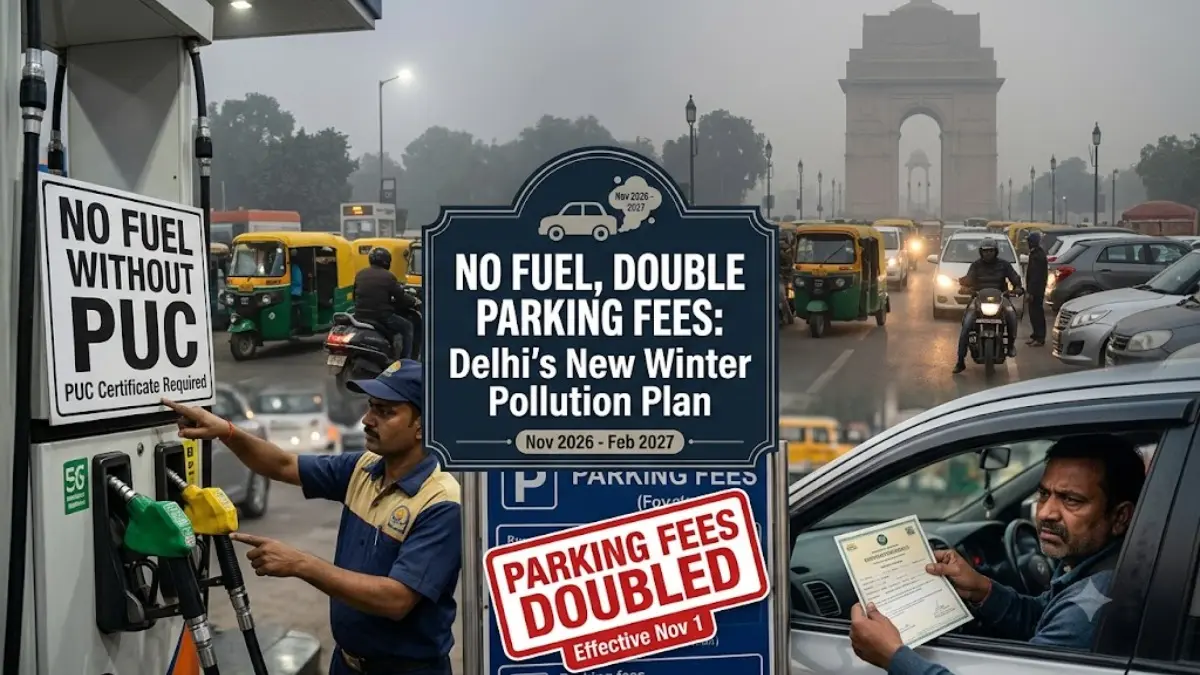
The Delhi government has announced that parking charges at authorised parking facilities across the city will be doubled from November 1, 2026, to February 28, 2027.
The idea is simple: make driving and parking private vehicles less attractive so that more people use public transport, carpooling and other alternatives.
Advertisement
For regular commuters, especially those travelling to offices, markets and commercial centres, the move could significantly increase daily travel expenses.
No PUC Certificate? You May Not Get Fuel
The government is also introducing a strict “No PUC, No Fuel” policy.
Under the proposed rule, petrol pumps in Delhi may refuse fuel to vehicles that do not have a valid Pollution Under Control (PUC) certificate.
The measure targets vehicles that exceed emission limits and aims to improve compliance with pollution norms across the city.
Vehicle owners who have delayed renewing their pollution certificates may need to act before winter begins to avoid inconvenience.
Older Commercial Vehicles to Stay Out
Vehicular pollution remains one of the biggest contributors to Delhi’s winter smog.
To tackle this, the government has announced that non-BS-VI commercial vehicles registered outside Delhi will not be allowed to enter the capital between November 1, 2026, and January 31, 2027.
However, electric vehicles, CNG vehicles, emergency service vehicles and vehicles engaged in government work will be exempt from the restriction.
Officials believe the move will reduce emissions from older and more polluting vehicles during the period when Delhi’s air quality is at its worst.
Work From Home May Return During Peak Pollution
Delhi residents could also see a return of work-from-home arrangements if pollution levels become extremely high.
The framework allows government and private offices to operate with only up to 50 percent physical attendance. Staggered office timings may also be introduced to reduce traffic congestion and lower vehicle emissions.
Essential and emergency services will continue to function normally.
Construction Sites Face Tougher Rules
Construction dust is another major source of air pollution in Delhi.
Under the new framework, construction and demolition sites will have to follow stricter dust-control measures between November and January.
Large projects and commercial high-rise buildings may be required to install anti-smog guns, mist systems and other pollution-control equipment.
Authorities may also impose additional restrictions during the most polluted weeks of winter.
Drones to Monitor Open Burning
Open burning of garbage, leaves and waste remains a recurring problem across Delhi during winter.
The government plans to increase surveillance through field inspections and drone monitoring to identify violations quickly.
Resident Welfare Associations (RWAs), contractors and institutions have been directed to prevent open burning. Those violating the rules could face penalties and environmental compensation charges.
Why Delhi Faces a Pollution Crisis Every Winter
Delhi’s winter pollution problem is caused by a combination of factors.
Cold weather and low wind speeds prevent pollutants from dispersing. At the same time, emissions from vehicles, industries, construction activities and seasonal stubble burning add to the pollution load.
The result is a thick layer of smog that often covers the city for weeks, leading to breathing difficulties, eye irritation and other health concerns, particularly among children, senior citizens and people with respiratory illnesses.
What This Means for Delhi Residents
The new framework signals a shift from emergency reaction to advance planning.
For residents, it means preparing for higher parking costs, ensuring vehicles have valid PUC certificates, and being ready for possible work-from-home arrangements during peak pollution periods.
Whether the measures will significantly improve Delhi’s air quality remains uncertain. But with winter pollution becoming an annual challenge, the government is betting that early action will help reduce the severity of the crisis before the smog arrives.
Get Current Updates on India News, Entertainment News, Cricket News along with Latest News and Web Stories from India and around the world.