
‘Ensure Metro Services, Remove Barricades Unless Necessary’: SC Directs Centre Amid Delhi CJP Protest
The Supreme Court directs authorities to remove unnecessary barricades across Delhi, ensure normal Metro and railway services, and prevent illegal detention of peaceful protesters amid CJP demonstrations demanding CEC Gyanesh Kumar's resignation. Centre and Delhi Police must respond to allegations.
- India News
- 5 min read

;'%3e%3cpath%20d='m8,15.99c4.41,0,7.99-3.58,7.99-7.99S12.41,0,8,0,0,3.59,0,8s3.58,7.99,7.99,7.99Z'%20style='stroke:%23fff;%20stroke-miterlimit:10;%20stroke-width:.02px;'/%3e%3cpath%20d='m3.08,3.37l3.82,5.11-3.84,4.15h.87l3.37-3.64,2.72,3.64h2.94l-4.04-5.39,3.58-3.87h-.86l-3.1,3.35-2.5-3.35h-2.94Zm1.27.64h1.35l5.97,7.99h-1.35l-5.97-7.99Z'%20style='fill:%23fff;'/%3e%3c/g%3e%3c/svg%3e)


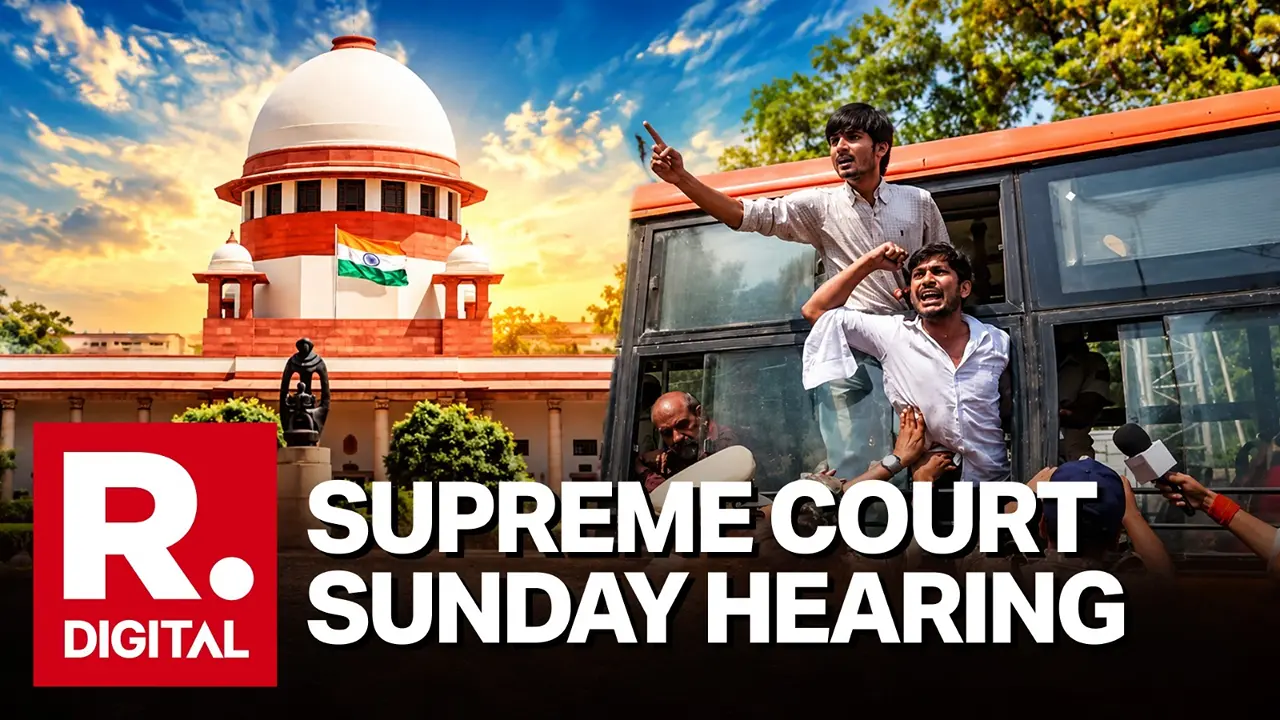
New Delhi: The Supreme Court on Sunday directed authorities to review barricades across Delhi, ensure the normal functioning of Metro and railway services, and allow the free movement of people amid protests by the Cockroach Janta Party (CJP) over demands for Chief Election Commissioner Gyanesh Kumar’s resignation.
During a special hearing on October 11, a bench of Justices Joymalya Bagchi and V Mohana also sought responses from the government over allegations of illegal detentions and excessive police action during Saturday’s protests. The court emphasised that peaceful and unarmed protesters must not be detained except in accordance with the law.
The directions came after petitions challenged restrictions imposed across the national capital during the demonstrations, including the closure of Metro stations, barricading of roads and alleged preventive detention of protesters, political leaders, lawyers and journalists.
The court stressed that restrictions on public movement must be justified by law and genuine public-order requirements, rather than unnecessarily disrupting the lives of Delhi residents.
Advertisement
SC Directs Removal Of Barricades Unless Necessary
The Supreme Court directed authorities to review the barricades installed across Delhi and remove those that were not absolutely necessary.
The bench said the free movement of people must be permitted, subject to traffic regulations and legitimate law-and-order requirements. It emphasised that security arrangements should not impose unnecessary restrictions on the public.
Advertisement
The court also raised concerns over restrictions around the Supreme Court and other court premises, particularly where such measures could prevent lawyers from carrying out their professional duties.
The directions followed allegations that extensive barricading and restrictions during the CJP protests had severely disrupted movement across central Delhi.
Metro, Railway Services Must Operate Normally
The Supreme Court also directed authorities to ensure that Metro and railway services function normally unless restrictions are required to maintain public order.
The court reiterated that transport services cannot be subjected to a blanket shutdown merely because protests have been called in the capital.
Authorities may regulate services when necessary, but any restrictions must be justified by the prevailing circumstances.
The issue came before the court after petitions alleged that Metro stations and railway services had been restricted during Saturday’s demonstrations, despite an earlier direction against a complete prohibition on Metro and train services in Delhi.
The court's intervention sought to ensure that security measures did not unnecessarily affect commuters and other residents.
The Solicitor General, Tushar Mehta, informed the bench that Metro stations had been reopened and internet services restored by Saturday night. The court nevertheless stressed the need to ensure that public transport and essential facilities continued to function normally, subject to lawful restrictions.
Sc Directs Lifting of Sec 163 BNSS Curbs Around Apex Court
The Supreme Court on Sunday directed authorities to immediately lift the prohibitory orders under Section 163 of the Bharatiya Nagarik Suraksha Sanhita (BNSS) imposed around the apex court complex, emphasising that access to justice must remain unhindered and peaceful citizens should not face illegal detention.
A bench comprising Justices Joymalya Bagchi and V. Mohana passed the directions while hearing a batch of petitions challenging the government crackdown and detention of demonstrators by the Delhi Police and paramilitary forces during protests in the national capital on October 10, alongside a contempt plea alleging wilful disobedience of court orders.
Highlighting the fundamental right to peaceful movement, the apex court ordered that smooth movement of people across the national capital must be facilitated within the bounds of the law.
"Smooth movement of people in the city shall be permitted in accordance with law. There shall be no illegal detention, particularly of peaceful, unarmed assemblages of people, beyond the area where Section 163 BNSS is in operation," the bench stated.
No Illegal Detention Of Peaceful Protesters
The bench made it clear that peaceful and unarmed gatherings must not result in illegal detentions.
It said detention must follow the procedure established by law, particularly for people assembling peacefully outside areas where prohibitory orders under Section 163 of the Bharatiya Nagarik Suraksha Sanhita (BNSS) are in force.
Section 163 empowers authorities to issue urgent orders to prevent potential threats to public peace and safety, including restrictions on gatherings in specified circumstances.
The court's observations came amid allegations that protesters and several public figures had been detained during the demonstrations. Petitions before the court also raised concerns over the alleged use of excessive force against lawyers and media personnel.
The bench sought responses from the authorities on the allegations and emphasised that law-enforcement action must remain within the framework of the law.
Centre, Delhi Police And DMRC Face Questions
The Supreme Court issued notices to the authorities concerned over allegations that its earlier directions on transport restrictions had not been followed.
The proceedings involved the Union government, Delhi Police and the Delhi Metro Rail Corporation (DMRC). The petitions sought accountability for the restrictions imposed during the protests and questioned the legality of the police action.
The court sought responses on the allegations and directed the authorities to explain the steps taken to comply with its directions. The matter is scheduled for further consideration, with the government expected to respond to the concerns raised before the bench.
The petitions also brought attention to the reported detention of political leaders, lawyers, journalists and members of the public during Saturday's demonstrations.
CJP Protest Over CEC Gyanesh Kumar
The protests were organised by the Cockroach Janta Party to demand the resignation of Chief Election Commissioner Gyanesh Kumar over alleged irregularities in the Special Intensive Revision (SIR) of electoral rolls.
The demonstrations on Saturday, October 10, triggered heightened security arrangements across Delhi, particularly around central Delhi and the proposed protest venue at Jantar Mantar.
Authorities imposed restrictions and deployed security personnel to prevent unauthorised gatherings. However, the resulting curbs on movement and public transport prompted legal challenges before the Supreme Court.
The controversy has since expanded beyond the protest itself, with questions being raised over the balance between maintaining public order and protecting citizens' rights to peaceful assembly and free movement.
The Supreme Court's directions underline that authorities can impose lawful restrictions to address genuine security concerns, but such measures must remain proportionate and cannot automatically justify blanket curbs on public transport, movement or peaceful gatherings.
Get Current Updates on India News, Entertainment News, Cricket News along with Latest News and Web Stories from India and around the world.