
Four New Greenfield ‘Namo Cities’ Approved Under NCR Regional Plan 2041 to Decentralise Urban Sprawl
The National Capital Region Planning Board has approved the development of four new greenfield smart cities, called ‘Namo Cities,’ to manage rising urbanisation. A ₹5,000 crore competitive funding model will select the final locations across Haryana, Uttar Pradesh, and Rajasthan.
- India News
- 3 min read

;'%3e%3cpath%20d='m8,15.99c4.41,0,7.99-3.58,7.99-7.99S12.41,0,8,0,0,3.59,0,8s3.58,7.99,7.99,7.99Z'%20style='stroke:%23fff;%20stroke-miterlimit:10;%20stroke-width:.02px;'/%3e%3cpath%20d='m3.08,3.37l3.82,5.11-3.84,4.15h.87l3.37-3.64,2.72,3.64h2.94l-4.04-5.39,3.58-3.87h-.86l-3.1,3.35-2.5-3.35h-2.94Zm1.27.64h1.35l5.97,7.99h-1.35l-5.97-7.99Z'%20style='fill:%23fff;'/%3e%3c/g%3e%3c/svg%3e)


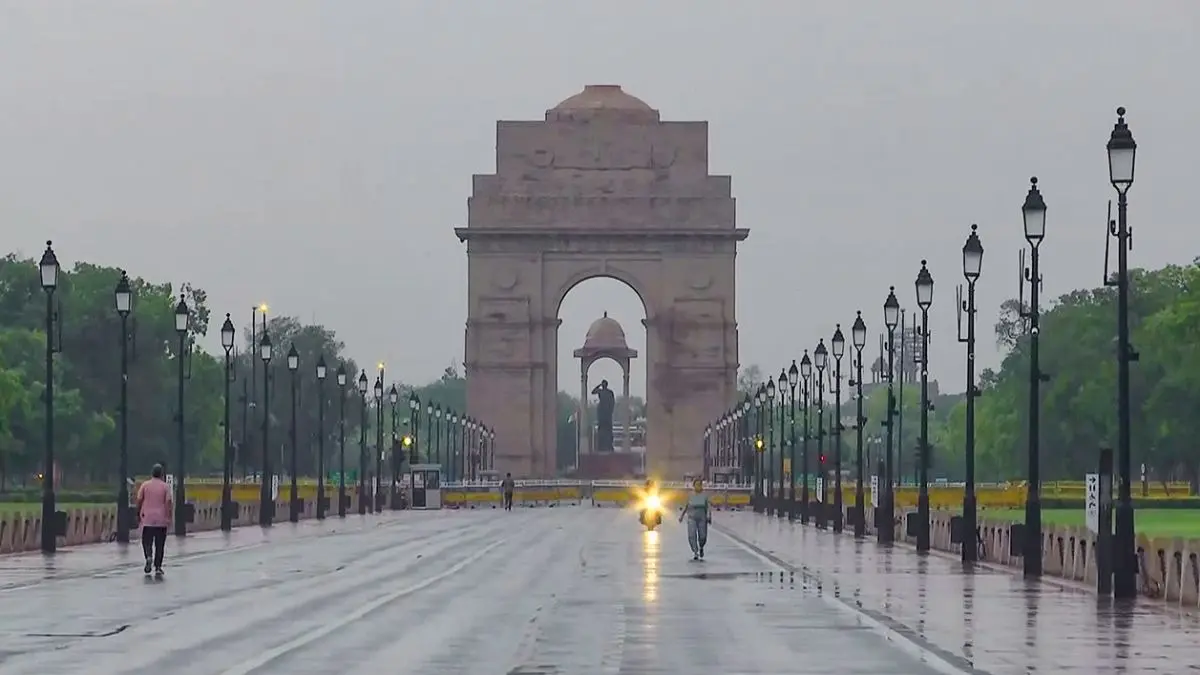
New Delhi: In a major policy shift aimed at easing the immense infrastructural pressure on the national capital and its immediate neighbors, the National Capital Region Planning Board (NCRPB) has officially approved the development of four brand-new, greenfield smart cities. Designated as ‘Namo Cities,’ these urban centers will be built from scratch to absorb the massive influx of migration projected over the next two decades.
The landmark decision was finalised during a high-level NCRPB meeting on Tuesday, chaired by Union Housing and Urban Affairs Minister Manohar Lal. The strategic session saw direct participation from key regional stakeholders, including Delhi Chief Minister Rekha Gupta, Haryana Chief Minister Nayab Singh Saini, and senior urban development ministers representing Rajasthan and Uttar Pradesh.
Managing the Shift to 67% Urbanisation
The driving force behind this massive planning intervention is a set of stark demographic projections outlined in the draft Regional Plan 2041. According to the board’s internal data, the wider National Capital Region is urbanizing at an unprecedented rate. The urban population within the NCR is projected to climb steeply to 57 percent by 2031, before surging to approximately 67 percent by 2041.
Recognizing that existing hubs like Noida, Gurugram, and Ghaziabad are rapidly approaching their saturation points in terms of water, traffic management, and housing, the board determined that traditional expansion is no longer sustainable. The 'Namo Cities' initiative represents a deliberate pivot toward decentralized growth, establishing self-sustaining economic and residential zones across the border states of Haryana, Uttar Pradesh, and Rajasthan.
Advertisement
A Rs 5,000 Crore Competitive Funding Model
To kickstart the ambitious project, Union Minister Manohar Lal announced a central financial commitment of Rs 5,000 crore. However, instead of allocating these funds via traditional bureaucratic quotas, the Ministry is introducing a competitive, merit-based selection process.
"In the meeting, it was decided that four greenfield cities will be developed. These cities will be called ‘Namo Cities’," Minister Lal told reporters during the post-meeting briefing. "The Centre will release Rs 5,000 crore for these cities. States will now have to submit their detailed project proposals, and the final four locations will be selected through a challenge process."
Advertisement
This challenge method is designed to ensure that only the most viable, well-planned, and execution-ready state proposals receive the federal stimulus. Participating state governments will need to demonstrate clear roadmaps for land acquisition, environmental sustainability, and financial feasibility.
Economic and Real Estate Implications
By shifting the focus away from the congested core of Delhi, the Regional Plan 2041 aims to trigger a widespread economic ripple effect across the northern Hindi belt. Industry observers note that the creation of four distinct, large-scale greenfield cities will provide a significant boost to the infrastructure, construction, manufacturing, and logistics sectors.
If the baseline connectivity such as high-speed rail links and expressways is integrated correctly from the blueprint stage, these new hubs are expected to generate substantial local employment and open up highly lucrative corridors for commercial and residential real estate investment over the next fifteen years. The immediate next step rests with the state administrations, who are expected to begin drafting their competitive bids for the 'Namo City' tags in the coming months.
Get Current Updates on India News, Entertainment News, Cricket News along with Latest News and Web Stories from India and around the world.