
From IDs to GPS Logs: How India Traced the Pahalgam Killers to Lashkar’s Pakistan Network
India has unveiled clinching proof linking Pakistan-based Lashkar-e-Taiba operatives to the April 2025 Pahalgam massacre that killed 26 civilians. Forensic tests, digital trails, and government-issued Pakistani IDs confirm cross-border infiltration. The three militants, eliminated in a July encounter, had no local Kashmiri link, marking a turning point in the investigation.
- India News
- 4 min read

;'%3e%3cpath%20d='m8,15.99c4.41,0,7.99-3.58,7.99-7.99S12.41,0,8,0,0,3.59,0,8s3.58,7.99,7.99,7.99Z'%20style='stroke:%23fff;%20stroke-miterlimit:10;%20stroke-width:.02px;'/%3e%3cpath%20d='m3.08,3.37l3.82,5.11-3.84,4.15h.87l3.37-3.64,2.72,3.64h2.94l-4.04-5.39,3.58-3.87h-.86l-3.1,3.35-2.5-3.35h-2.94Zm1.27.64h1.35l5.97,7.99h-1.35l-5.97-7.99Z'%20style='fill:%23fff;'/%3e%3c/g%3e%3c/svg%3e)


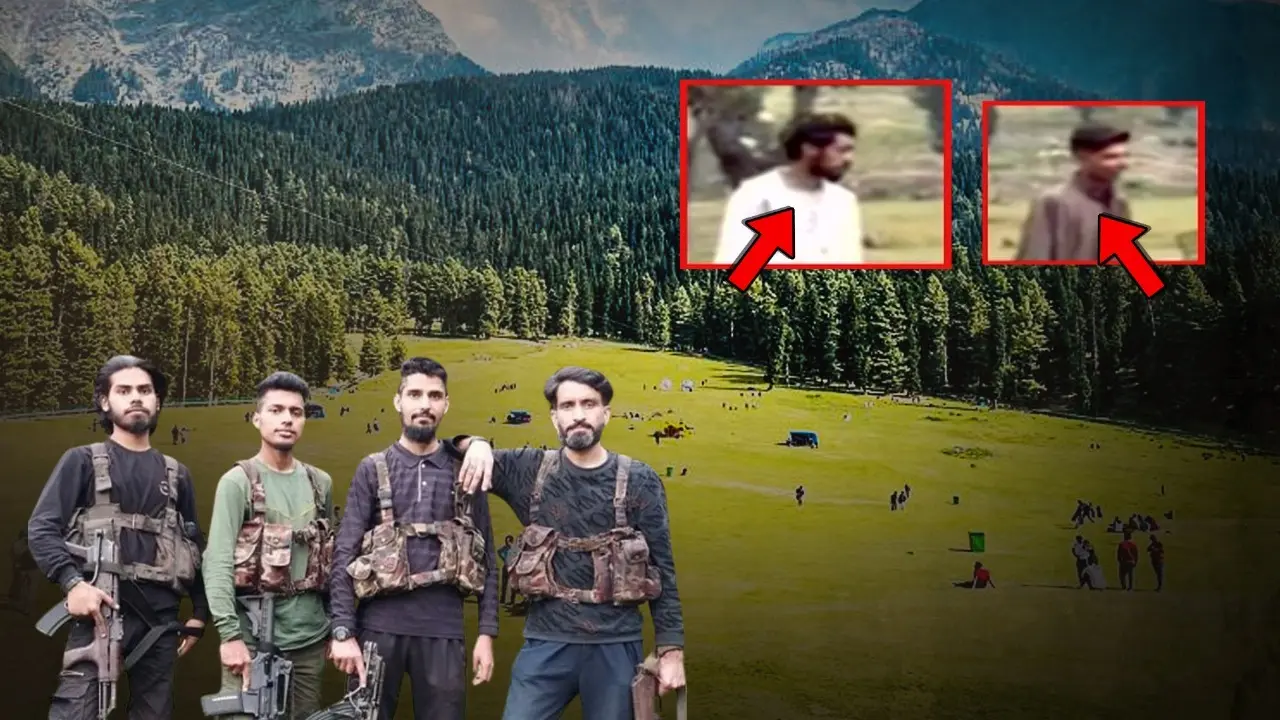
India presented irrefutable proof that the perpetrators of the April 2025 Pahalgam massacre were Pakistani nationals and senior operatives of the banned terror outfit Lashkar-e-Taiba (LeT).
The announcement followed the killing of all three terrorists on July 28 during Operation Mahadev in Jammu and Kashmir’s Dachigam-Harwan forest area.
The attack, which occurred on April 22 in Baisaran meadow, claimed the lives of 26 civilians, most of them Hindu tourists.
“For the first time, we have government-issued Pakistani documents in hand that nail the nationality of the Pahalgam attackers beyond doubt,” Union Home Minister Amit Shah told Parliament on July 29.
Who Were the Attackers?
The men eliminated were:
Suleman Shah, alias Faizal Jatt – A++ LeT commander and mastermind of the attack
Abu Hamza, alias Afghan – A-grade LeT commander and second shooter
Yasir, alias Jibran – A-grade LeT commander who provided rear security during the assault
None of them were Indian nationals, and no local Kashmiri was involved in the execution of the massacre, the report makes clear.
ID Cards, Chocolates, and Satellite Phones: Evidence of Pakistani Origin
Among the most damning evidence were Pakistani voter ID cards found on Suleman Shah and Abu Hamza, issued by the Election Commission of Pakistan. Their serial numbers traced back to electoral rolls in Lahore and Gujranwala.
Investigators also recovered a micro-SD card from a damaged sat-phone containing biometric data linked to Pakistan’s NADRA database. The details included fingerprints, facial recognition templates, and family trees, confirming addresses in Changa Manga (Kasur district) and Koiyan village near Rawalakot in Pakistan-occupied Kashmir.
Further, wrappers of CandyLand and ChocoMax chocolates, both manufactured in Karachi, were discovered in the same rucksack that held spare ammunition. Lot numbers confirmed shipment to Muzaffarabad in May 2024.
Forensics, GPS Logs, and DNA Seal the Case
Indian forensic labs confirmed that the 7.62×39mm shell casings collected from the Baisaran site matched the three AK-103 rifles recovered after the July 28 encounter.
Blood samples on a torn shirt left behind at the crime scene produced mitochondrial DNA matches with the bodies of all three terrorists.
In addition, data from a Huawei satellite phone used by the trio revealed their consistent location within the Harwan forest belt between April 22 and July 25. GPS data from a Garmin device found with Suleman Shah also matched eyewitness-verified firing positions.
How the Plot Unfolded: A Timeline
According to the Indian dossier, the terrorists infiltrated through the Gurez sector in May 2022. Intelligence intercepts had picked up their initial radio signals from across the Line of Control at that time.
On April 21, 2025, the trio sheltered in a seasonal hut (dhok) near Hill Park, just 2 km from Baisaran. Two local Kashmiris, Parvaiz and Bashir Ahmad Jothar, confessed to providing them food and overnight shelter. Both have been detained.
On the morning of April 22, they trekked to Baisaran meadow, attacked civilians at 2:30 PM, and escaped toward Dachigam forest where they remained hidden until the July 28 encounter.
Sketch Confusion: Misidentification Explained
Earlier sketches released by J&K Police on April 24 had named Hashim Musa, Ali Bhai (alias Talha), and Adil Hussain Thoker as suspects. However, the National Investigation Agency (NIA) later clarified that these were based on an unrelated photograph from a December 2024 shootout.
This confusion was resolved once digital and forensic evidence identified the actual attackers.
LeT Handlers Traced to Pakistan
The investigation also tracked the chain of command behind the massacre to two top LeT leaders:
Sajid Saifullah Jatt, LeT’s South Kashmir operations chief based in Changa Manga, Lahore, was identified as the mastermind and remote handler. His voice samples from the satellite phone matched those from earlier intelligence intercepts.
Advertisement
Rizwan Anees, LeT’s Rawalakot commander, visited the families of the slain attackers on July 29 to conduct funeral prayers in absentia. His presence was recorded on video by local villagers and has been included in the Indian dossier.
Read More - Shibu Soren, Former Jharkhand Chief Minister, Dies At 81
Diplomatic Fallout Ahead
The strong documentary trail, government IDs, digital logs, forensics, and eyewitness confessions, has armed India with a dossier it plans to submit to global bodies including the United Nations and the Financial Action Task Force (FATF). Officials say the evidence is expected to amplify pressure on Pakistan for cross-border terror facilitation.
Advertisement
Get Current Updates on India News, Entertainment News, Cricket News along with Latest News and Web Stories from India and around the world.